
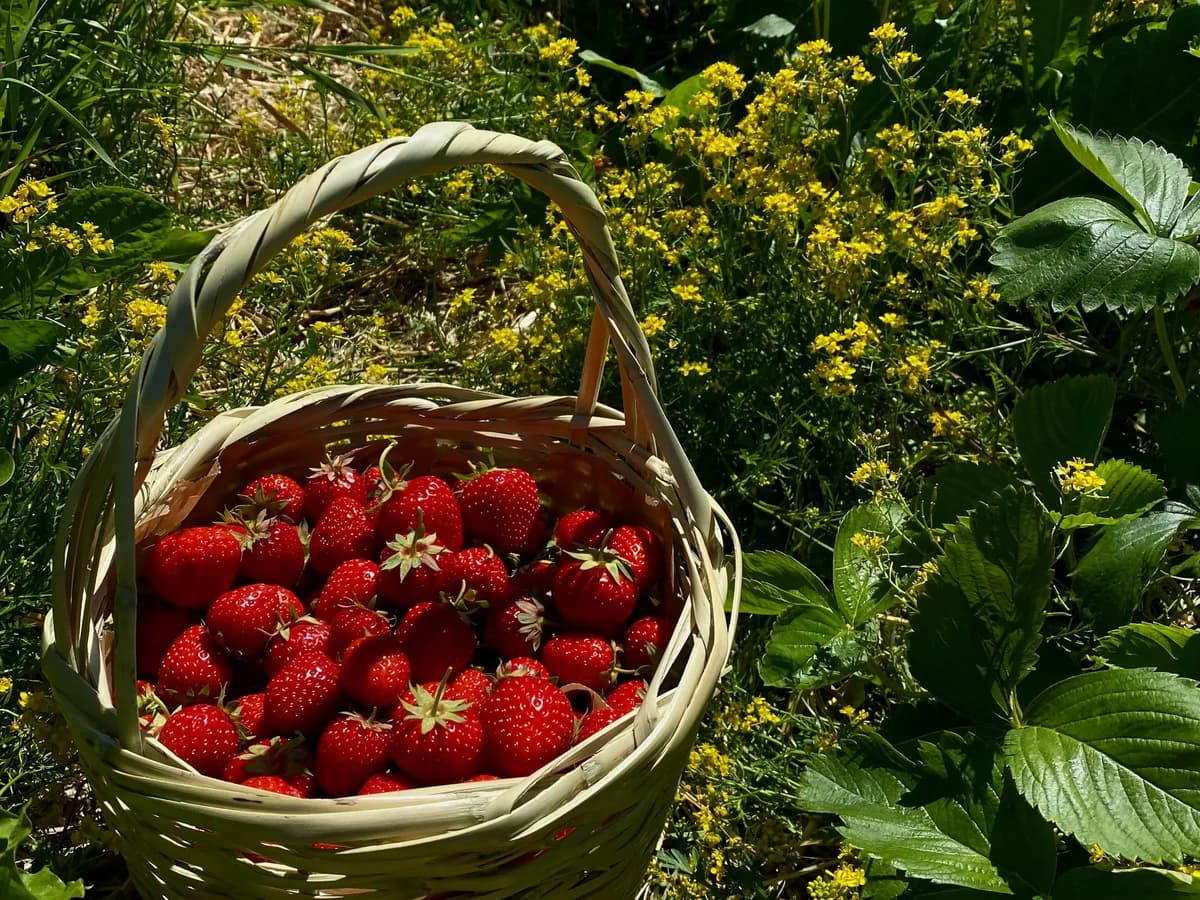
The strawberry of San Mauro is a small berry grown in the peri-urban areas of San Mauro Torinese, a municipality in the eastern belt of Turin, along the left bank of the Po.
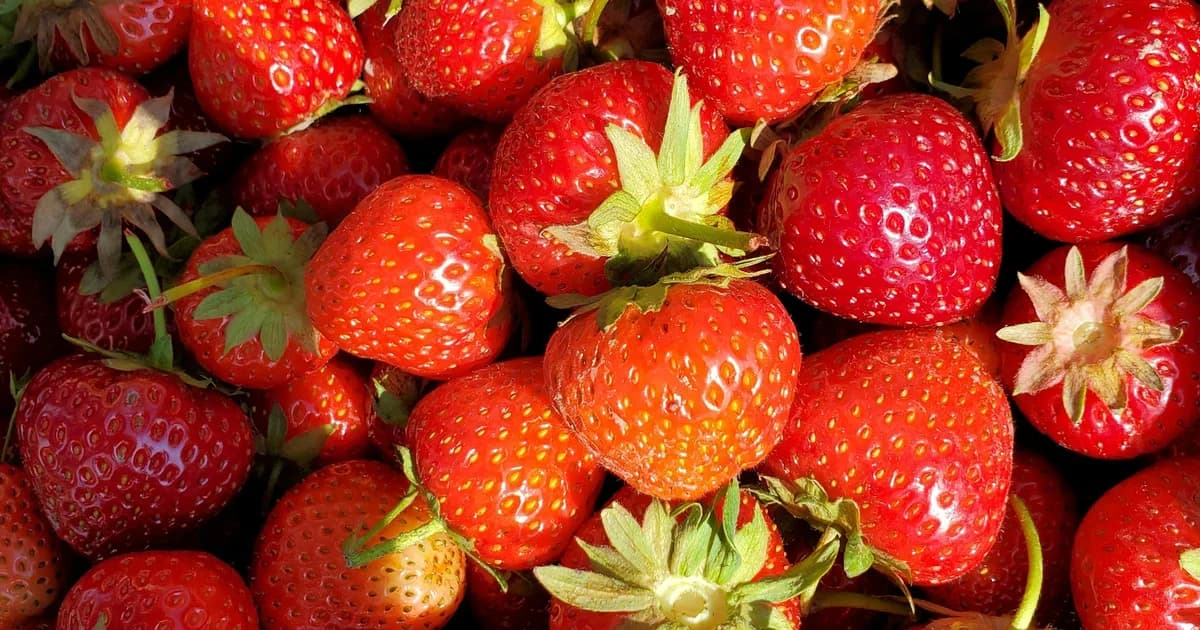
It is a local variety with medium-small fruit, with a tendentially conical shape and a bright red peel, sometimes almost vermilion when fully ripe. The pulp is compact but juicy, with an intense and floral aroma reminiscent of wild strawberry. The flavour is distinctly sweet, with a slight background acidity that clearly distinguishes it from the more watery and less aromatic industrial varieties. Included in the list of Traditional Italian Agri-Food Products (PAT), this strawberry represents one of the most recognisable fruit and vegetable heritages of Turin. In the kitchen, it lends itself to consumption mainly raw, accompanied by little sugar or a little lemon juice to enhance its aroma. It finds a place in rustic cakes, custard tarts and spoon desserts, but its character is best appreciated when the recipe remains simple. The brevity of the production season, concentrated between May and June, makes it an expected and valuable ingredient in the area's domestic kitchens.
The fertile banks of the Po that cross the territory of San Mauro Torinese have been home to orchards and orchards since medieval times, when the land was cultivated by the farmers of the farms scattered along the river. The local strawberry established itself as a valuable crop during the nineteenth century, when its proximity to Turin made San Mauro a natural supplier of fresh products for city markets.
Over time, the farmers selected the plants most suitable for the area's microclimate, characterised by harsh winters, wet springs and alluvial soils rich in organic matter, thus building a well-adapted local ecotype.
In the twentieth century, Sanmaurese fragoliculture experienced its greatest expansion, with entire families engaged seasonally in harvesting and selling directly to the Porta Palazzo market in Turin. The advent of intensive hybrid varieties and the urban pressure on the agricultural territory progressively reduced the cultivated areas, putting the survival of the traditional variety at risk.
The recognition as a Traditional Agri-Food Product (PAT) by the Ministry of Agricultural Policies has helped to keep the attention on this strawberry alive, supporting small local producers who hand down its cultivation according to established practices over time.
The San Mauro strawberry comes with a medium or medium-small fruit, with a regular conical shape and a shiny surface. The external colour is an intense and uniform red, which when fully ripe tends towards dark and deep tones; the internal pulp is also red, compact and devoid of the spongy cavities typical of the most common commercial varieties.
The scent is one of the most recognisable elements: floral and musky, with notes reminiscent of wild strawberries rather than intensive varieties. On the palate, the flavour is sweet with a balanced and persistent acidity. To recognise the authentic product, it is useful to buy it directly from local producers in San Mauro Torinese or at the Turin farmers' markets during the short season, from May to June.
The absence of product certification marks makes it necessary to rely on the declared origin and direct contact with the manufacturer.
San Mauro strawberry shares the nutritional profile of strawberries in general, with a low calorie intake, around 30-35 kcal per 100 grams. It is rich in vitamin C, with amounts that can cover a significant part of the daily requirement, and contains vitamin K, folic acid and potassium in relevant amounts. The antioxidant component, supported by the presence of anthocyanins and flavonoids, is favoured by the high pigmentation of the pulp.
The high water content and the presence of fibre make it an easily digestible fruit suitable for a balanced diet.
San Mauro strawberries, like all strawberries with compact but delicate pulp, should be stored in the refrigerator at a temperature between 2 and 4 degrees Celsius, preferably in a low, open container or covered with absorbent paper to limit condensation. It is advisable not to wash them before storage and to consume them within two or three days of purchase.
The seasonal brevity suggests, for those who want to prolong its availability, the preparation of preserves, jams or raw freezing.
The most immediate way to appreciate the San Mauro strawberry is raw, natural or with a light touch of sugar and a few drops of lemon, leaving the pulp to macerate for a few minutes before serving. The ideal consumption temperature is ambient or slightly fresh, never cold in the refrigerator, to preserve the aromatic intensity. In the kitchen it is used in tarts, macedonias, semifreddos and sauces to be combined with fresh cheeses.
The season is concentrated between May and June and harvesting generally takes place in the morning to ensure maximum freshness.
On the beverage front, the strawberry of San Mauro marries very naturally with sweet Piedmontese wines based on Moscato, such as Moscato d 'Asti DOCG, whose delicate effervescence and fruity notes create a harmonious dialogue with the acidic sweetness of the berry. Even a Brachetto d 'Acqui, slightly sparkling and scented with rose, goes well with these strawberries in a dessert or in a glass.
For those who prefer dry bubbles, a Classic Piedmontese Method with low dosage cleanses the palate without covering the aroma of the fruit.
Among the food combinations, the San Mauro strawberry finds an excellent synthesis with soft fresh cheeses such as Roccaverano robiola or fresh curd, where the fatness of the milk balances the acidity of the fruit. It is also combined with mascarpone, in simple preparations such as cups with dry biscuits, and with panna cotta, a classic Piedmontese dessert that enhances the contrast between creaminess and freshness.
Traditional and simple preparation of Turin's peasant cuisine: the clean strawberries are macerated for about half anhour with sugar and a glass of light red wine, usually a table Barbera. The result is a fresh and fragrant dessert, often served with slices of white bread or breadsticks to collect the red and sweet liquid on the bottom of the plate.
One of the most popular domestic desserts in the San Mauro area during the strawberry season. A shortcrust pastry base cooked in white is filled with lemon custard and topped with fresh strawberries arranged in a radius. The absence of strawberry cooking preserves the characteristic aroma of the local variety.
To prolong the availability of a seasonal and short fruit, the families of San Mauro have always prepared jams with few ingredients: strawberries, sugar and lemon juice. The yield is a bright red preserve with an intense aroma, used all year round on toast or as a filling for winter tarts.
In San Mauro Torinese, strawberries have long been a symbol of belonging and season, an expected fruit that marked the arrival of spring in the houses and farms along the Po. Peasant families in the area used to bring strawberries to the Porta Palazzo market in Turin in the early hours of the morning, often on foot or by cart, building a direct and daily link with the city that has defined the identity of the town for generations.
Even today, despite the reduction in cultivated areas, the strawberry of San Mauro is perceived by the local community as an identity heritage that distinguishes the country from other municipalities in the Turin belt.
San Mauro Torinese has traditionally celebrated its strawberry with a village festival held in spring, coinciding with the ripening of the fruit, usually between the end of May and the first days of June. The event, which attracts inhabitants of the Turin belt and curious about the city, includes the direct sale of the product, tastings and local preparations.
Among the farmers' markets in Turin, even those organized in the metropolitan area of Turin often include producers from San Maura during the short strawberry season.


