
Molise
Cuisine of Molise: definitive guide to authentic flavors, typical products and regional gastronomic tradition
Introduction to Molise: territory, identity and gastronomic culture
Molise is one of the smallest Italian regions, but also among the most coherent from a gastronomic and identity perspective. Located between the Apennines and the Adriatic Sea, its territory alternates between mountains, hills and a short coastal strip that profoundly influence the traditional Molise cuisine.
The gastronomy of Molise stems from a rural, pastoral and self-sufficient culture, where cooking was strictly linked to agricultural cycles and daily survival. This results in a tradition made of essential recipes, local ingredients and slow processing, still deeply rooted today.
Speaking of typical products of Molise means entering an authentic cuisine, little industrialized and still strongly domestic.
Characteristics of Molise cuisine
Ingredients at the base of tradition
Regional cuisine is based on simple but highly identitary raw materials:
Durum wheat for bread and homemade pasta
Native legumes (chickpeas, beans, lentils)
Sheep and pork meat
Cheeses made from sheep and cow milk
Extra virgin olive oil
Wild herbs (chicory, borage, wild fennel)
A distinctive element is the ability to transform humble ingredients into complex dishes through traditional techniques such as aging, drying and slow cooking.
Historical influences of Molise gastronomy
The cuisine of Molise is the result of specific historical stratifications:
Samnite tradition: centrality of cereals and legumes
Roman era: agricultural and olive oil development
Culture of transhumance: basis of dairy and sheep production
Bourbon influences: richer and more structured dishes
The Apennine transhumance, recognized also at a cultural level, had a decisive impact on aged cheeses, sheep meat and preservation techniques.
Typical products of Molise
Regional gastronomic excellence
The Molise agri-food heritage is rich in identitary productions often little known outside the region:
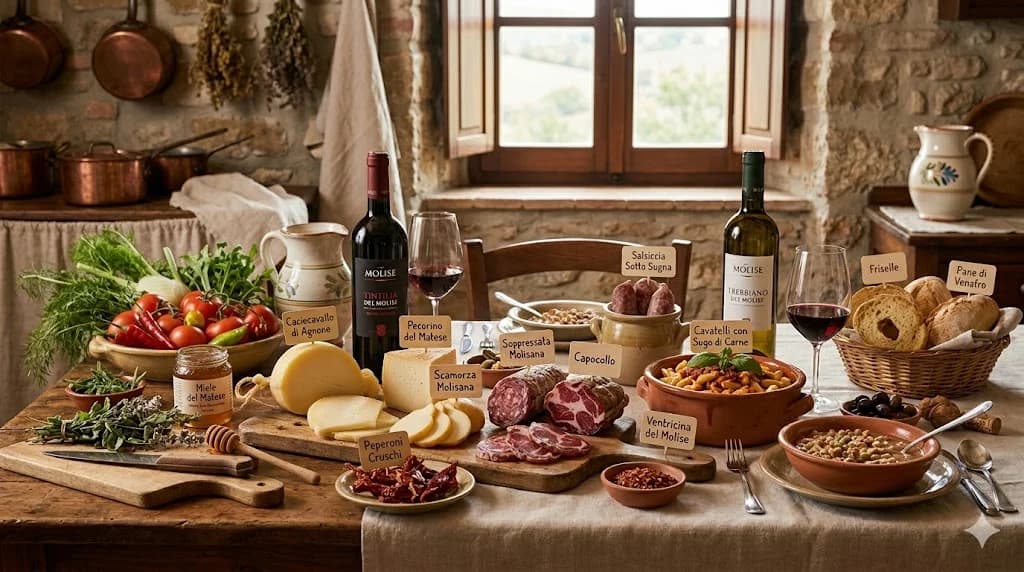
Caciocavallo molisano: stretched-curd cheese, aged even in caves, with intense and persistent flavor
Stracciata molisana: fresh and stringy cheese, typical of artisanal production
Ventricina molisana: spiced cured meat with coarse grain, different from the Abruzzese version for cut and processing
Soppressata molisana: traditional pork sausage of selected meat
Pampanella: pork meat spiced with chili pepper, vinegar and garlic, slowly cooked in the oven
Durum wheat bread: with thick crust and compact crumb, designed for long preservation
Molise extra virgin olive oil: medium fruity, balanced, often obtained from local cultivars
DOP, IGP and DOC products of Molise
DOP
Olio Extravergine di Oliva Molise DOP
Caciocavallo Silano DOP (also produced in suitable Molise areas)
DOC (wine)
Tintilia del Molise DOC (native grape variety recovered, regional enological symbol)
Biferno DOC (red, white and rosé)
Pentro d'Isernia DOC
PAT (Traditional Agri-food Products) relevant
Lenticchia di Capracotta
Cipolla di Isernia
Traditional Molise durum wheat bread
Typical Molise dishes
First courses of tradition
Cavatelli molisani: fresh pasta worked by hand, dressed with meat sauces or wild vegetables
Fusilli al ferretto: twisted pasta according to traditional technique, symbol of local craftsmanship
Lagane e ceci: ancient dish of rural origin, essential and nourishing
Legume and cereal soups: expression of rural winter cooking
Main courses and meat specialties
Pampanella molisana: spiced pork slowly cooked, typical of popular festivities
Pezzata di Capracotta: lamb stew linked to transhumance culture
Agnello alla brace: essential preparation that enhances the raw material
Scamorza alla griglia: stretched-curd cheese cooked directly on the embers
Molise seafood cuisine
Brodetto di Termoli: Adriatic fish soup with local varieties
Blue fish grilled or marinated: simple and linked to coastal fishing
Recommended insights (internal linking Wikicibo)
Recipe for traditional homemade cavatelli
Authentic preparation of pampanella molisana
Guide to fusilli al ferretto and artisanal pasta techniques
Fish brodetto: Italian regional variations
Peasant soups of Central Italy
Wines and typical beverages of Molise
Molise wines
Tintilia del Molise DOC: native red wine, recently rediscovered, with spicy notes and important structure
Biferno DOC: historic wine of the region, versatile and suitable for multiple pairings
Pentro d'Isernia DOC: limited production, linked to mountain viticulture
Traditional beverages
Liqueurs made from wild herbs (gentian, wild fennel)
Artisanal local bitters
Grappas obtained from regional pomace
Gastronomic production areas
Areas with food vocation
Upper Molise (Capracotta, Agnone)
Aged cheeses, sheep meat, mountain legumes.Campobasso area and inland
Fresh pasta, cured meats, traditional bread-making.Lower Molise and coast (Termoli)
Blue fish, fish soups, extra virgin olive oil.Biferno Valley
Wine production center for Tintilia and regional DOC.
Gastronomic traditions, festivals and events
Molise gastronomic culture is strongly linked to the community dimension.
Pampanella Festival (San Martino in Pensilis)
Pezzata Festival (Capracotta)
Cavatelli festivals in historic villages
New oil festivals in autumn months
Events linked to Tintilia harvest
These appointments represent a fundamental moment for the transmission of traditional Molise cuisine.
Curiosities about Molise cuisine
It is one of the least industrialized Italian regional cuisines
Many recipes vary from village to village while maintaining the same base
Homemade pasta is still a widespread practice in rural families
Ancient techniques such as drying and preservation are still used
How to taste Molise cuisine authentically
To fully experience Molise gastronomy:
Choose family trattorias and local agritourism
Follow the seasonality of products
Pair Tintilia and Biferno with meat and pasta dishes
Buy directly from local producers
Participate in festivals to learn about traditional preparations
Conclusion: why Molise cuisine is unique in Italy
The cuisine of Molise represents one of the most authentic expressions of Italian gastronomic tradition. Essential but rich in identity, it still preserves today a direct connection with the territory and the communities that produce it.
For those seeking authentic Italian typical products, historic regional recipes and non-standardized cuisine, Molise is one of the most interesting gastronomic destinations to rediscover.