
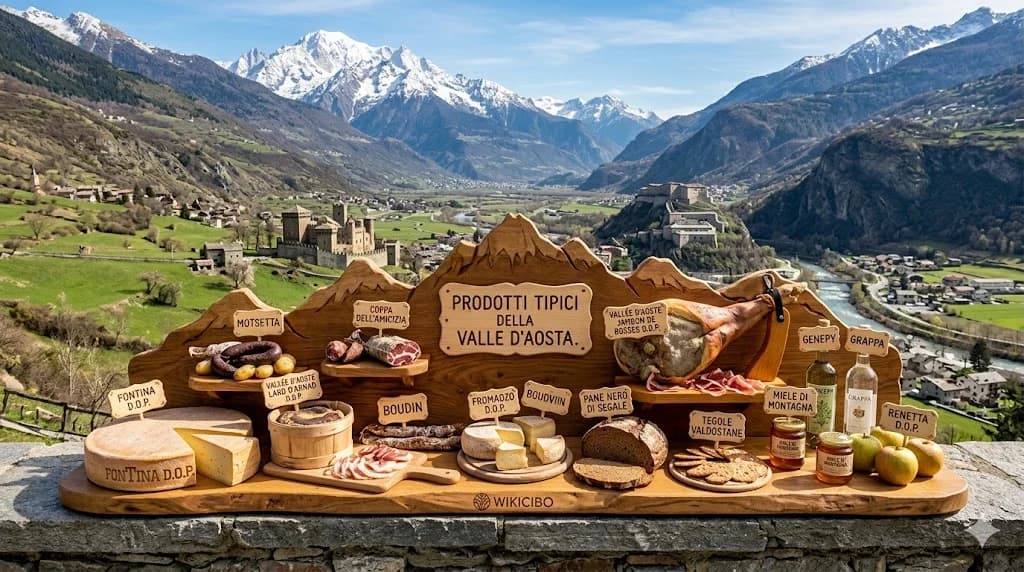
Aosta Valley
Definitive Guide to Valle d'Aosta Gastronomy
Introduction: mountain cuisine between identity and survival
Valle d'Aosta is the smallest Italian region, but also one of the most distinctive from a gastronomic point of view. Entirely mountainous, it develops between the peaks of Mont Blanc, Monte Rosa and the Matterhorn, in an environment that has imposed over the centuries a concrete, nourishing cuisine deeply rooted in the territory.
Here gastronomy is born from real needs: to preserve, nourish, survive. The result is a unique culinary tradition, where every product tells the story of alpine pasturing, livestock raising and direct relationship with nature.
Characteristics of Valdostana cuisine
Gastronomic identity
Valdostana cuisine is distinguished by:
Prevalent use of butter and animal fats
Centrality of alpine pasture cheeses
Techniques of traditional preservation
Caloric and substantial dishes
Fundamental raw materials
Raw cow's milk (Valdostana breed)
Rye and rustic cereals
Potatoes and vegetables resistant to cold
Alpine game
Wild mountain herbs
Typical products of Valle d'Aosta (encyclopedic repertoire)
Cheeses (alpine dairy system)
Fontina DOP
Whole raw milk, single milking, minimum aging of 80 days in natural caves. Sweet flavor, hazelnut notes. Use: fonduta, gnocchi alla bava.Fromadzo DOP
Also produced with partially skimmed milk; variable from fresh to aged. Alpine herb aromas, sometimes spiced.Toma di Gressoney
Semi-fat cheese, produced in alpine pasture, delicate and milky taste.Toma di Valgrisenche
More savory and intense, longer aging.Toma di Oyace
Aromatic, linked to high-altitude pastures.Toma di Allein
Typical of Gran San Bernardo, compact structure.Toma di Saint-Rhémy
Decisive aromatic profile, linked to alpine pastures.Reblec
Fresh, acidulous, consumed within a few days.Salignön
Preparation based on fresh cheese, salt, pepper, garlic and herbs.Séras
Valdostana ricotta, sweet and delicate.Brossa
Fermented product derived from whey, intense and pungent taste.Burro d'alpeggio
Rich in floral aromas, intense yellow color.
Cured meats and meat (art of alpine preservation)
Lardo di Arnad DOP
Aged in "doils" with rosemary, garlic and spices. Melting and aromatic.Jambon de Bosses DOP
Aging beyond 12 months, spiced with juniper and herbs.Motzetta
Dried beef or game meat, flavored with herbs.Boudin valdostano
Sausage with potatoes, beets and spices.Saouseusse
Aged sausages, often spiced.Mocetta di camoscio e stambecco
High-altitude versions, intense flavor.Prosciutto crudo di Saint-Rhémy
Carne salada valdostana
Game (deer, roe deer, chamois)
Bread, cereals and baked goods
Pane nero di segale
Made with rye and wheat, baked in community ovens once a year.Micoula
Sweet bread with chestnuts, figs and raisins.Rustic rye flatbreads
Alpine cereal crackers
Traditional sweets (often undervalued heritage)
Tegole valdostane
Thin crispy wafers with hazelnuts.Mécoulin
Leavened sweet with raisins, similar to a rustic panettone.Fiocca di Gressoney
Whipped cream served with chocolate.Crema di Cogne
Cream made with eggs, sugar and wine.Mountain apple cake
Rye biscuits
Zabaglione with local wine
Other food and agricultural products
Valdostana mountain honey
Varieties: rhododendron (prized), chestnut, alpine multifloral.Genepy (medicinal plant)
Alpine herbs (wild thyme, yarrow)
Mountain potatoes
Alpine cabbages
Traditional Valdostana dishes (gastronomic deepening)
Fonduta valdostana
Iconic preparation: Fontina melted with milk, butter and egg yolks. Creamy and enveloping.Polenta concia
Polenta enriched with butter and local cheeses.Seuppa Valpellinentze
Rye bread, cabbage and Fontina, gratinéed.Zuppa alla valdostana
Variant with broth and stale bread.Carbonade valdostana
Beef marinated in red wine and slowly cooked.Gnocchi alla bava
Crespelle alla valdostana
Risotto alla Fontina
Game civet
Ribs with savoy cabbage
Wines and typical beverages
Valle d'Aosta DOC
A single designation that includes several sub-zones:
Donnas – structured wines from local Nebbiolo
Enfer d'Arvier – intense and mineral reds
Torrette – among the most representative
Blanc de Morgex et de La Salle – high-altitude wines from Prié Blanc
Native grape varieties
Petit Rouge
Fumin (ideal with game)
Cornalin
Mayolet
Prié Blanc
Traditional beverages
Genepì
Caffè alla valdostana
Mountain grappa
Gastronomic zones and local productions
Valpelline: Fontina and soups
Gran San Bernardo: cured meats and dairy products
Lower Valley (Arnad, Donnas): lard and wines
Valtournenche: alpine pasture products
Gressoney and Ayas: Walser tradition
Traditions and gastronomic events
Fiera di Sant'Orso
Festa del Lardo di Arnad
Devétéya
Bataille de Reines
Gastronomic curiosities
Fontina is produced exclusively in Valle d'Aosta
Black bread was preserved for months
Genepì originated as a digestive remedy
Valdostana cuisine is among the most caloric in Italy
How to taste it best (experiential approach)
To truly experience Valdostana cuisine:
Taste Fontina in alpine pasture during summer
Pair Lardo di Arnad with honey and rye bread
Try fonduta in mountain refuges
Participate in local festivals
Taste wines directly from producers
Certified products
DOP
Fontina DOP
Fromadzo DOP
Lardo di Arnad DOP
Jambon de Bosses DOP
DOC
Valle d'Aosta DOC
PAT (main products)
Motzetta
Boudin
Micoula
Tegole valdostane
Mécoulin
Reblec
Salignön
Conclusion
The cuisine of Valle d'Aosta is one of the most distinctive in Italy: essential yet extraordinarily rich, born from necessity but become gastronomic excellence.