
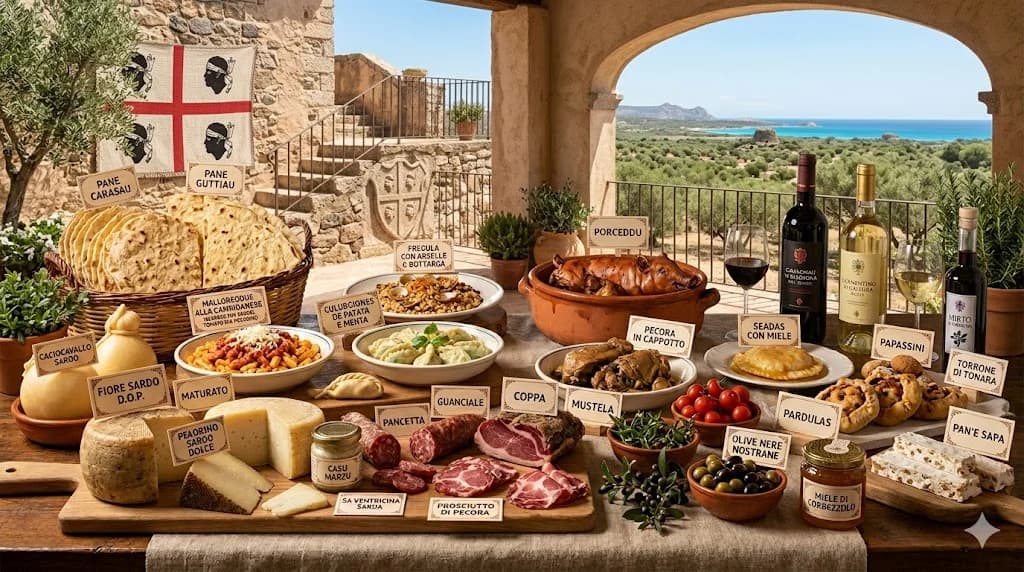
Sardinia
Cuisine of Sardinia: complete guide to regional gastronomy between pastoral tradition, sea and Mediterranean identity
Introduction to Sardinia: territory, identity and gastronomic culture
Sardinia is a unique island region in the Italian and Mediterranean panorama. Its geographical position, in the center of the western Mediterranean, and its historical isolation have favored the development of an autonomous gastronomic culture, deeply rooted in local traditions and only partially influenced by external dominations.
The territory is extremely varied: internal mountains like Gennargentu, Barbagia plateaus, Campidano plains and a coast among the most extensive and articulated in Italy. This diversity is reflected in a cuisine that alternates pastoral products from the interior and coastal fishing riches, while maintaining a strong identity thread.
Sardinian cuisine is one of the oldest and most recognizable in Italy, based on simplicity, seasonality and total valorization of raw materials.
Characteristics of Sardinian cuisine
Fundamental ingredients and gastronomic structure
The gastronomy of Sardinia is founded on a few essential elements, but of great quality and identity:
Pecorino Sardo and other ovine cheeses
ovine and porcine meat (porceddu and traditional processing)
durum wheat for bread and typical pasta
fish, mollusks and crustaceans along the coasts
pane carasau and derivatives of cereal tradition
spontaneous Mediterranean herbs and local aromas
Sardinian extra virgin olive oil
This cuisine is strongly linked to pastoral culture, which has shaped for centuries techniques of preservation, transformation and integral use of resources.
Historical roots and cultural identity
Sardinian cuisine preserves traces of the Nuragic civilization and subsequent Phoenician, Roman, Catalan and Aragonese influences. However, the region's strong geographical autonomy has allowed it to maintain a very coherent and recognizable gastronomic tradition.
Pastoralism is the heart of the Sardinian food system: cheeses, meats and bread still represent today the framework of regional cuisine.
Typical products of Sardinia (DOP, IGP and local excellences)
Sardinia is one of the Italian regions with the strongest agro-pastoral identity and a rich presence of certified products.
Main typical products
Pecorino Sardo DOP
Fiore Sardo DOP
Pecorino Romano DOP (also Sardinian production)
Carciofo Spinoso di Sardegna DOP
Agnello di Sardegna IGP
Bottarga di Muggine IGP
Pane Carasau (traditional heritage)
Sardinian extra virgin olive oil
Sardinian goat (traditional production)
Focus on the symbolic products of Sardinia
Pecorino Sardo DOP
Ovine cheese that is a symbol of Sardinian tradition, produced in various aging variants. The aromatic profile varies from sweet and delicate to intense and peppery with aging.
Bottarga di Muggine IGP
Considered one of the Mediterranean's gastronomic excellences, it is obtained from the drying of salted and pressed mullet eggs. It has an intense, savory and persistent flavor.
Pane Carasau
Also known as "carta da musica" (sheet music), it is a very thin and crispy bread from pastoral tradition. Born as a long-keeping food for shepherds during transhumance.
Traditional dishes of Sardinian cuisine
Sardinian cuisine is strongly linked to religious occasions, pastoral culture and seasonality.
Typical dishes
Malloreddus alla campidanese
Culurgiones ogliastrini
Porceddu sardo
Zuppa gallurese
Fregola con arselle
Pane frattau
Seadas
Agnello in umido
Dishes that are symbols of Sardinian tradition
Malloreddus alla campidanese
Semolina gnocchetti with sausage and tomato sauce, enriched with Pecorino Sardo. It is one of the most emblematic dishes of island cuisine.
Porceddu sardo
Suckling pig cooked slowly over a spit on aromatic wood coals. Absolute symbol of pastoral cuisine and major festive occasions.
Culurgiones ogliastrini
Filled pasta typical of Ogliastra, with potatoes, pecorino and mint. The ear-shaped closure represents a distinctive element of the artisanal tradition.
Wines and typical drinks of Sardinia
Sardinian viticulture is characterized by autochthonous varieties and a strong connection to the territory.
Main wines
Cannonau di Sardegna DOC
Vermentino di Gallura DOCG
Carignano del Sulcis DOC
Vernaccia di Oristano DOC
Monica di Sardegna DOC
Traditional beverages
distillates with spontaneous herbs
typical local liqueurs
sweet wines from autochthonous grapes
Gastronomic zones of Sardinia
Cuisine varies significantly among the different areas of the island:
Barbagia: pastoral culture and meats
Ogliastra: filled pasta and mountain traditions
Campidano: cereals, sausage and agricultural cuisine
Gallura: marine and Corsican influences
Coastal zones: fish, crustaceans and bottarga
Traditions, festivals and gastronomic events
Sardinian gastronomic culture is deeply linked to popular festivals and production cycles.
Main events
Sagra del Carciofo Spinoso di Sardegna DOP
Festa del Redentore (Nuoro) with gastronomic traditions
Sagre del porceddu throughout the territory
Events dedicated to bottarga di Cabras
Events related to Cannonau
Curiosities about Sardinian cuisine
Sardinia is one of the world's "Blue Zones" for longevity
Pane carasau originates as food for shepherds in transhumance
Cuisine varies greatly between interior and coasts
Many recipes have remained almost unchanged for centuries
Tips for tasting Sardinian cuisine
To live an authentic experience:
visit local farms and shepherds
taste cheeses in artisanal dairies
explore the villages of Barbagia and Ogliastra
participate in traditional festivals
pair dishes with Sardinian autochthonous wines
DOP, IGP and DOC products of Sardinia
DOP
Pecorino Sardo DOP
Fiore Sardo DOP
Carciofo Spinoso di Sardegna DOP
IGP
Agnello di Sardegna IGP
Bottarga di Muggine IGP
DOC / DOCG
Cannonau di Sardegna DOC
Vermentino di Gallura DOCG
Carignano del Sulcis DOC
Vernaccia di Oristano DOC
Monica di Sardegna DOC
Conclusion
The cuisine of Sardinia represents one of the most distinctive gastronomic systems of the Mediterranean, deeply linked to pastoral culture and the natural resources of the island. It is an essential cuisine but extremely rich in meaning, capable of telling the story of history, territory and tradition through a few fundamental ingredients and ancient techniques still alive today.