
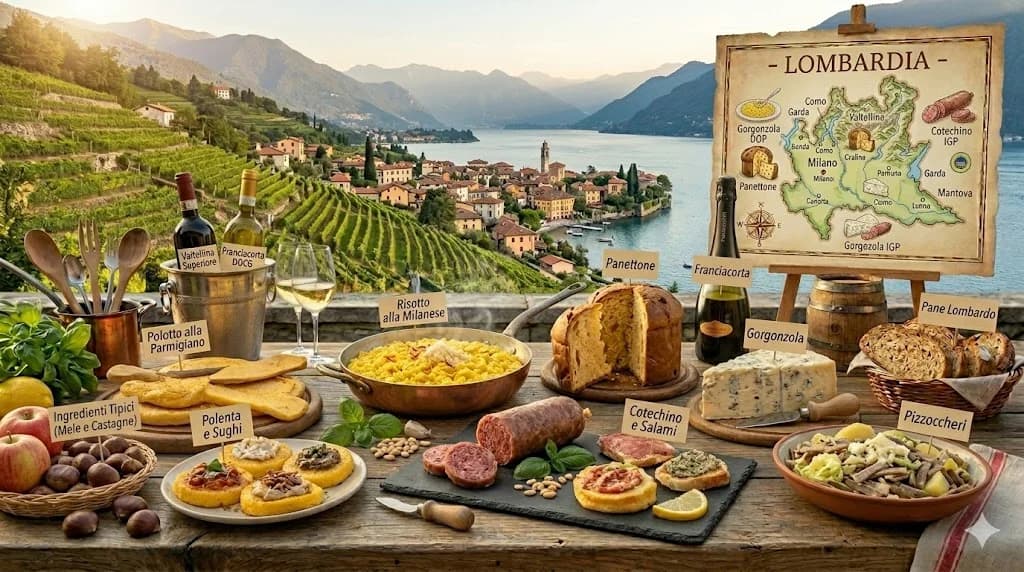
Lombardy
Lombardy: complete gastronomic guide between tradition, typical products and territories
Lombardy represents one of the beating hearts of Italian gastronomy: a region where history, geography and culture intertwine to create a rich, concrete and deeply identity-driven cuisine. From the Alpine ridges of Valtellina to the rice paddies of the Po Valley, each area guards products and recipes that tell the story of the territory.
Introduction to Lombardy: territory and gastronomic identity
Located in Northern Italy, Lombardy is an extremely varied region: mountains, lakes, hills and plains coexist in a unique balance. Cities like Milan have profoundly influenced the cultural and gastronomic development of the region, transforming it into a national point of reference.
The landscape is directly reflected in the cuisine:
Alps and Prealps: alpine cheeses, meats, substantial dishes
Po Valley: rice, corn, cattle and pig farming
Lake areas: freshwater fish
Characteristics of Lombard cuisine
Symbol ingredients
Rice (Lomellina, Pavia)
Corn (polenta)
Butter and dairy products
DOP cheeses
Beef and pork
Lake fish
Culinary identity
Lombard cuisine is:
Substantial and caloric, suited to cold climates
Rural and pragmatic, based on local ingredients
Influenced by foreign dominations, particularly Austrian ones
All typical products of Lombardy
DOP cheeses (absolute excellences)
Grana Padano
Gorgonzola
Taleggio
Quartirolo Lombardo
Provolone Valpadana
Bitto
Valtellina Casera
Strachitunt
Formai de Mut dell'Alta Valle Brembana
DOP and IGP cured meats
Bresaola della Valtellina IGP
Salame Brianza DOP
Salame Cremona IGP
Salame Mantovano
Mortadella di fegato
Agricultural products and IGP
Asparago di Cantello IGP
Melone Mantovano IGP
Olio del Garda DOP
Rice from Lomellina
Lombard honey
PAT (traditional) products
Violino di capra
Mostarda di Cremona
Mostarda mantovana
Polenta taragna
Polenta uncia
Polenta concia
Tortionata lodigiana
Amaretti di Saronno
Biscotti di Prosto
Pan de Mej
Bossolà
Spongada
Stracciatella (ice cream born in Bergamo)
Typical Lombard dishes: tradition at the table
First courses
Risotto alla milanese
Pizzoccheri della Valtellina
Casoncelli bergamaschi
Ravioli di zucca mantovani
Minestrone lombardo
Main courses
Ossobuco
Cassoeula
Brasato al Barolo (also widespread in western Lombardy)
Bollito misto
Luccio in salsa
Symbol dishes
Polenta (taragna, uncia, concia)
Mondeghili milanesi
Traditional desserts
Panettone
Colomba pasquale
Sbrisolona mantovana
Tortionata
Amaretti
Spongada
Lombard wines DOCG, DOC and IGT
DOCG
Franciacorta
Valtellina Superiore
Sforzato di Valtellina
Main DOC
Lugana
Oltrepò Pavese
San Colombano al Lambro
Other beverages
Amaro Braulio
Lombard grappa
Tradition of the Milanese aperitif
Gastronomic production areas
Valtellina: Bresaola della Valtellina, cheeses and alpine wines
Franciacorta: sparkling wines classic method
Oltrepò Pavese: wines and cured meats
Mantua: pumpkin, rice, desserts
Bergamo and Brescia: alpine cheeses
Lodi and Cremona: dairy products and mostardas
Traditions, festivals and gastronomic events
Festa del Torrone di Cremona
Sagra del Gorgonzola
Festival Franciacorta
Fiera del Riso
Sagre della polenta e dei formaggi alpini
These events represent a living cultural heritage, fundamental for the valorization of typical Lombard products.
Curiosities about Lombard cuisine
Butter dominates compared to oil
Risotto is one of the symbols of Milanese aristocratic cuisine
Polenta was the main food of the working classes
Panettone originated as a dessert of noble festivities
Tips for tasting Lombard products
To truly experience Lombard gastronomy:
Taste products in their territory of origin
Pair local cheeses and wines (e.g. Bitto and Valtellina Superiore)
Choose seasonality and tradition
Prefer farmstays, alpine huts and local producers
Discover the local variants of the same dishes
Insights and useful links
For a complete experience on Wikicibo:
Traditional Lombard recipes (risottos, polenta, braised meats)
Detailed sheets of DOP cheeses
Guides to Lombard wines
Insights into the cuisine of Valtellina and the Po Valley
Conclusion
Lombard gastronomy is a journey between different but complementary territories: a concrete, rich and deeply history-linked cuisine. From the great DOP cheeses to iconic dishes like Risotto alla milanese, every taste tells a tradition that continues to evolve without losing authenticity.
If you wish, in the next step I can:
create Wikicibo product sheets (one for each Lombard excellence)
or transform this guide into SEO cluster with related articles and keyword strategy
WIKICIBO STYLE, ENRICHED WITH INFORMATION AND PRODUCTS version 10/10 SEO
Lombardy: complete gastronomic guide between typical products, traditions and territories
Lombardy is one of the richest Italian regions from a gastronomic point of view, a true mosaic of flavors built over the centuries thanks to the variety of the territory and historical influences. From the Alpine peaks of Valtellina to the rice paddies of the Po Valley, to major urban centers like Milan, each area contributes to defining an identity-driven, concrete and deeply raw material-linked cuisine.
This guide in Wikicibo 10/10 SEO style offers a complete, in-depth and structured overview of Lombard gastronomy, with a focus on typical products, denominations, dishes and traditions.
Territory and gastronomic identity of Lombardy
Lombardy presents extraordinary geographical diversity:
Alps and Prealps: pastures, alpine huts, alpine cheeses
Lakes (such as Lake Garda and Lake Como): freshwater fishing, olive cultivation
Po Valley: cereals, livestock, dairy production
This variety is directly reflected in a cuisine that changes profoundly from area to area, while maintaining common elements: use of butter, valorization of rice, great cheese-making tradition.
Characteristics of Lombard cuisine
Distinctive elements
Prevalent use of butter compared to oil
Wide use of rice and corn
Cheese-making tradition among the most important in Europe
Caloric dishes, designed for cold climates
Strong link with seasonality and territory
Historical influences
Austro-Hungarian domination (risottos, cooking techniques)
Rural culture (polenta, soups, boiled meats)
Monastic and noble tradition (desserts and complex preparations)
Typical products of Lombardy (DOP, IGP, PAT)
DOP cheeses (excellence heritage)
Lombardy is the Italian region with the largest number of DOP cheeses:
Grana Padano
Gorgonzola
Taleggio
Quartirolo Lombardo
Provolone Valpadana
Bitto
Valtellina Casera
Strachitunt
Formai de Mut dell'Alta Valle Brembana
Insight: these cheeses represent different production techniques, from raw milk alpine pasture (Bitto) to natural blueing (Gorgonzola).
Cured meats and typical meats
Bresaola della Valtellina IGP
Salame Brianza DOP
Salame Cremona IGP
Salame Mantovano
Violino di capra (PAT)
Mortadella di fegato (rural tradition)
Agricultural products and earth products
Rice from Lomellina (basis of Italian rice-growing)
Melone Mantovano IGP
Asparago di Cantello IGP
Olio del Garda DOP
Lombard honey (multifloral varieties, chestnut, acacia)
Mantuan pumpkin
Traditional products (PAT and local specialties)
Mostarda di Cremona
Mostarda mantovana
Polenta taragna
Polenta uncia
Polenta concia
Pan de Mej
Spongada
Bossolà
Biscotti di Prosto
Stracciatella (ice cream born in Bergamo)
Tortionata lodigiana
Sbrisolona mantovana
Typical Lombard dishes
First courses of symbol
Risotto alla milanese: rice, saffron and marrow
Pizzoccheri della Valtellina: buckwheat, cabbage, potatoes and cheeses
Casoncelli bergamaschi: traditional filled pasta
Ravioli di zucca mantovani
Minestrone lombardo
Traditional main courses
Ossobuco with gremolata
Cassoeula: cabbage and pork meat
Brasato in red wine
Bollito misto
Luccio in salsa
Iconic and popular dishes
Polenta (in all variants)
Mondeghili (Milanese meatballs)
Traditional Lombard desserts
Panettone
Colomba pasquale
Sbrisolona mantovana
Amaretti di Saronno
Tortionata
Spongada
Lombard wines DOCG, DOC and IGT
DOCG denominations
Franciacorta DOCG
Valtellina Superiore DOCG
Sforzato di Valtellina DOCG
DOC and relevant areas
Lugana DOC
Oltrepò Pavese DOC
San Colombano al Lambro DOC
Traditional beverages
Amaro Braulio
Lombard grappa
Culture of the Milanese aperitif
Gastronomic zones of Lombardy
Valtellina
Bresaola della Valtellina
Pizzoccheri, Bitto, alpine wines
Franciacorta
Production of sparkling wines classic method
Oltrepò Pavese
Wines and cured meats
Mantua
Rice, pumpkin, desserts (sbrisolona)
Bergamo and Brescia
Alpine cheeses, polenta