
Guide·Sagre·Fiere·Mercati·Degustazioni
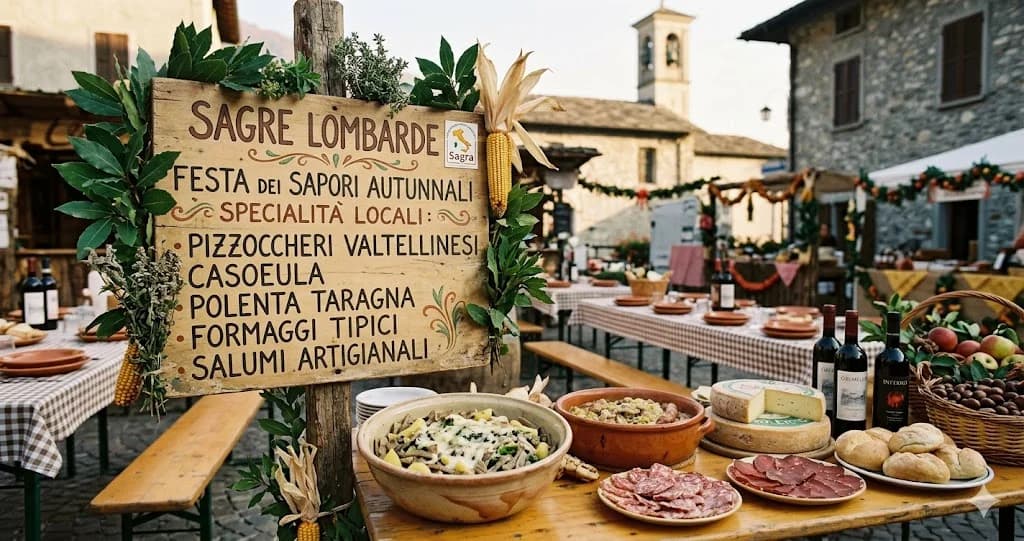
Walking through the markets of Lombardy means crossing a region that has never ceased to be a crossroads. Here the voices of sellers mingle with those of buyers, the seasons dictate the stalls and each province carries with it a precise character: the rice from Lomellina, the cheeses from Valtellina, the cured meats from Brianza, the aromatic herbs from the lakes. This guide accompanies the reader through the main Lombard markets, from major city retailers to small village markets, with practical tools to navigate, seize the right moment and distinguish what is worthwhile from the superfluous.
Lombardy is the Italian region with the highest concentration of commercial and agribusiness activities, but its markets are not limited to this numerical primacy. Every provincial capital has a deep-rooted market tradition: Milan with its historic neighborhood markets like Piazza Mercato and the more recent and lively Porta Romana market; Bergamo with its weekly market in Città Bassa; Brescia with the Loggia market; Mantua with its Monday squares laden with products from the Gonzaga territory. Alongside urban markets, there is a capillary network of weekly appointments in small towns, often tied to specific local production.
The logic governing these spaces is seasonal rather than geographical. Those who frequent Lombard markets quickly learn that quality does not depend on the physical location but on the ability to read the agricultural calendar: cold months bring roots, aged cheeses and game; summer fills the stalls with tomatoes, zucchini and peaches; autumn is the time for chestnuts, mushrooms from the Preappennines and grapes from the Colli Mantovani. Understanding this rhythm is the first step to navigating a Lombard market with full knowledge.
January Winter markets offer seasonal root vegetables such as turnips, Jerusalem artichokes and parsnips, along with long-aged cheeses like historic Bitto and Branzi. In the plains markets, the last reserves of Mantuan squash can still be found.
February A month poor in fresh production but rich in processed goods: cured meats, sausages, lardo and pancetta appear in large quantities in the markets of Brianza and Lecchese. In the foothill areas, the first wild herbs such as dandelion arrive.
March The arrival of asparagus marks the awakening of Lombard markets. Those of Cantello and Oltrepò Pavese are among the most appreciated. Spring herbs also appear, along with wild hop shoots.
April A period of abundance for white and green asparagus. The markets of Mezzago and Cilavegna come alive with the first strawberries. Fresh alpine cheeses can still be found descending from the mountain pastures.
May The first zucchini and peas arrive. The markets of Mantuan begin to offer early melon. In the lakes, smoked lavarello and dried missoltino are found.
June The stalls fill with cherries from Basso Milanese and apricots from Pavese. Lake fish, shad and perch in the foreground, reach the markets of Como and Verbano.
July Tomatoes, eggplants and peppers fill every corner. The Mantua market is particularly lively with melons from Sermide. In the Alpine markets of Valtellina, fresh summer cheeses are found.
August A month of slowdown for urban markets, but those of lake villages remain active. It is the best time to buy local figs and plums from Brescia.
September Autumn begins with the grape harvest: in the markets of Franciacorta and Oltrepò you can find table grapes. Porcini mushrooms come down from the forests of Valcamonica and Lecchese.
October Chestnuts and walnuts in the foreground. New rice arrives from Lomellina and the bordering Vercellese. The autumn markets of Vigevano and Pavia offer Carnaroli and Vialone varieties just threshed.
November The month of truffles: the prized white truffle appears in the markets of Pavese. Potatoes from Ribera and those local to Valchiavenna fill the sacks. Hard-paste cheeses of new production begin to appear.
December Christmas markets combine gastronomic offerings with artisanal ones. In traditional markets you can find fresh cotechino, capons from Morosolo and artisanal pandori from Brescia bakeries.
A Lombard market is better understood if you return to it several times, in the same place, in different seasons. The vegetable vendor's stall in Mantua that overflows with melons in July and displays the last squashes of the season in October tells a story of the territory that no guide can fully replace. The most practical advice that can be given is simple: choose a market close to you, visit it regularly throughout the four seasons and learn to recognize the faces of the producers who really care. From there, everything else follows naturally.