
Guide·Sagre·Fiere·Mercati·Degustazioni
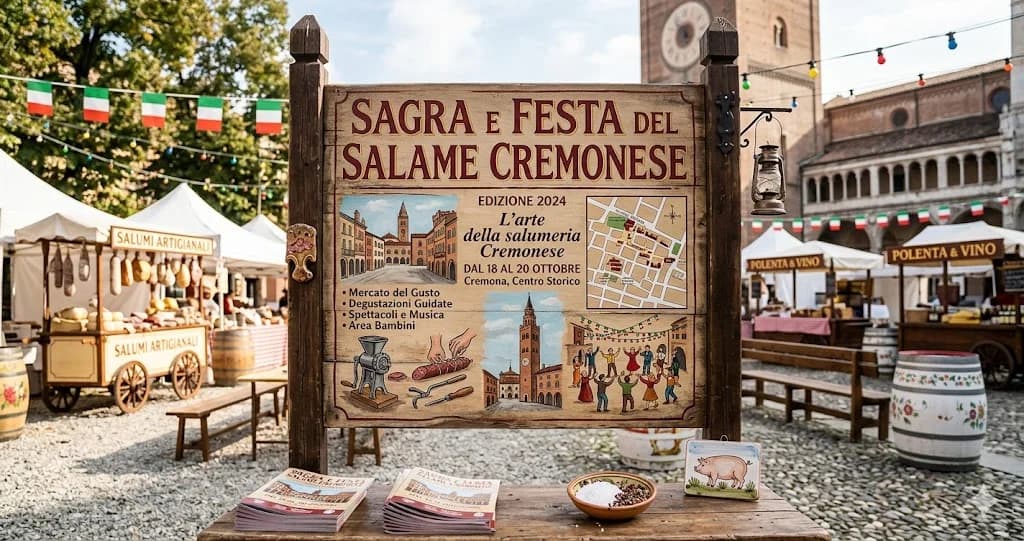
In the plains stretching between the Po and the Prealps, and along the shores of the lakes that dot the Lombard landscape, food markets and fairs tell the story of a region that has never stopped grappling with its own complexity. Not a single cuisine, but a constellation of traditions: the rice from the Novarese paddies at the border with Lomellina, the cheeses of the Bergamo valleys, the cured meats of the Bassa, the lake fish that still arrives today in wooden crates along the riverbanks. This guide accompanies the reader through the fairs and markets that, season after season, keep that heritage alive.
Lombardy is the Italian region with the highest number of recognized designations of origin in the dairy sector, and its plains safeguard some of Europe's most complex agri-food supply chains. Yet, alongside major commercial circuits, a capillary network of weekly markets, patron saint festivals and seasonal events survives, restoring food to its dimension of local exchange and territorial identity.
From the fairs of the Fiera di Sant'Alessandro in Bergamo, among the most ancient in the region, to the lake fish markets such as those in Desenzano del Garda or Lecco, passing through the events dedicated to Varzi salame or the wines of Oltrepò Pavese, the Lombard calendar offers opportunities to meet with producers, breeders and artisans of food distributed throughout the year. It is not just a matter of where to buy, but of how to read a territory through what it brings to the marketplace.
January and February Winter is the time for cured meats and aged cheeses. In the towns of Bassa bresciana and the Lomellina, small fairs dedicated to traditional norcineria are held, with exhibitions and sales of cotechini, salami da pentola and lardo. The winter markets of Cremona keep alive the tradition of mostacci and artisanal torronieri.
March and April With the first warm days, spring fairs dedicated to fresh cheeses open: young Taleggio, crescenza, goat cheeses from the pre-Alpine valleys. The market in Lodi comes back to life with dairy products from the Po Valley, while in the towns around Lake Como and Lake Maggiore the first fish market stalls are set up, featuring agone, lavarello and persico.
May May is the month of asparagus and wild herbs. The Asparagus Fair of Cilavegna, in the Pavia province, is among the most anticipated events of the season. On Lake Garda, the markets of Desenzano offer the first carpione and products from Garda horticulture, such as the lemons from the lemon groves of Gargnano.
June and July Summer brings to the squares the products of Po Valley fruit and vegetable cultivation: melons from Mantua, tomatoes from Cremona, strawberries from the Prealps. The evening markets of Mantova, on summer Fridays, come alive with local productions and small winemakers from Oltrepò. On Lake Iseo the traditional Sagra del Tinca al Forno of Clusane is held, a significant event for lake cuisine.
August The quietest month for producer fairs, but the lakeside markets remain active. In Lugano and Varese informal fish fairs are held. In the Bergamo valleys the alpine pasture fairs begin, with the descent of shepherds and summer cheeses.
September September is the heart of autumn fairs. The Fair of Sant'Alessandro in Bergamo, among the most significant historical events in the region, welcomes producers from across the province. In Mantova the Festival della Letteratura brings Gonzaga flavors to the squares: tortelli di zucca, mostarda, sbrisolona.
October The month of rice and wine. Risotto festivals multiply from the Lomellina to the Bassa milanese, with varieties such as Carnaroli and Vialone Nano from Pavia. In Franciacorta open cellars and sparkling wine tastings of classic method are held.
November and December Christmas markets occupy the squares of Brescia, Como and Bergamo, with a significant presence of artisanal producers of cheeses, honey, jams and traditional sweets like artisanal panettone. The Fair of Sant'Ambrogio in Milan, on December 7th, closes the year's cycle with an exhibition that also includes Lombard gastronomic presidia.
Exploring the markets and fairs of Lombardy requires a certain willingness to venture beyond already-known circuits. The most interesting product is rarely found at the largest stand or at the most publicized fair: often it is in a town in the Bassa, displayed by a producer who comes there once a month. Keep an eye on municipal calendars, talk to stallholders, ask uncomfortable questions about provenance. This is how a complex region like this truly reveals itself, one purchase at a time.