
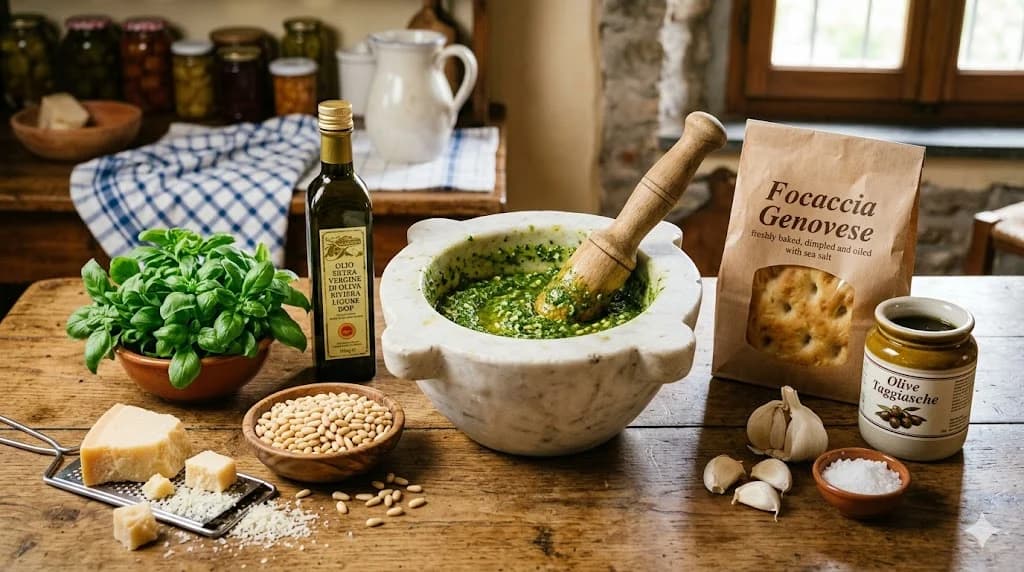
Tempo di preparazione: 20 minuti
Tempo di cottura: 0 minuti
Difficoltà: media
Porzioni: 4 persone
Ingredienti
50 g di foglie di basilico fresco (preferibilmente basilico genovese DOP)
30 g di pinoli
60 g di Parmigiano Reggiano grattugiato
20 g di Pecorino stagionato grattugiato
1 spicchio d’aglio
100 ml di olio extravergine di oliva
1 pizzico di sale grosso
Preparation
Gently wash the basil leaves in cold water and wipe them dry with a cloth, avoiding crushing them.
In a marble mortar, crush the garlic with the coarse salt until you get a cream.
Add the basil leaves a little at a time, beating with rotary movements until a homogeneous green paste is obtained.
Combine the pine nuts and continue working the mixture until it is creamy.
Stir in the grated cheeses, stirring gently.
Pour the extra virgin olive oil flush, amalgamating until a fluid consistency is obtained and velvety.
Use immediately or transfer to a storage container.
Chef's Tips
Avoid the blender, if possible: the blades heat the basil, oxidising it and altering its flavour.
Do not wash basil under running water body too strong not to ruin its leaves.
Use delicate extra virgin olive oil, so as not to cover the scent of basil.
Do not overdo it with garlic: it must be present but not dominant.
If using a mixer, work in short pulses and add an ice cube to maintain color.
Traditional Ligurian
Introduction
The intense scent of fresh basil, the creaminess of pine nuts and the flavour of aged cheeses: Genoese pesto is much more than just a sauce, it is a symbol of Liguria that contains tradition, territory and simplicity. Preparing it correctly means respecting an ancient ritual, made of slow gestures and ingredients of the highest quality.
Description of the dish
The Genoese pesto was born in Liguria, particularly in the city of Genoa, where the basil grows lushly thanks to the mild climate and the sea breeze. It is a raw, uncooked sauce, characterized by a bright green color and a fresh and aromatic taste. Traditionally it is used to season trofie, trenette or lasagna, and is a typical dish of the spring and summer months, when basil is at its best.
Recipe variants
Fast variant
Preparation with a blender, ideal when you have little time, paying attention not to overheat give the ingredients.
Garlic-free variant
Perfect for those who want a more delicate taste or have difficulty digesting.
Ligurian variant with walnuts
In some homemade versions, pine nuts are replaced with walnuts, for a more rustic flavour.
Recommended pairings
The pesto goes perfectly with:
Fresh and aromatic Ligurian white wines such as Vermentino or Pigato
Slightly sparkling water to cleanse the palate
Simple side dishes such as boiled potatoes and green beans, often served along with pasta with pesto
Storage
The Genoese pesto is preserved:
In the refrigerator for 2-3 days, covered with a layer of extra virgin olive oil
In the freezer for up to 1 month, preferably in small single-portion containers
Indicative nutritional values (per serving)
Calories: about 250-300 kcal
Fat: 25 g
Protein: 6 g
Carbohydrates: 3 g
Values may vary depending on the amount of oil and cheeses used.
Curiosity and history
The term "pesto" comes from the verb "pestare", or crushing in the mortar, a fundamental technique for this recipe. The origins date back to the nineteenth century, but probably derive from older sauces such as the medieval allied sauce. Even today, in Genoa, there is a real world pesto al mortar championship, where this gastronomic excellence is celebrated according to the most authentic tradition.