
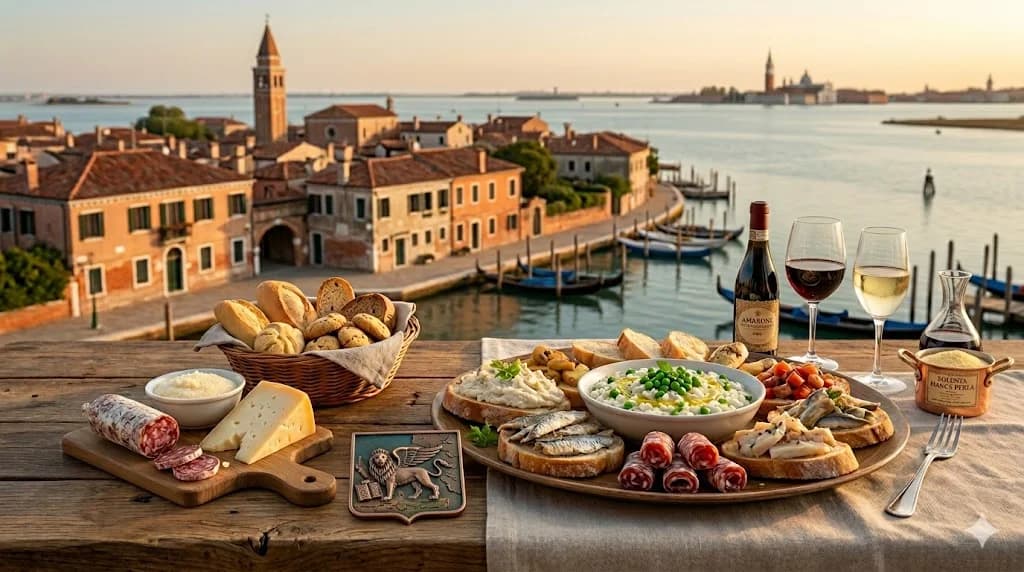
Veneto
Veneto: complete gastronomic guide between tradition, territory and culinary identity
Introduction to Veneto: a region between land, water and mountains
Veneto is a complex and stratified region, where very diverse landscapes coexist within a few kilometers: the Dolomites to the north, the central agricultural plain, the vine-covered hills and the lagoon of Venice opening onto the Adriatic. This geographic variety has generated one of Italy's most articulate regional cuisines, capable of expressing different identities even within the same province.
Venetian gastronomic culture is the result of a balance between two souls: that of the Most Serene Republic of Venice, refined and open to international exchanges, and that of the countryside and rural hinterland, based on simple ingredients, food preservation and rigorous seasonality.
Characteristics of Venetian cuisine: essentiality, memory and territory
Venetian cuisine is distinguished by strong practicality: few ingredients, slow processing, great attention to product quality.
Cardinal ingredients of tradition
Corn, the base of polenta in all its variations
Rice, protagonist especially in the plain between Verona, Rovigo and Padua
Sea and lagoon fish, with historic preservation techniques
Pork, used in cured meats and rustic preparations
Bitter and seasonal vegetables, such as radicchio and wild greens
Alpine dairy cheeses, linked to mountain production
Oil and butter, with variable use between coast and inland
The legacy of the Serene Republic
The Republic of Venice profoundly influenced regional cuisine, not only through the spice trade, but also with a true culture of taste: sweet and savory coexist, sweet and sour becomes a stylistic signature, and preserved fish assumes a central role in popular diet.
Typical products of Veneto: agricultural identities and historic specialties
Cheeses and cured meats
Asiago DOP: symbol product of the Altopiano dei Sette Comuni, available in fresh and aged versions, with very different aromatic profiles
Monte Veronese DOP: cow's cheese from the Veronese mountains, linked to Alpine cheese-making tradition
Sopressa Vicentina DOP: aged cured meat, emblematic of Vicentine peasant culture, often linked to rural festivals
Vegetables and produce from the land
Radicchio Rosso di Treviso IGP: winter vegetable with typical bitter note, protagonist of seasonal cuisine
Radicchio di Chioggia IGP: more compact and sweet variety, widespread in the south of the region
Fagiolo di Lamon della Vallata Bellunese IGP: high-altitude legume with delicate flavor and creamy structure
Rice and cereals
Riso Vialone Nano Veronese IGP: essential for preparing Venetian risottos, thanks to its ability to absorb condiments while maintaining consistency
Lagoon and sea products
Moeche: small crab from the Venetian lagoon, consumed only during the molting phase, considered a true seasonal delicacy
Baccalà (dried cod): central element of Venetian cuisine, symbol of preservation and Nordic trade
Traditional Venetian dishes: popular memory and territorial cuisine
Iconic dishes of tradition
Baccalà alla vicentina: iconic dish of the city of Vicenza, born from the meeting between Nordic preservation technique and Mediterranean cuisine; slow cooking with milk, onions and anchovies
Risi e bisi: typical Venetian spring preparation, halfway between risotto and soup, historically served to the Doge
Bigoli in salsa: rustic pasta dressed with stewed onions and anchovies, perfect example of poor cuisine transformed into regional identity
Fegato alla veneziana: dish of the lagoon tradition, where the sweetness of onion balances the intensity of liver
Sarde in saor: sweet and sour preparation born as a preservation method for fish during long voyages
Risotto al tastasal: rice combined with spiced pork, typical of the Verona hinterland
Pastissada de caval: ancient Veronese stew, linked to medieval traditions and the need for meat recovery
Polenta e osei: symbolic dish of mountain areas, today also reinterpreted in sweet version in pastry
Wines and beverages of Veneto: one of Italy's most important wine regions
Veneto represents one of the cardinal regions of Italian viticulture, with production ranging from sparkling wines to structured reds, to mineral whites.
Wines symbolizing the territory
Prosecco: the region's most international expression, produced between the hills of Conegliano and Valdobbiadene, characterized by freshness and aromaticity
Amarone della Valpolicella: structured wine obtained from withered grapes, symbol of the Veronese area
Valpolicella: versatile and everyday wine, base also of the Ripasso type
Soave: elegant and mineral white, linked to volcanic soils of the Verona area
Tai Rosso: iconic grape variety of the Colli Berici, authentic expression of Vicentine viticulture
Traditional beverages
Venetian grappa, historically linked to rural distillation
Herbal liqueurs from the Alps
Sweet wines and meditation wines in hilly areas
Gastronomic zones of Veneto: a culinary mosaic
Venice and lagoon: seafaring cuisine, fish preservation, sweet and sour and spices
Treviso: capital of radicchio and central area of Prosecco
Verona: great enological tradition and meat cuisine
Vicenza: home of baccalà alla vicentina and sopressa
Padua: agricultural cuisine and plain risottos
Rovigo and Polesine: rice, freshwater fish and horticulture
Belluno: Alpine cuisine, alpine dairy cheeses and game
Traditions, festivals and gastronomic events
The Venetian calendar is rich with events linked to seasonal products and local identities:
Vinitaly (Verona): international event dedicated to wine
Festa del Radicchio Rosso di Treviso IGP: celebration of the winter vegetable
Sagra del Baccalà di Sandrigo: identity event dedicated to baccalà alla vicentina
Festa dell'Uva in Valpolicella: celebration of the harvest and wine culture
Alpine festivals: dedicated to cheeses, mushrooms and polenta in the Venetian Dolomites
Curiosities about Venetian cuisine
In Veneto, the term "baccalà" traditionally indicates dried cod and not salt-cured cod
Many dishes are born from preservation needs, rather than refined gastronomic research
Sweet and sour is one of the historic signatures of Venetian cuisine
Rice has often replaced pasta as the base food in many areas of the region
Some dishes today considered gourmet were originally poor peasant or seafaring cuisine
How to best taste Venetian cuisine
Pair white wines like Soave and Prosecco with fish dishes and delicate appetizers
Use Amarone or Valpolicella for red meats, stews and structured preparations
Consume baccalà alla vicentina with soft polenta to respect the original tradition
Favor seasonal products and local festivals to understand cuisine in its real context
Visit wineries, dairies and producers to read the direct link between territory and flavor
DOP, IGP, DOC and DOCG designations of Veneto
DOP
Asiago DOP
Monte Veronese DOP
Sopressa Vicentina DOP
IGP
Radicchio Rosso di Treviso IGP
Radicchio di Chioggia IGP
Riso Vialone Nano Veronese IGP
Fagiolo di Lamon della Vallata Bellunese IGP
DOC / DOCG
Prosecco
Amarone della Valpolicella
Valpolicella
Soave
Bardolino DOC
Colli Euganei DOC
Final editorial synthesis
Venetian cuisine is one of Italy's most stratified: it is born from necessity, evolves through trade and consolidates in territorial identity. It is a cuisine that tells the story of a region without ever separating the dish from the landscape, and which still today preserves a rare balance between popular memory and contemporary gastronomic recognition.