
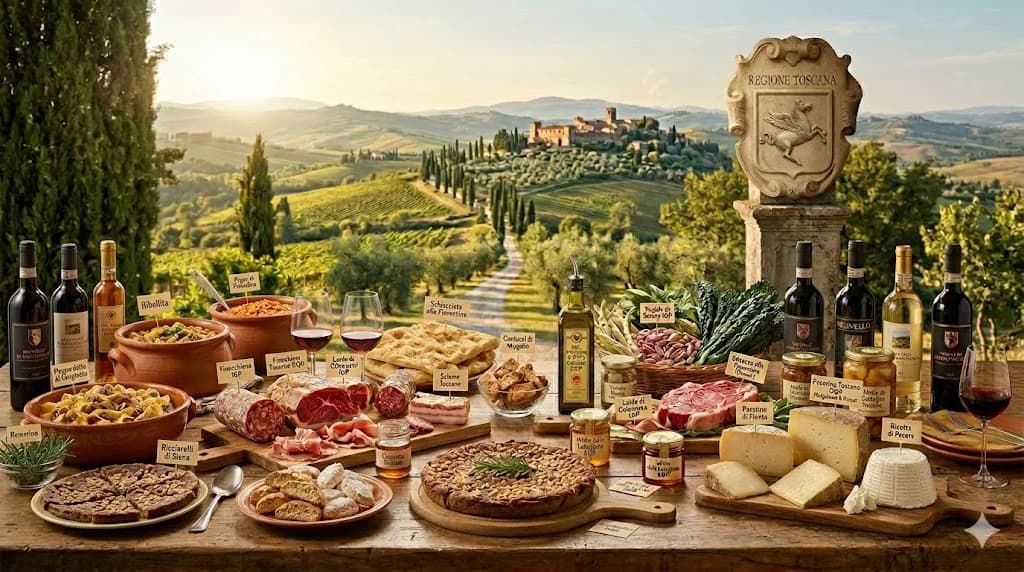
Tuscany
Tuscany: complete guide to regional cuisine, typical DOP products and gastronomic traditions
Tuscany is one of the most iconic regions of Italian gastronomy, a territory where cuisine is born from the balance between rural simplicity, excellence of raw materials and great wine culture. Its culinary identity is immediately recognizable: few ingredients, essential techniques and a deep connection with the territory.
From art cities like Florence and Siena to the coasts of Livorno and the villages of Val d'Orcia, Tuscan cuisine represents a gastronomic heritage among the most important in Italy.
Territory and gastronomic identity of Tuscany
The geographical variety of Tuscany directly influences its cuisine:
Tuscan-Emilian Apennines: mountain cuisine, chestnuts and rustic soups
Chianti hills: wine culture and grilled meat
Val d'Orcia: pastoral tradition and Pecorino Toscano
Maremma: game, wild boar and rural cuisine
Tyrrhenian coast: humble fish and seafood soups
This diversity has generated a coherent but deeply territorial regional gastronomy.
Characteristics of Tuscan cuisine
Tuscan cuisine is defined by an essential approach, where the quality of ingredients is central.
Principles of regional cuisine
valorization of local raw materials
limited use of complex condiments
rural tradition and waste reduction
centrality of unsalted Tuscan bread
slow cooking and recovery recipes
Typical ingredients
Tuscan extra virgin olive oil IGP
Chianina breed meat
Legumes (cannellini and zolfini beans)
Pecorino Toscano DOP
Pane Toscano DOP
Local game and pork
Mediterranean aromatic herbs
Typical Tuscan products (DOP, IGP, DOCG)
Tuscany is one of the Italian regions with the greatest number of certified excellences.
DOP and IGP cheeses and cured meats
Pecorino Toscano DOP
Sheep's milk cheese produced in various areas of the region, fresh or aged
Prosciutto Toscano DOP
Aged prosciutto with a savory and aromatic flavor
Finocchiona IGP
Typical cured meat flavored with wild fennel, symbol of Tuscan pork butchery
Baked goods and pastry tradition
Pane Toscano DOP
Unsalted bread, fundamental base of regional cuisine
Cantuccini di Prato IGP
Dry almond biscuits typical of Prato, traditionally paired with Vin Santo
Oil and condiments
Olio Toscano IGP
Fruity extra virgin oil, slightly peppery and very balanced
Typical dishes of Tuscan cuisine
Tuscan gastronomy is deeply linked to popular cuisine and the tradition of recovery.
First courses and soups
Ribollita
Rural soup made with black cabbage, legumes and stale bread
Pappa al pomodoro
Simple and iconic dish with tomato, bread and basil
Panzanella
Summer salad of stale bread, tomato and onion
Pici all'aglione
Rustic pasta from Val d'Orcia with garlic sauce
Main courses and iconic dishes
Bistecca alla fiorentina
Cut of Chianina breed meat cooked on the grill, symbol of Florence
Cacciucco alla livornese
Fish soup typical of the Livorno coast
Trippa alla fiorentina
Historical preparation of popular cuisine
Cinghiale in umido
Specialty of Maremma
Wines and typical beverages of Tuscany
Tuscany is one of the most prestigious wine regions in the world.
Main DOCG and DOC wines
Chianti DOCG
Iconic wine of the hills between Florence and Siena
Brunello di Montalcino DOCG
Structured wine produced in Montalcino
Vino Nobile di Montepulciano DOCG
Historic red wine produced in Montepulciano
Vernaccia di San Gimignano DOCG
Historic white wine produced in San Gimignano
Bolgheri DOC
Structured red wines from the Livorno coast
Traditional beverages
Vin Santo toscano
Artisanal grappa
Local herb liqueurs
Gastronomic zones of Tuscany
Chianti area
structured red wine
grilled meat
high quality extra virgin oil
Val d'Orcia
pastoral cuisine
pici and Pecorino Toscano
authentic agricultural tradition
Maremma
wild boar and game
rural cuisine
Etruscan and rural influences
Tyrrhenian coast
humble seafood cuisine
fish soups
maritime tradition
Apennines and Garfagnana
chestnuts and rustic flours
soups and winter dishes
mountain cuisine
Traditions, festivals and gastronomic events
Tuscany is strongly linked to popular traditions and local celebrations.
Palio of Siena with strong local gastronomic identity
Wild boar festivals in Maremma
Truffle fairs in inland areas
Wine events in Chianti and Montalcino
New oil celebrations in autumn
Curiosities about Tuscan cuisine
Unsalted bread originates from ancient historical disputes over salt trade
Bistecca alla fiorentina is tied to Medici tradition
Many dishes were born as rural recovery cuisine
Vin Santo is traditionally paired with cantucci
There is a strong gastronomic difference between coast and inland areas
Tips for tasting Tuscan cuisine
To fully experience regional gastronomy:
taste bistecca alla fiorentina in historic trattorias
pair typical dishes with Chianti, Brunello or Bolgheri
visit wineries and villages of Val d'Orcia
taste cacciucco in Livorno taverns
try new oil on Pane Toscano DOP
end the meal with cantucci and Vin Santo
Conclusion
Tuscany represents one of the most authentic expressions of Italian cuisine: essential, territorial and deeply rooted in rural culture. Each dish reflects a balance between simplicity and identity, while its DOP and DOCG products tell the story of a territory among the most prestigious in the world.
From the pastries of Prato to the wines of Montalcino, from bistecca fiorentina to the flavors of Maremma, Tuscany offers a complete, coherent and recognizable gastronomic heritage in every corner of the world.