
Apulia
Cuisine of Puglia: a complete guide to regional gastronomy between tradition, typical products and wines
Introduction: Puglia and its Mediterranean gastronomic identity
Puglia is one of the Italian regions that best represents the essence of the Mediterranean diet. Located between the Adriatic Sea and the Ionian Sea, it is characterized by an extraordinary variety of landscapes: stretches of centuries-old olive groves, hard wheat fields, jagged coastlines and historic centers strongly tied to peasant and maritime traditions.
This combination has given rise to a unique gastronomic culture, based on essential ingredients, seasonality and strong continuity with food practices of the past. Apulian cuisine is not merely culinary tradition, but a true cultural system that unites history, territory and social identity.
Characteristics of Apulian cuisine
Fundamental ingredients and gastronomic structure
Apulian cuisine is founded on a simple but extremely coherent base:
hard wheat, the central element for bread and fresh pasta
extra virgin olive oil, the region's identifying symbol
wild and cultivated vegetables (turnip greens, chicory, cardoncelli)
legumes (fava beans, chickpeas, lentils)
blue fish, shellfish and seafood
fresh dairy products and traditional pastoral cheeses
This structure does not represent gastronomic poverty, but a culture of the territory based on balance between natural availability and culinary creativity.
Historical roots and Mediterranean influences
Apulian cuisine is the result of complex historical stratification that includes Greek, Roman, Byzantine, Norman and Aragonese influences. These dominions left evident traces in preservation techniques, in the management of raw materials and in gastronomic combinations.
The use of olive oil, vegetable preserves and wild herbs represents a historical continuity that connects contemporary cuisine to its Mediterranean origins.
Typical Apulian products (DOP, IGP and local excellences)
Puglia is one of the Italian regions with the highest concentration of certified products, a direct expression of the agricultural and cultural biodiversity of the territory.
Main DOP and IGP products
Pane di Altamura DOP
Burrata di Andria IGP
Extra virgin olive oil Terra di Bari DOP
Canestrato Pugliese DOP
Caciocavallo Silano DOP
Lenticchia di Altamura IGP
Carciofo Brindisino IGP
Uva di Puglia IGP
Focus on Puglia's signature products
Pane di Altamura DOP
Historic product of the Apulian cereal tradition, made with reground durum wheat semolina and mother yeast. It is recognizable by its thick and fragrant crust and its long natural shelf life, a fundamental characteristic in rural economies of the past.
Burrata di Andria IGP
Fresh stretched-curd cheese with a soft heart of stracciatella and cream. It originates as a milk recovery technique and establishes itself as one of the most internationally recognized Italian dairy products.
Apulian extra virgin olive oil
Central element of the regional gastronomic culture, obtained from native cultivars such as Coratina, Ogliarola and Peranzana. It presents an intense sensory profile, with bitter and spicy notes and a high richness of polyphenols.
Typical dishes of Apulian cuisine
The regional culinary tradition develops mainly in domestic and peasant contexts, with recipes passed down orally and strongly tied to seasonality.
Traditional Apulian dishes
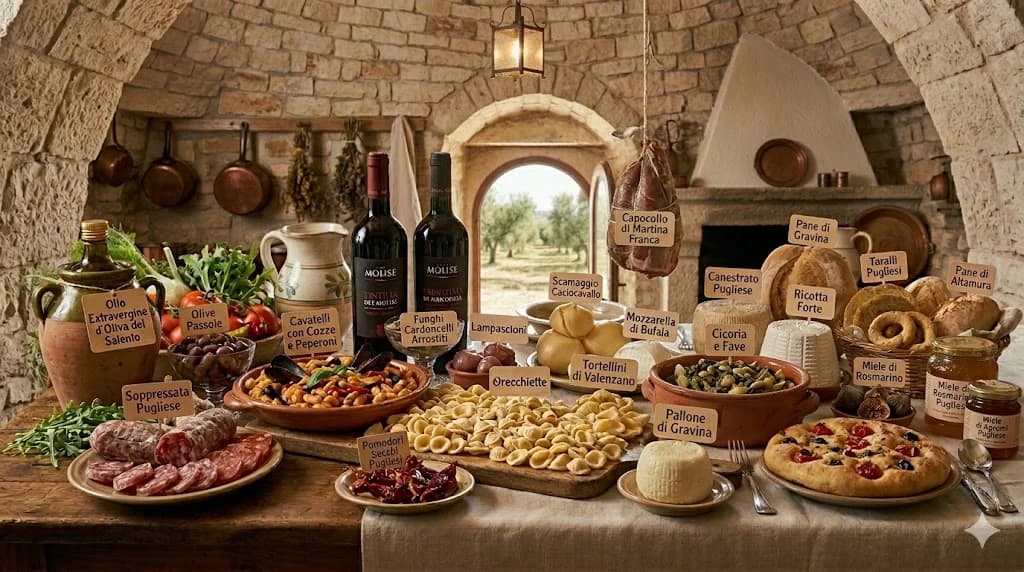
orecchiette with turnip greens
Fava beans and chicory
Tiella barese (rice, potatoes and mussels)
focaccia barese
Panzerotti pugliesi
Bombette della Valle d'Itria
Stuffed mussels
Acquasale
Signature dishes of tradition
orecchiette with turnip greens
Iconic dish of central Puglia, particularly of the Bari area. Freshly made handcrafted pasta is combined with vegetables with a bitter taste, often completed with anchovies and extra virgin olive oil.
Tiella barese
Baked preparation that unites rice, potatoes and mussels. It is one of the finest examples of fusion between peasant cuisine and maritime culture.
focaccia barese
Baked product symbol of Apulian street food, characterized by soft dough, cherry tomatoes and olives. Widespread throughout the region with numerous local variations.
Typical Apulian wines and beverages
Puglia is one of the main Italian wine-producing regions, with extensive production strongly tied to its territories.
Main Apulian wines
Primitivo di Manduria DOC
Negroamaro Salento IGP
Nero di Troia DOCG
Salice Salentino DOC
Castel del Monte DOCG
These wines express the strong identity of the territory, combining structure, aromatic intensity and connection with the Mediterranean climate.
Traditional beverages
almond milk (typical of Salento)
artisanal liqueurs with citrus fruits and wild herbs
local digestive bitters
Gastronomic zones of Puglia
Apulian cuisine varies significantly based on geographic areas:
Gargano and Daunia: cereals, bread and rural cuisine
Terra di Bari: oil, focaccia and maritime tradition
Valle d'Itria: dairy products and typical meats
Murgia: legumes and hard wheat
Salento: Mediterranean cuisine and great red wines
Traditions, festivals and gastronomic events
Festivals represent a fundamental element of Apulian gastronomic culture, tools for transmission of traditions and valorization of local products.
Main events
Burrata festival in Andria
Festa della focaccia barese
Octopus festival in Mola di Bari
Wine events in Salento
Fresh pasta festivals in historic towns
Curiosities about Apulian cuisine
The consumption of raw fish in Bari is a deeply rooted historical tradition
orecchiette are still handmade in historic centers
Bread was identified by family marks impressed before baking
Apulian cuisine is one of the highest expressions of the Mediterranean diet
Tips for tasting Apulian cuisine
To experience an authentic experience:
visit farmhouses and agritourisms in rural territory
taste extra virgin olive oil directly in oil mills
explore local markets and artisanal shops
pair regional wines with typical dishes
prioritize seasonal products and short supply chains
Conclusion
Apulian cuisine represents one of the most coherent and characteristic gastronomic systems in Italy, built on a balance between territory, seasonality and material culture. Its strength lies in its ability to transform essential ingredients into a complex culinary heritage, symbol of Mediterranean tradition and food culture of Southern Italy.