
Calabria
Calabrian cuisine: a complete guide to regional gastronomy between Mediterranean identity, typical products and wines
Introduction to Calabria: territory, identity and gastronomic culture
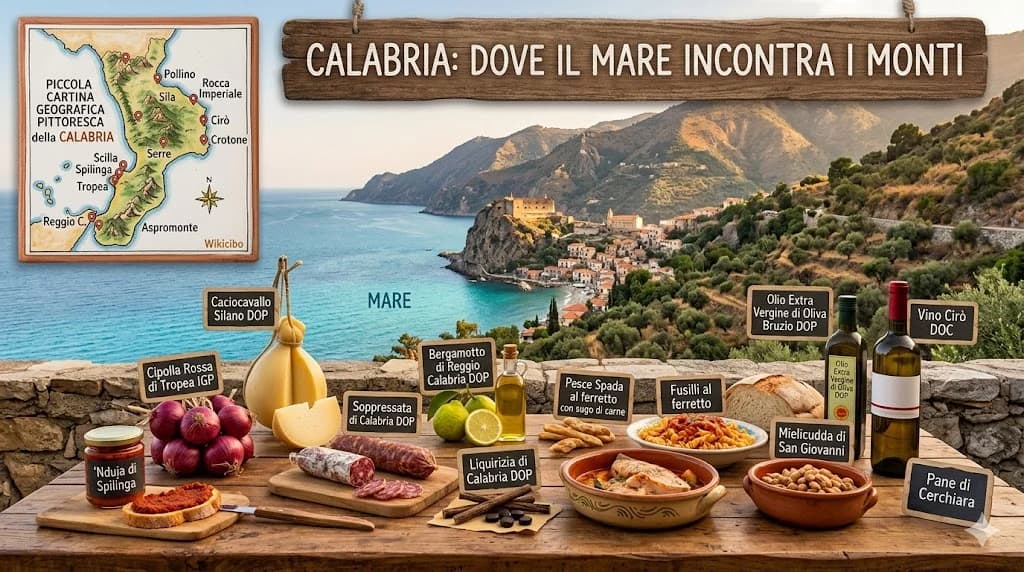
Calabria occupies the southern end of the Italian peninsula and is surrounded by the Tyrrhenian Sea and the Ionian Sea. Its territory is dominated by mountain ranges such as Aspromonte, Sila and Pollino, alternating with extended coasts and fertile plains. This strong geographical variety has generated, over the centuries, an extremely diverse gastronomic culture deeply linked to micro-territories.
Calabrian cuisine is one of the most authentic expressions of the Mediterranean food tradition of Southern Italy. It is a cuisine of identity, intense in flavours and strongly rooted in peasant and pastoral culture, in which the preservation of food and the full use of raw materials are central elements.
Characteristics of Calabrian cuisine
Essential ingredients and gastronomic structure
The kitchen of Calabria is based on a set of essential but highly recognisable ingredients:
Calabrian chilli pepper, identity symbol and distinctive element
pork, protagonist of traditional cured meats and preserves
extra virgin olive oil, the basis of daily cooking
Mediterranean vegetables such as Tropea red onion, aubergines and peppers
oily fish and inshore fishery products
durum wheat and flours for pasta and traditional bread
This structure reflects a gastronomic culture of peasant origin, in which the preservation and processing of food was fundamental such for survival.
Historical roots and cultural influences
Calabrian cuisine is the result of a complex historical stratification, which includes influences from Magna Graecia, the Byzantine period and the Norman and Aragonese dominations. The Greek-Mediterranean tradition is still evident in the use of olive oil, aromatic herbs and meat processing techniques.
Conservation practices such as drying, salting and inoil have allowed the development of a stable and distinctive cuisine.
Typical products of Calabria (PDO, PGI and local excellences)
Calabria boasts an agri-food heritage of great value, strongly linked to the territories and artisanal productions.
Main typical products
Red Onion of Tropea Calabria PGI
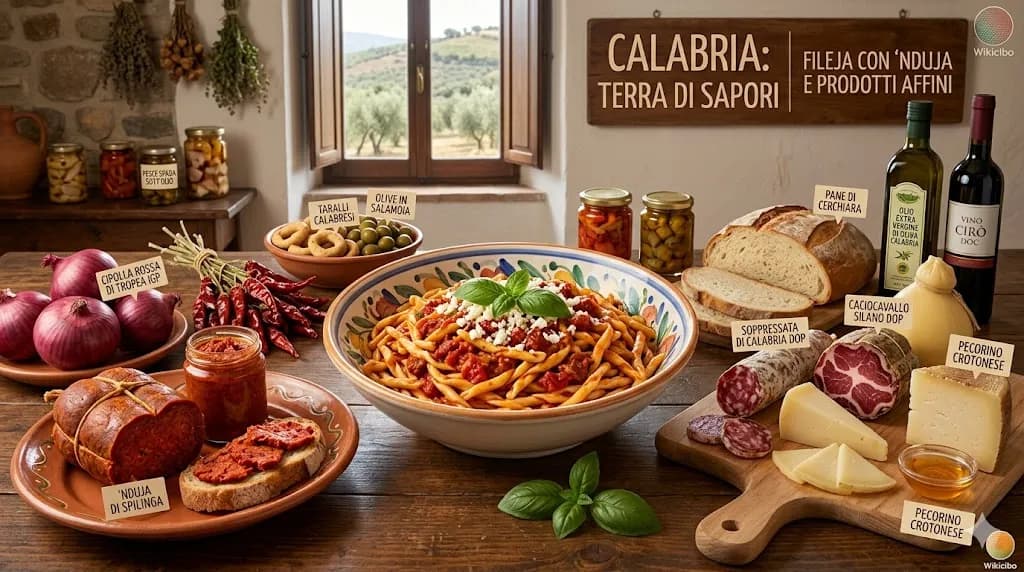
‘Nduja of Spilinga
Bergamot of Reggio Calabria PGI
Pecorino Crotonese PDO
Caciocavallo Silano PDO
Liquorice of Calabria PDO
Calabrian sausage and sausage
Calabrian chilli (dried, powdered and preserved)
Focus on the symbolic products of Calabria
Red Onion of Tropea Calabria PGI
One of the most internationally recognized products, characterized by natural sweetness and high digestibility. It is used both fresh and processed into jams and preserves.
‘Nduja of Spilinga
Soft and spreadable sausage based on pork and abundant Calabrian chilli. It is one of the most representative products of the spicy regional cuisine and peasant tradition of the Monte Poro area.
Bergamot of Reggio Calabria PGI
Citrus unique in the world for its aromatic characteristics and composition of essential oils. It is used in gastronomy, liquor and perfumery.
Traditional dishes of Calabrian cuisine
Calabrian cuisine is strongly linked to domestic tradition, with simple recipes but with a strong character.
Typical dishes
File with ‘nduja
Maccaruni al ferretto
Ponds and chickpeas
Silane pasta
Calabrian-style stuffed aubergines
Traditional pepper
Mamolese-style stock
Tropea red onion omelette
Symbolic dishes of Calabrian tradition
File with ‘nduja
Fresh pasta typical of Calabria, handmade and seasoned with spicy‘nduja. It perfectly represents the balance between peasant tradition and modern identity of regional cuisine.
Maccaruni al ferretto
Fresh pasta handmade with a thin metallic iron, widespread in many inland areas of the region. It is traditionally seasoned with meat sauces or long sauce.
Mamolese-style stock
Typical dish of the mountain area, based on stockfish. It represents the adaptation of Calabrian cuisine to preserved products and the need for long-lasting food.
Wines and drinks typical of Calabria
Calabria has an ancient wine-growing tradition, linked to Magna Graecia and the hilly and coastal territories.
Main wines
Cirò DOC
Greco di Bianco DOC
Melissa DOC
Bivongi DOC
Savuto DOC
These wines stand out for their structure, flavour and strong link with the Mediterranean territory.
Traditional drinks
bergamot liqueurs
bitter with local herbs
traditional sweet wines from native grapes
Gastronomic areas of Calabria
The calabrian cuisine varies significantly according to different geographical areas:
Sila: pastoral tradition, cheeses and potatoes
Aspromonte: cured meats and pork
Pollino: rural cuisine and legumes
Tyrrhenian coast: fish, citrus and vegetables
Ionian Coast: wines and Mediterranean agriculture
Traditions, festivals and gastronomic events
Festivals are a central element of Calabrian gastronomic culture and an important tool for enhancing local products.
Main events
‘Nduja Festival in Spilinga
Diamond Chilli Festival
Tropea Red Onion Festival
Bergamot events in Reggio Calabria
Cirò DOC Wine Festivals
Curiosity about the CUC ina calabrese
The chilli pepper is considered a true regional identity symbol
Many cured meats are traditionally preserved in lard or oil
Calabrian cuisine is among the hottest in Italy
Preservation techniques derive from the Greek tradition- mediterranean
Tips for tasting Calabrian cuisine
For an authentic experience:
visit local villages and farms
taste cured meats directly from artisan producers
participate at the traditional festivals of the area
pair dishes with local DOC wines
favour seasonal and short-chain
PDO, PGI and Doc products from Calabria
PDO
Pecorino Croto nESE PDO
Liquorice of Calabria PDO
Caciocavallo Silano PDO
PGI
Red Onion of Tropea Calabria PGI
Bergamot of Reggio Calabria PGI
DOC
Cirò DOC
Greco di Bianco DOC
Melissa DOC
Bivongi DOC
Savuto DOC
Conclusion
La cu calabrian China represents a strongly identitarian gastronomic system, in which peasant and seafaring traditions are intertwined in a unique balance. It is an intense cuisine, historically layered and deeply linked to the territory, capable of transforming simple ingredients into a cultural heritage recognized nationally and internationally.