
Basilicata
Basilicata cuisine: a complete guide to regional gastronomy among peasant tradition, typical products and wines
Introduction to Basilicata: territory, identity and gastronomic culture
Basilicata is a region of southern Italy characterized by a predominantly mountainous and hilly territory, including the Lucanian Apennines, the Vulture massif and the Ionian coast. This geographical conformation, combined with a historical fragmentation of the inhabited centres, has favoured the development of a gastronomic culture that is strongly autonomous and linked to local resources.
Lucanian cuisine is one of the most authentic expressions of the peasant tradition of Southern Italy. It is an essential cuisine in ingredients, but extremely rich from a cultural point of view: it tells the story of rural communities that have built their identity through wheat, legumes, breeding and conservation techniques handed down for generations.
Characteristics of Lucanian cuisine
Fundamental ingredients and gastronomic identity < /span>
Basilicata cuisine is based on a few key ingredients, deeply linked to the territory:
durum wheat, bread base and fresh homemade pasta
legumes, especially chickpeas, beans and lentils
crusco pepper, an absolute symbol of Lucanian gastronomy
<
li>spontaneous vegetables and seasonal vegetables
local extra virgin olive oil
sheepmeat and pork, often processed in traditional cured meats
This structure reflects a food culture based on self-sufficiency, in which every element is valued and transformed without waste. n>
Peasant tradition and historical stratification
Lucanian cuisine retains traces of Greco-Roman and medieval influences, but is distinguished above all by its strong rural matrix. Techniques such as drying, maturing and storage in oil have made it possible to adapt to an often difficult and isolated territory.
The result is a cuisine that is not born from luxury, but from necessity, transformed over time into cultural heritage.
Typical products of Basilicata (PDO, PGI and local excellences)
La Ba silicate has a strongly identitarian agri-food heritage, linked to small-scale and high quality productions.
Main typical products
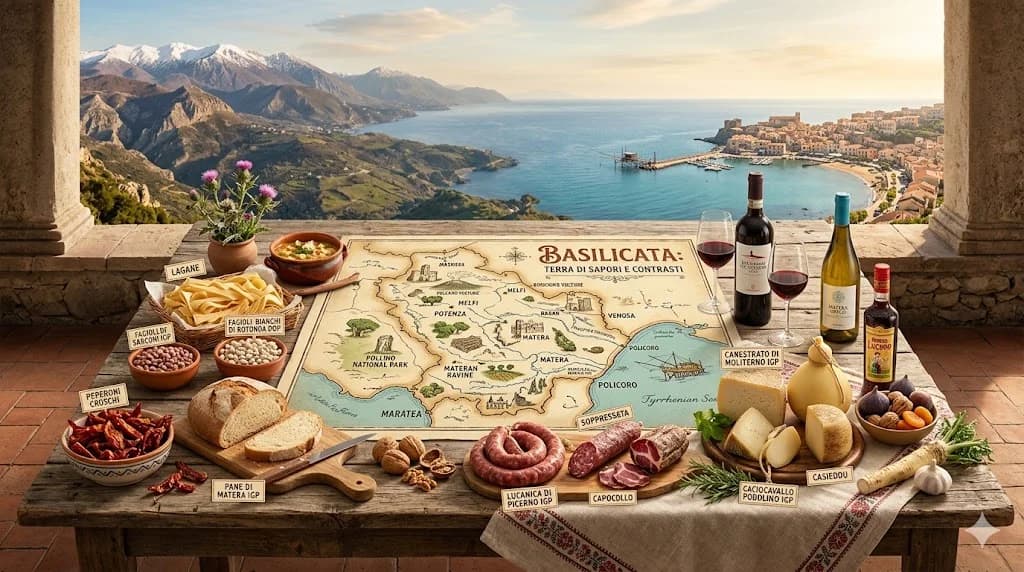
Senise pepper PGI
Sarconi Bean PGI
Red Eggplant from Rotonda PDO
Matera bread PGI
Aglianico del Vulture DOCG
Pecorino di Filiano PDO
Canestrato di Moliterno PGI
Lucanian sausage (crisp and seasoned)
Focus on Basili's iconic products
tasting Senise pepper PGI (raw pepper)
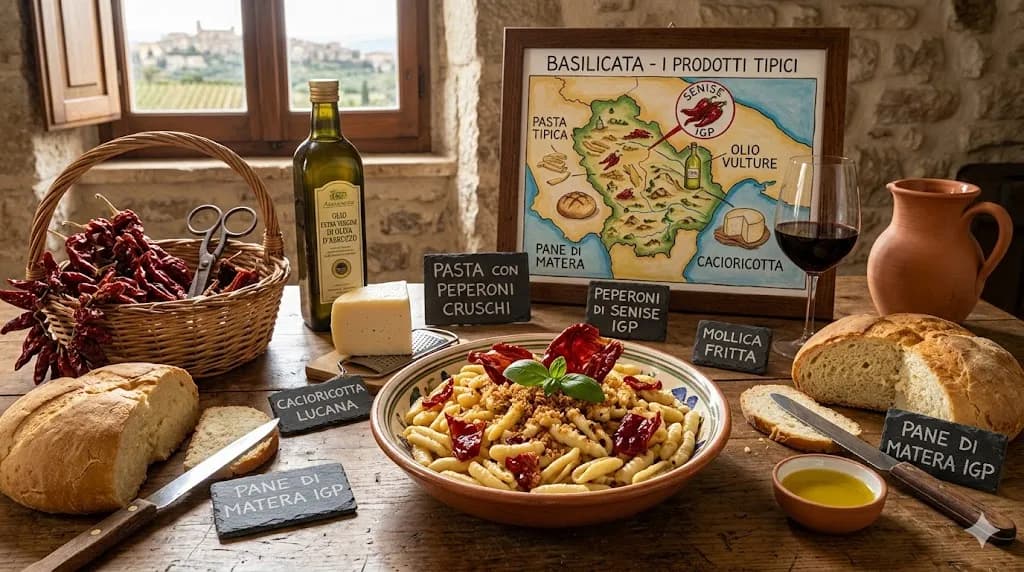
Senise pepper is one of the most recognizable symbols of Lucanian cuisine. Dried naturally and often fried, it becomes "crusco", characterised by a crunchy texture and a sweet and intense flavour. It is a central ingredient in numerous regional recipes.
Pane di Matera PGI
A symbol of the Lucanian cereal tradition, made with durum wheat semolina and sourdough. It stands out for its characteristic shape and long shelf life, a fundamental quality in peasant food culture.
Aglianico del Vulture DOCG
One of the great red wines of Southern Italy, it was born on volcanic soils on the slopes of Monte Vulture. It is a structured, long-lived and complex wine with a strong territorial identity.
Traditional dishes of Lucanian cuisine
Lucanian gastronomy is deeply linked to domestic and pastoral cuisine, with recipes handed down orally and linked to seasonal cycles.
Typical dishes
Pasta with bran peppers
Ponds and chickpeas
Cavatelli with Lucanian sauce
Matera
crawlerLucanian
horseradishLamb stew
Raisinpeppers with eggs
Lucanian sausage with potatoes
Traditional dishes
Pasta with raisin peppers
One of the most representative dishes of Basilicata. The pasta is seasoned with fried dried peppers, which give it crunchiness and an unmistakable sweet flavour.
Ponds and chickpeas
Ancient dish of the peasant tradition, prepared with fresh pasta similar to noodles and legumes. It is a perfect example of essential, nutritious and deeply identifying cuisine.
Matera
crawlerTraditional soup made from legumes and cereals, a symbol of Matera's cuisine. Historically linked to the end of the harvest, it represents a moment of community sharing.
Wines and drinks typical of Basilicata
Lucanian wine production is strongly concentrated in the Vulture area, a territory of volcanic origin.
Main wines
Aglianico del Vulture DOCG
Matera DOC
Grottino di Roccanova DOC
Terre dell 'Alta Val d 'Agri DOC
These wines are distinguished by their structure, minerality and strong bond with the territory.
Traditional drinks
herbal liqueurs local digestive infusions sweet wines from native grapes
Gastronomic areas of Basilicata
Lucanian cuisine varies according to the different territorial contexts:
Vulture: great red wines and volcanic agriculture
Materano: legumes, durum wheat and peasant cuisine
Pollino: pastoral tradition and sheepmeat
Metapontino: vegetables, fruit and coastal Mediterranean cuisine
Traditions, festivals and gastronomic events
Festivals represent a fundamental element of Lucanian gastronomic culture and are closely linked to agricultural cycles and village life.
Main events
Sagra del peperone crusco in Senise
Bread Festival of Matera
Fiesta della crapiata materana
Legume festivals in Sarconi and Rotonda
Food and wine events in Vulture
Curiosities about Lucanian cuisine
The crusco pepper is considered one of the gastronomic symbols of she region
Many dishes derive from the tradition of transhumance
Matera bread is among the most recognizable historic breads in Italy
Lucanian cuisine is among the most conservative of the Mediterranean tradition
Tips for tasting Lucanian cuisine
For an authentic experience:
visit the historic villages of Matera and Vulture
taste products directly in the mills and farms
participate in traditional local festivals
match the dishes with Agli wines anico del Vulture
choose seasonal and short-chain
PDO, PGI, Doc products from Basilicata
PDO
Red Eggplant from Rotonda PDO
Pecorino di Filiano PDO
PGI
Senise pepper PGI
Sarconi Bean PGI
Pane di Matera PGI
Canestrato di Moliterno PGI
DOC / DOCG
Aglianico del Vulture DOCG
Matera DOC
Grottino di Roccanova DOC
Conclusion
The cuisine of Basilicata represents one of the most authentic gastronomic systems in Southern Italy, deeply and linked to the territory and peasant culture. Its strength lies in its ability to transform simple ingredients into a complex identity heritage, capable of telling history, community and Mediterranean tradition.