
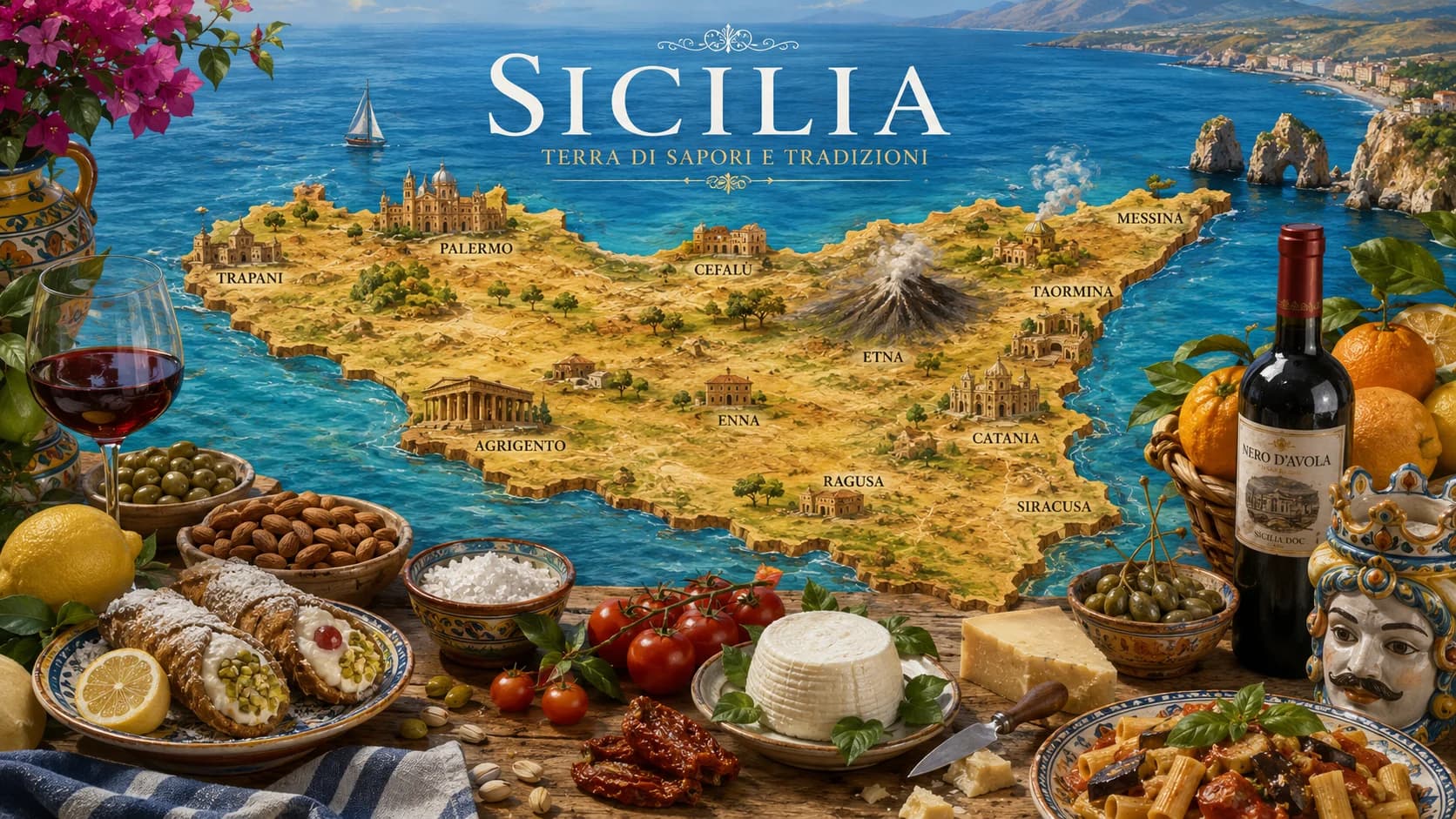
Sicily
Sicilian cuisine: a complete guide to regional gastronomy between the Mediterranean, history and gastronomic identity
Introduction to Sicily: territory, identity and gastronomic culture
Sicily, the largest island in the Mediterranean, is a unique region for its variety of landscapes and cultural stratification. Its strategic position has made the island, over the centuries, a crossroads of civilizations: Greeks, Romans, Arabs, Normans, Spaniards and French have helped to define not only the historical identity, but also the gastronomic one.
Sicilian cuisine is one of the richest and most recognizable in Italy. It is not a uniform culinary system, but a set of local traditions that vary from province to province, while maintaining a common thread: the meeting between land and sea, sweet and salty, peasant simplicity and historical refinement.
Characteristics of Sicilian cuisine
Fundamental ingredients and gastronomic structure an>
Sicilian cuisine is distinguished by the variety and expressive power of the ingredients, often linked to historical crops and local productions:
Sicilian citrus fruits (red oranges, lemons, mandarins, cedars)
durum wheat for pasta and traditional bread
oily fish, tuna and fruits seafood
Mediterranean vegetables (aubergines, tomatoes, wild fennel)
dried fruit (pistachios, almonds)
sugar, spices and flavourings of Arab origin
This combination makes Sicilian cuisine one of the most complete expressions of the Mediterranean diet.
Historical Influences and Cultural Identity
Sicilian gastronomy is the result of a complex historical stratification. The Arab influence introduced citrus fruits, sugar and spices; the Greek one consolidated the centrality of wheat and oil; the Spanish one influenced desserts and frying techniques.
The result is a deeply hybrid cuisine, in which each domination has left a recognizable mark even today.
Typical products of Sicily (PDO, PGI and local excellences) bread>
Sicily is one of the Italian regions with the largest number of certified products, a direct expression of the island's agricultural biodiversity.
Main typical products
Bronte Pistachio PDO
Sicilian Red Orange PGI
Pachino Tomato PGI
Modica Chocolate PGI
Pantelleria IGP
caperTrapani sea salt PGI
Pecorino Siciliano PDO
Vastedda della Valle del Belice PDO
Avola almond
Focus on the symbolic products of Sicily
Bronte Pistachio PDO
Grown on the slopes of Etna, it is considered one of the finest pistachios in the world. Its intense flavour and bright green colour make it the protagonist of both pastry and savoury cuisine.
Sicilian Red Orange PGI
Cultivated mainly in the Piana di Catania, it owes its red pigmentation to the strong temperature changes. It is one of the most representative citrus fruits of the Mediterranean.
Modica Chocolate PGI
Produced according to a cold processing of Aztec origin, it retains a grainy texture and an intense taste, less refined than industrial chocolate.
Traditional dishes of Sicilian cuisine
Sicilian cuisine is the result of the encounter between peasant culture and seafaring tradition, with a strong presence of historical recipes handed down over time.
Typical dishes
Pasta alla Norma
Sicilian Caponata
Sicilian Arancini
Pasta with sardines
Puffedbread
Sfincione Palermitano
Swordfish Rolls
Sicilian Cassata
Sicilian cannoli
Symbolic dishes of Sicilian tradition
Pasta alla Norma
Symbol of Catania cuisine, it is a dish based on fried aubergines, tomatoes, salted ricotta and basil. It perfectly represents the balance between simplicity and Mediterranean identity.
Sicilian Arancini
Icon of island street food, they are breaded and fried rice preparations, filled with ragout, cheese or local variants.
Sicilian cannoli
One of the desserts it most famous alians in the world, consisting of crunchy waffle and filled with sweet ricotta, often enriched with pistachio or candied.
Typical Sicilian wines and drinks
Sicily is one of the most important wine regions in Italy, with an extremely diversified production.
Main wines < /span>
Nero d 'Avola Sicilia DOC
Etna DOC
Cerasuolo di Vittoria DOCG
Marsala DOC
Passito di Pantelleria DOC
Grillo Sicilia DOC
Inzolia Sicilia DOC
Traditional drinks
sweet raisin wines
Sicilian citrus liqueurs
bitters with Mediterranean herbs
Gastronomic areas of Sicily an>
Sicilian cuisine varies significantly from area to area:
Palermo: street food and Arab influences
Catania: Ethnic cuisine and citrus fruits
Drills: couscous and seafaring tradition
Ragusa and Syracuse: dairy products and baroque cuisine
<
li>
Messina: Calabrian contaminations and border cuisine
Traditions, festivals and gastronomic events
Sicilian gastronomic traditions are strongly linked to agricultural cycles and popular culture.
Main events
Cous Cous Fest di San Vito Lo Capo
Bronte Pistachio Festival
Sagra dell 'Arancia Rossa di Sicilia
Cannolo Festival in Piana degli Albanesi
Infiorata di Noto with typical tastings
Curiosities about Sicilian cuisine
In Sicily "arancina" is used in Palermo and "arancino" in Catania
Fish couscous is a legacy of Arab domination
The cassata has medieval origins with Arab and Norman influences
Sicily is one of the Italian regions with n the largest number of PDO and PGI products
Tips for tasting Sicilian cuisine
For an authentic experience:
visit historic markets such as Ballarò and Vucciria in Palermo
explore the wineries of Etna and south-eastern Sicily
street food tasting in the historic centres
participate in local festivals in the villages
favour seasonal and short-chain
Sicilian PDO, PGI and Doc
productsPDO
- < p>Pistachio di Bronte PDO
Pecorino Siciliano PDO
Vastedda della Valle del Belice PDO
PGI
Sicilian Red Orange PGI
Pachino Tomato PGI
Modica Chocolate PGI
Pantelleria IGP
caperSalt of Trapani PGI
DOC / DOCG
Etna DOC
Cerasuolo di Vittoria DOCG
Marsala DOC
Nero d 'Avola Sicilia DOC
Grillo Sicilia DOC
Passito di Pantelleria DOC
Conclusion
Sicilian cuisine is one of the most complex and identity-based astronomers of the Mediterranean. It is the result of centuries of cultural stratification that have transformed the island into a unique gastronomic laboratory, where tradition, contamination and territory coexist in perfect balance.