
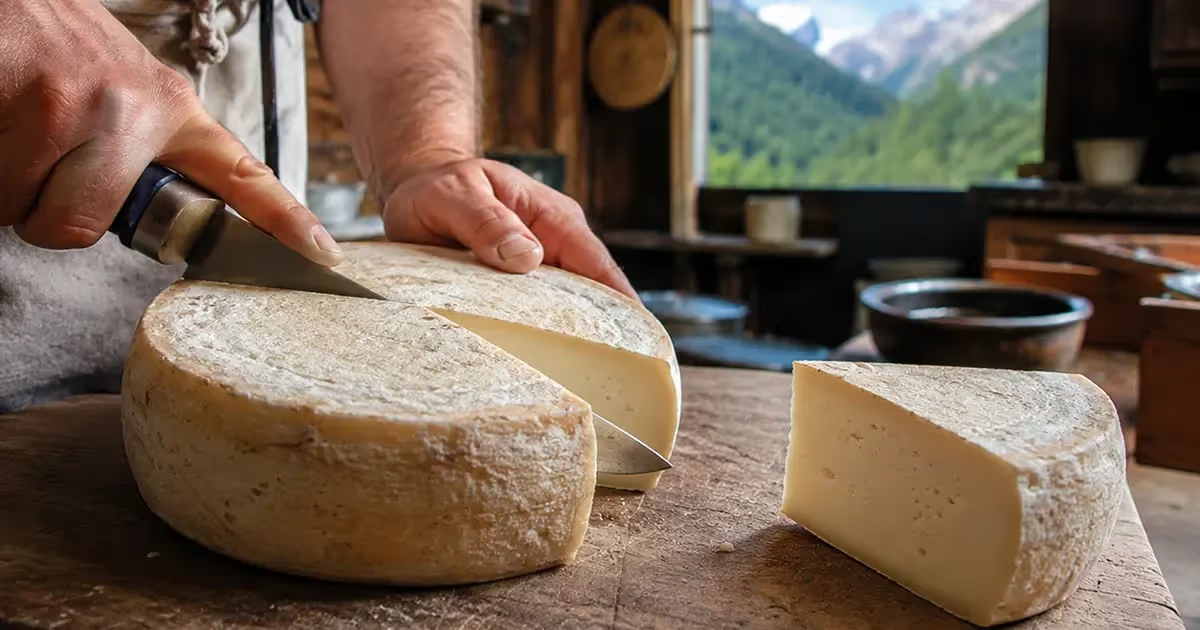
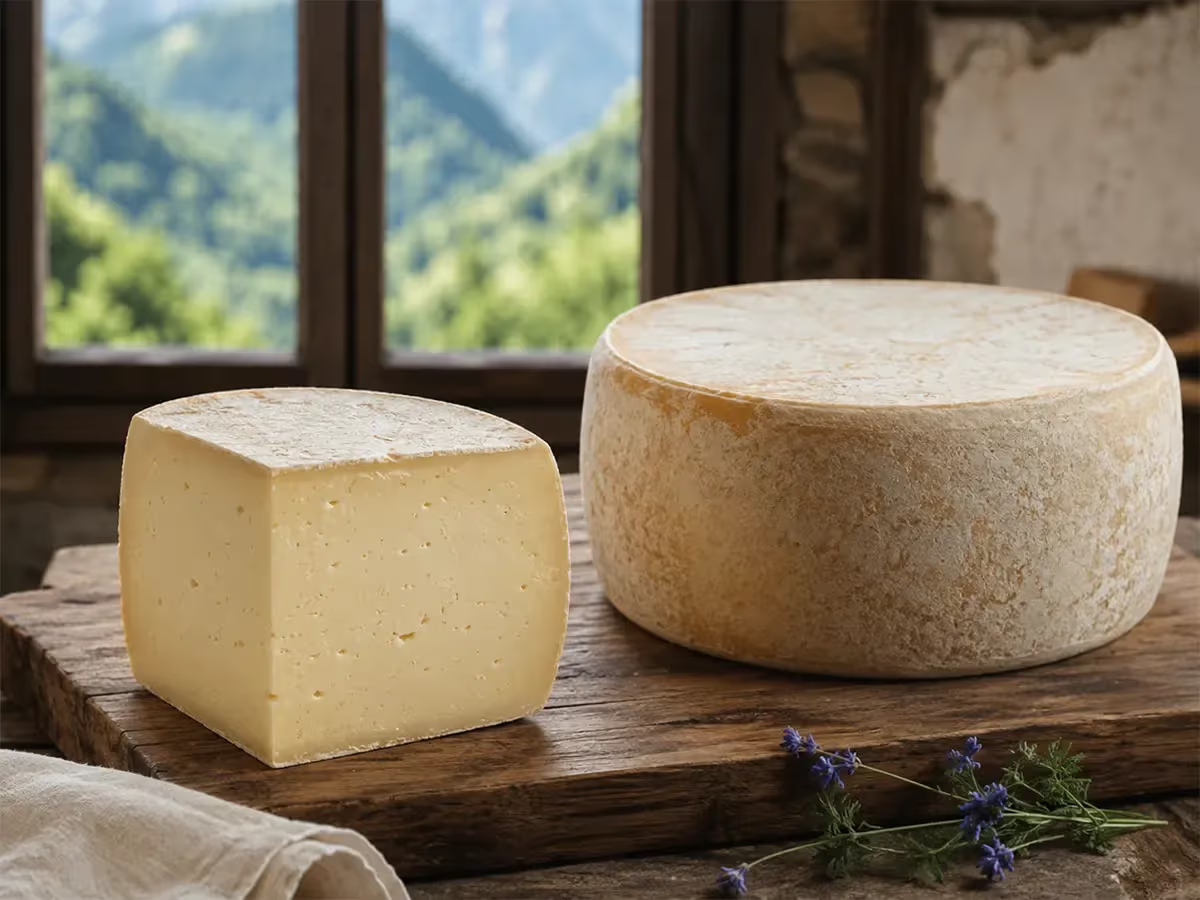
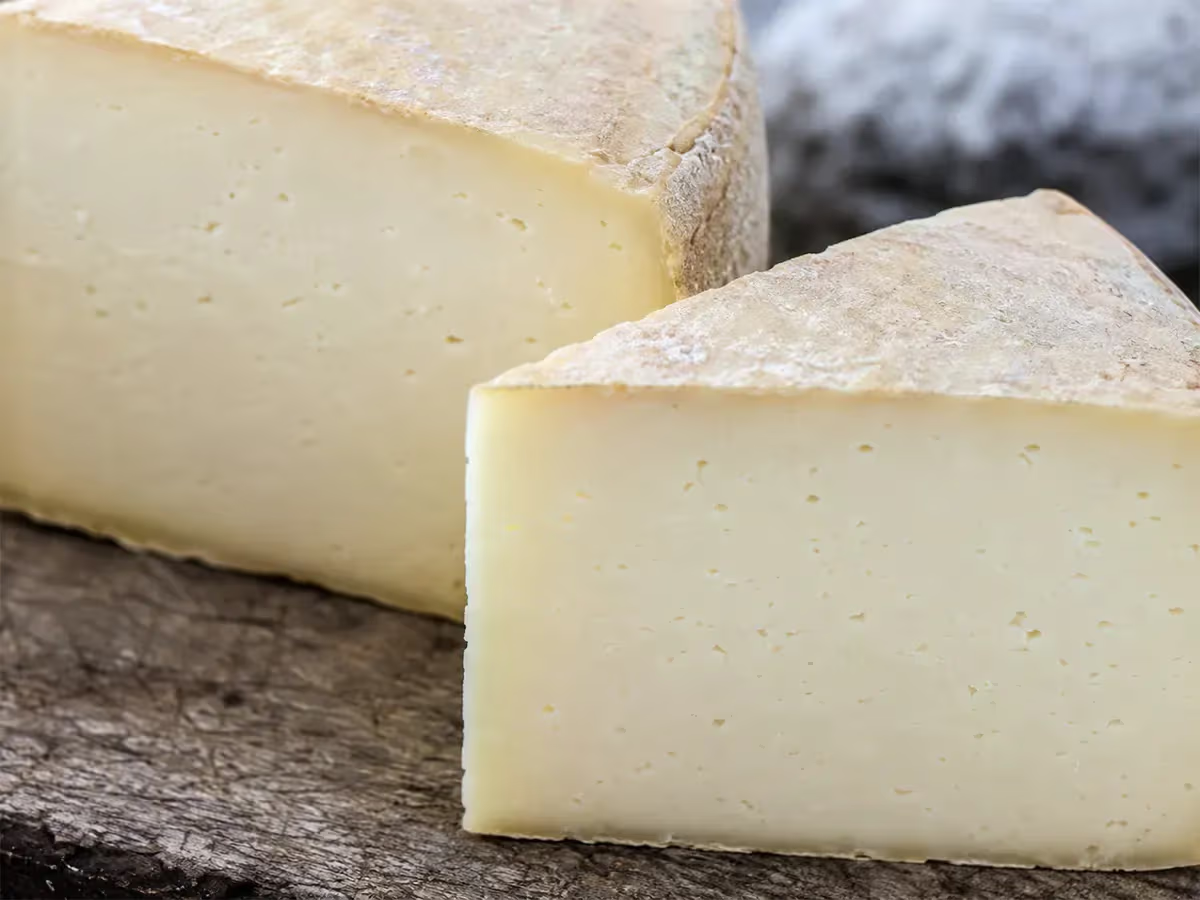
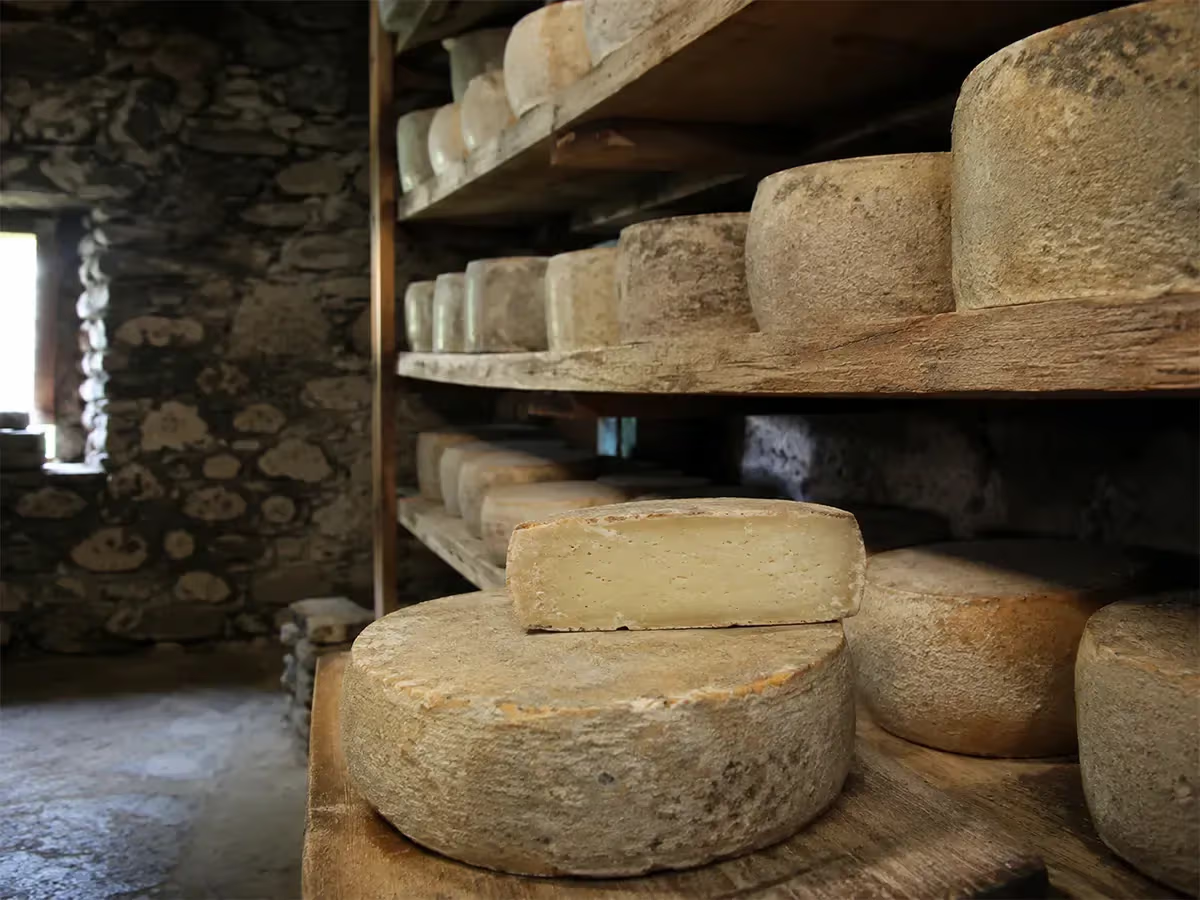
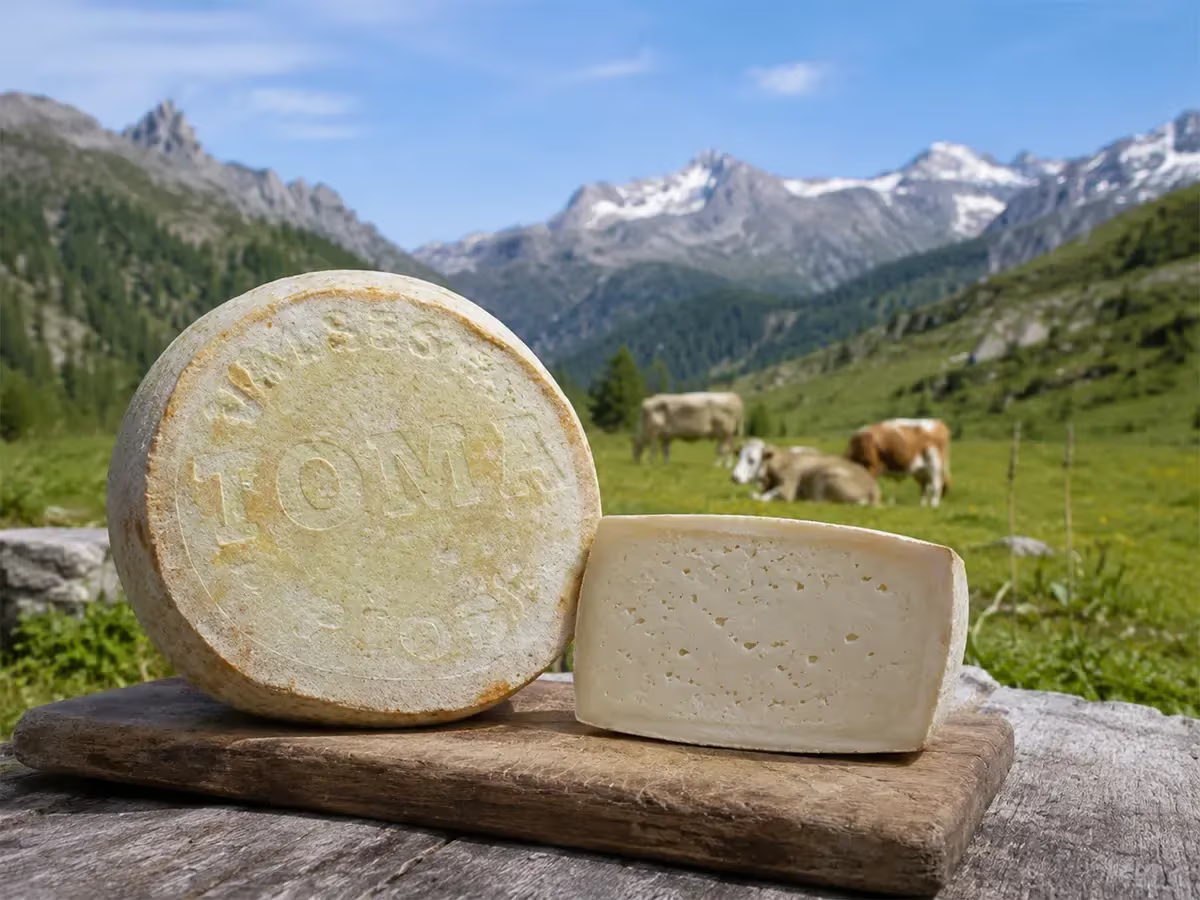
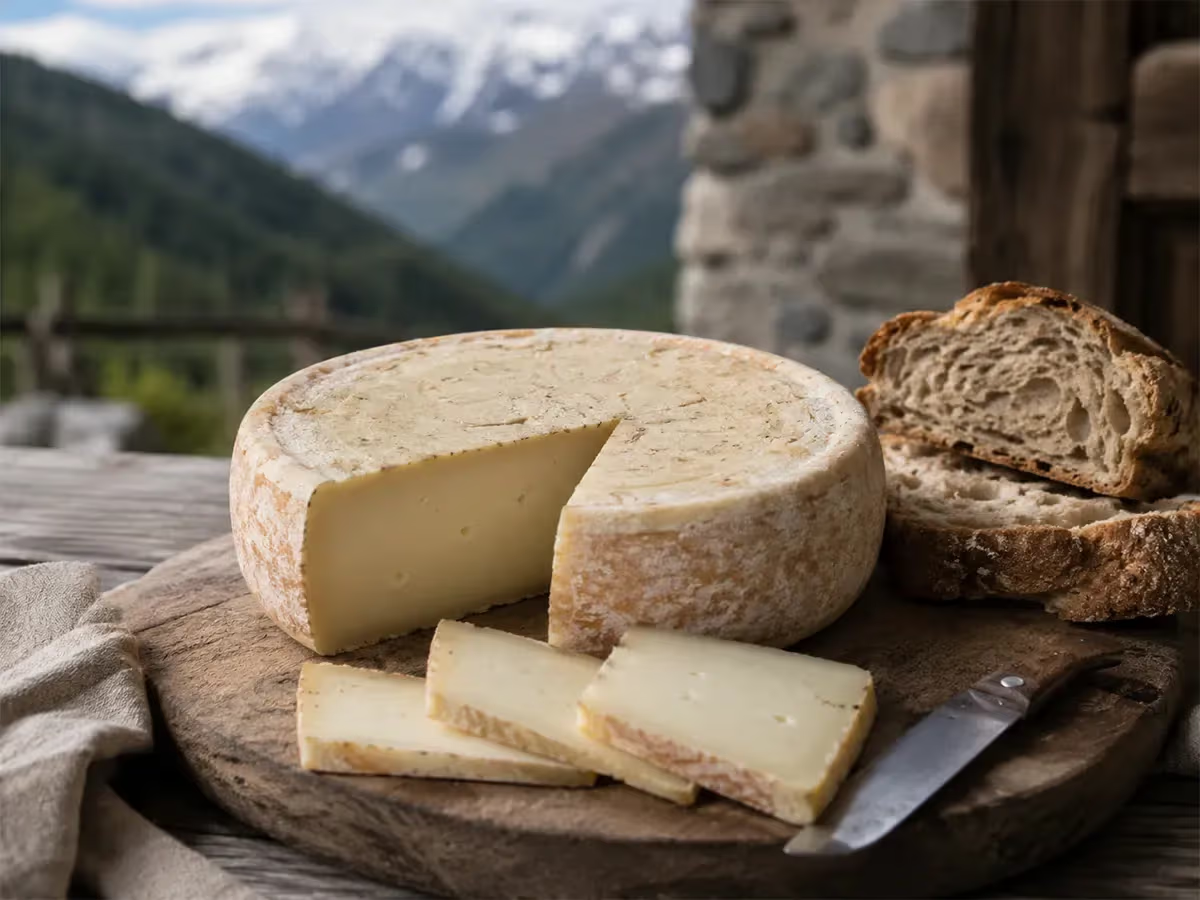
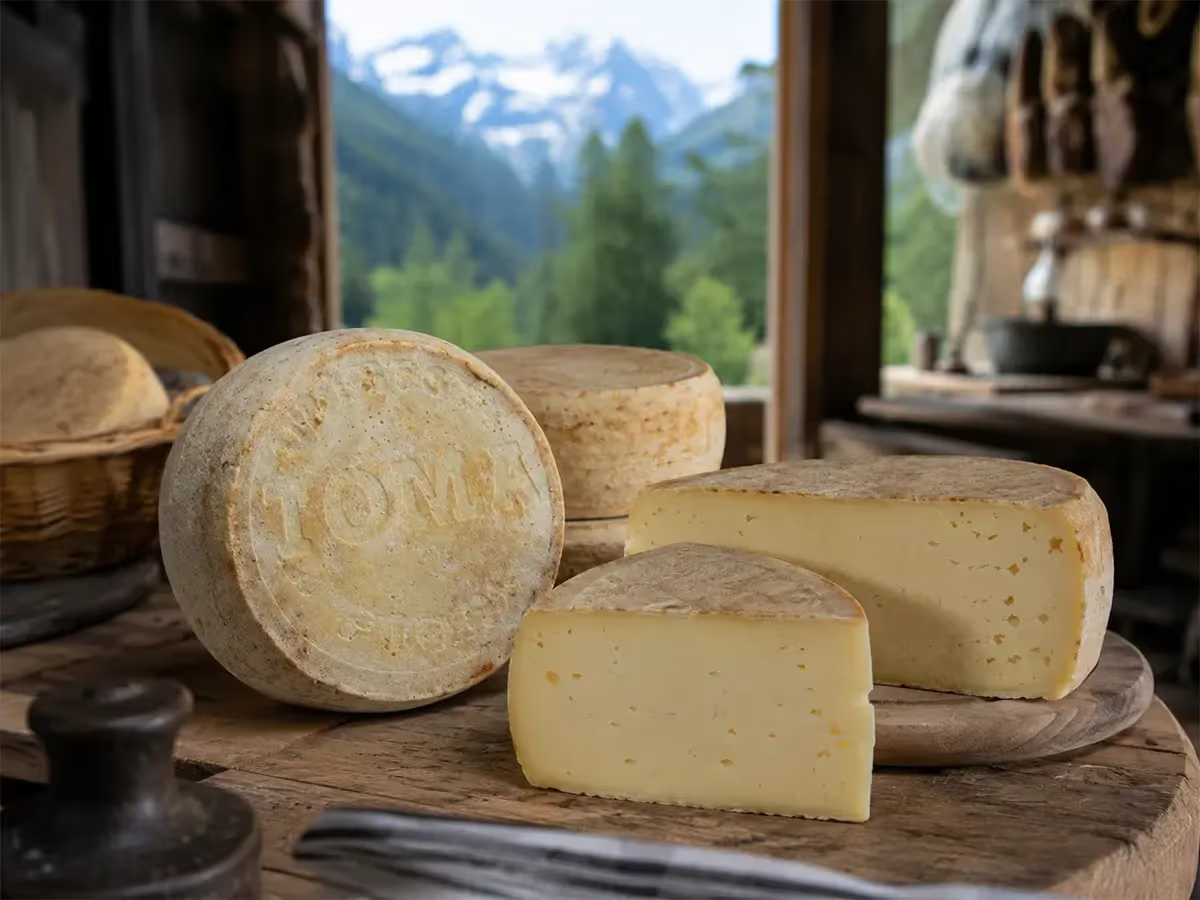
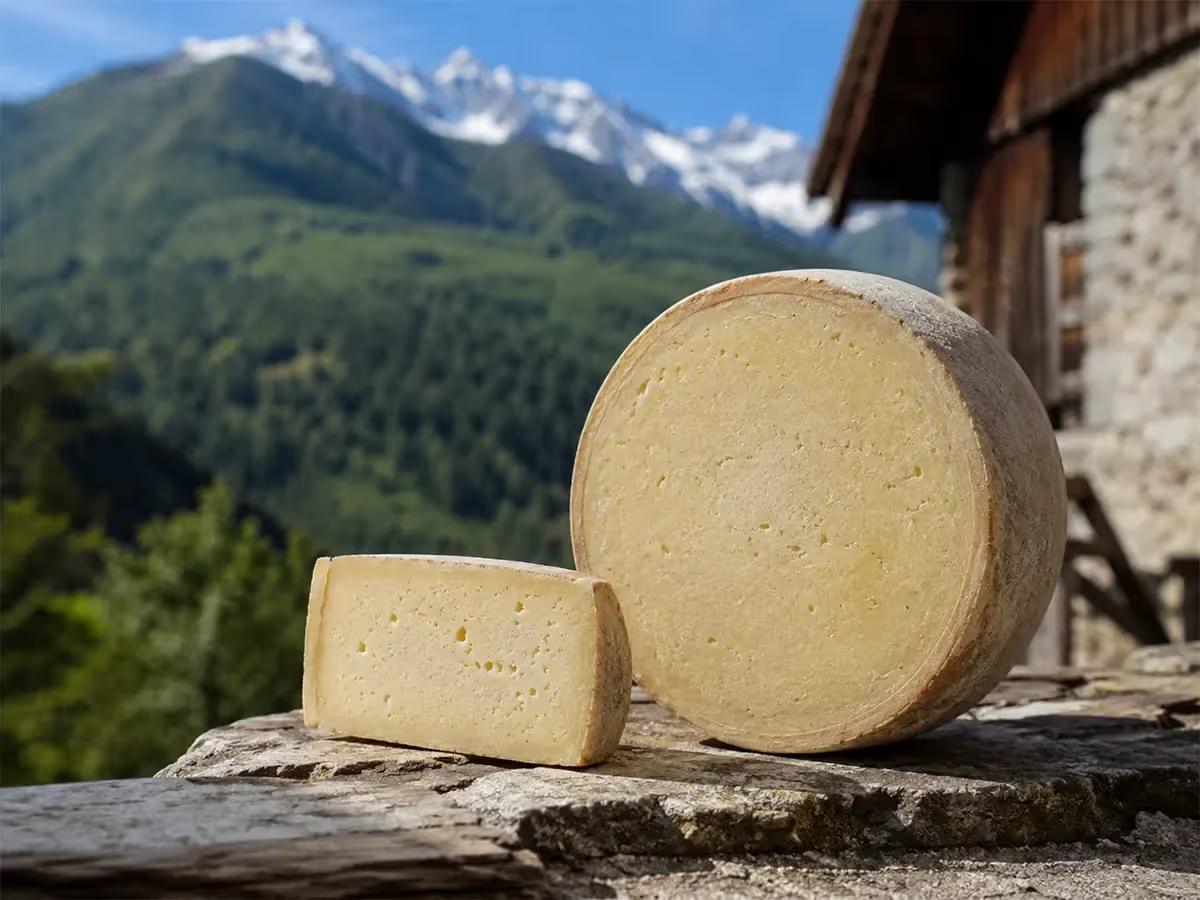
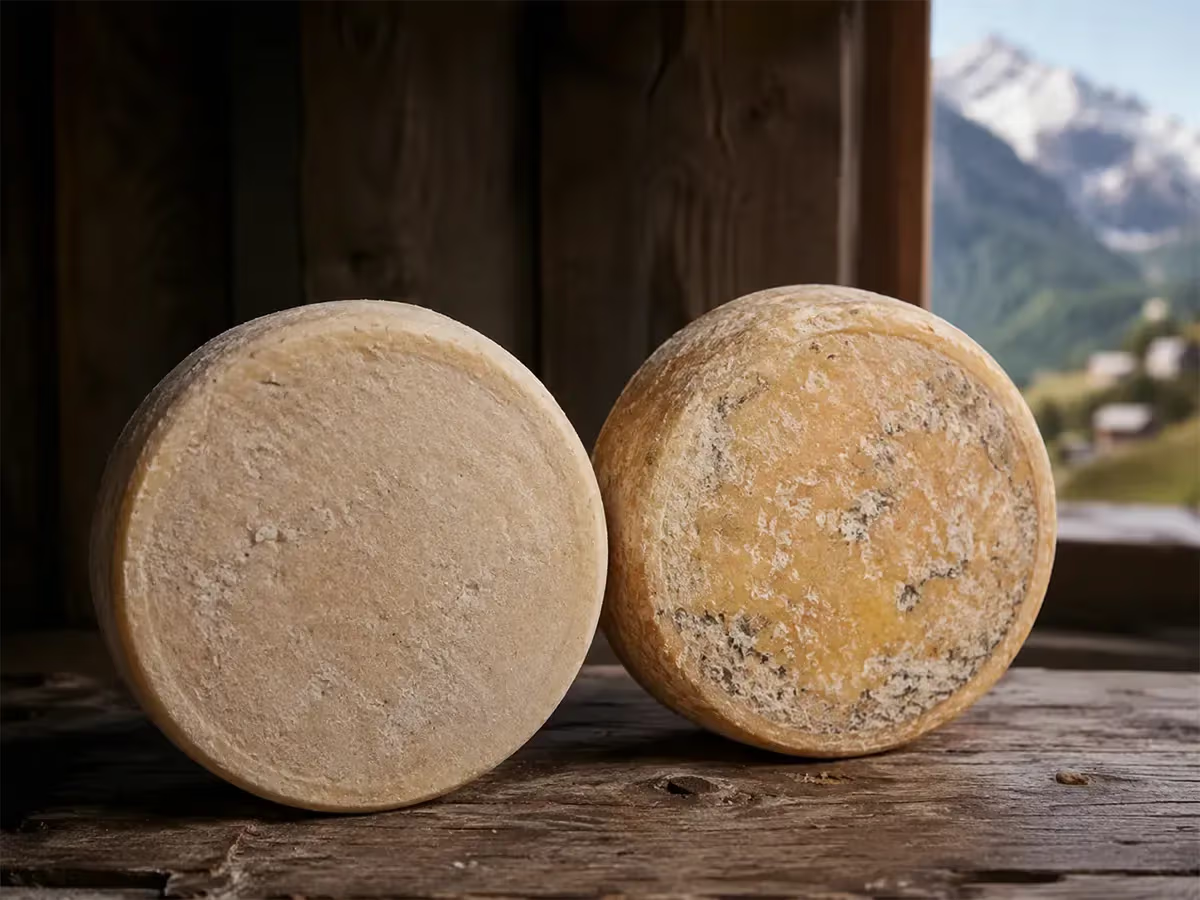
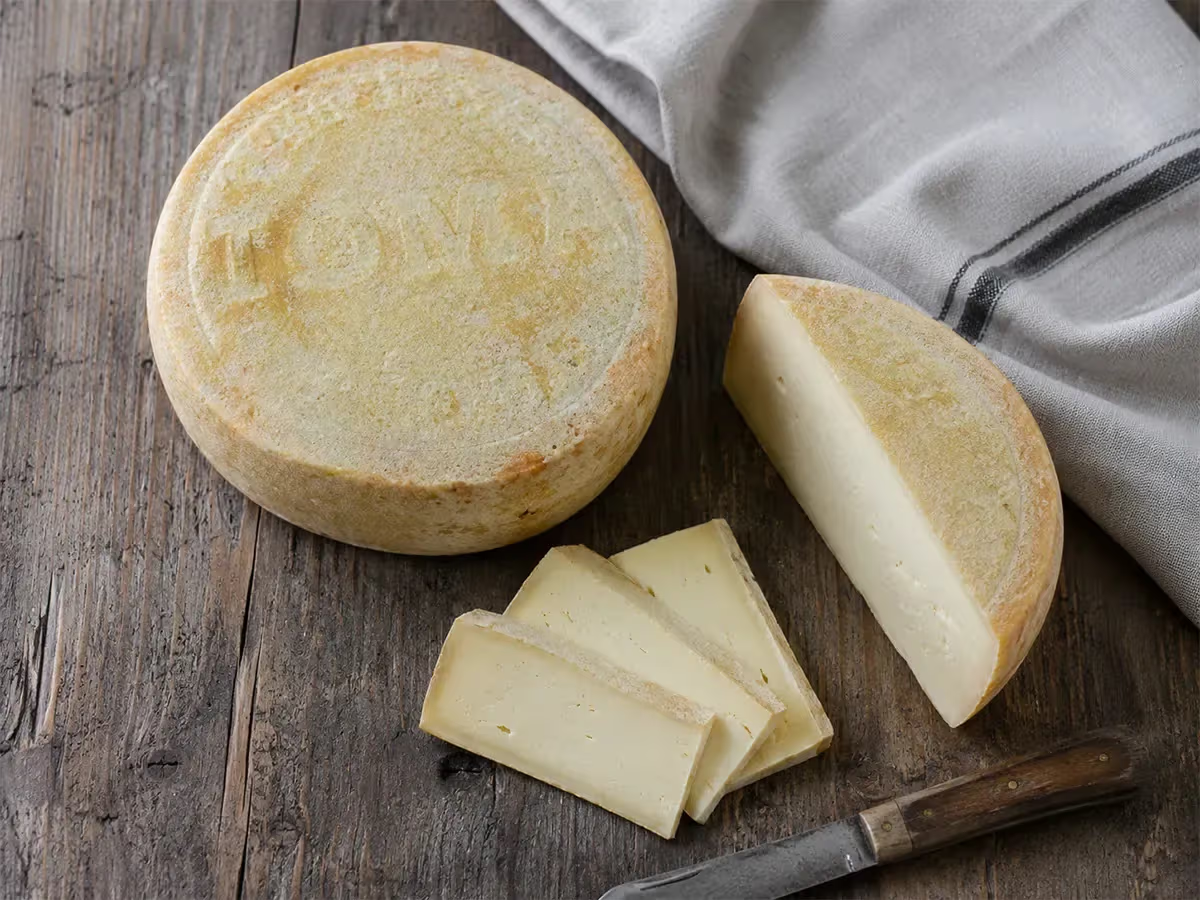
Toma della Valsesia is a semi-hard cheese produced in the homonymous Alpine valley of northern Piedmont, in the province of Vercelli, from whole or partially skimmed cow's milk sourced from cattle raised in the highlands. The shape is cylindrical, with a straight or slightly convex rind, and the crust varies from pale straw yellow to darker brown depending on the degree of aging. The internal paste is compact, with fine and irregular eyes, with an ivory-white color that tends toward yellow with aging. On the nose, a milky aroma emerges with herbaceous notes typical of high-altitude pastures; on the palate, the flavor is delicate and buttery in fresh cheeses, more persistent and with spicy notes in those with long aging.
In the kitchen, this cheese lends itself to different uses depending on the aging. Young Toma naturally pairs with rye bread, mountain honey, and grilled vegetables. The more aged version is grated or melted, finding a place in polenta, Aosta Valley soups, herb frittatas, and baked preparations typical of Piedmontese Alpine tradition.
On the pastures of the Valsesia, among the municipalities of the upper valley and the slopes of Monte Rosa, cheese production has roots that run deep in the calendar of transhumant herds. For centuries, herders would climb the alpine pastures in spring, bringing with them the knowledge of curdling, and descend in autumn with wheels wrapped in cloth, ready for the lowland markets. The Toma was the everyday cheese, the food that condensed into a rind the labor of an entire season of grazing.
The bond with the territory has withstood the transformations of twentieth-century dairy industry thanks to the persistence of small artisanal cheese dairies and the continuing practice of alpine pasturing. Today the Toma della Valsesia is included in the national register of Traditional Agri-Food Products (PAT), a recognition that attests to the continuity of production methods rooted in local memory. The PAT recognition does not impose rigid regulations like the European DOP or IGP certifications, but signals the historical and cultural value of the product within the policies for protecting Italian gastronomic heritage. Production remains concentrated in the valley and tied to the seasonal rhythms of the alpine pastures, with some families of cheesemakers who keep alive the traditional practices passed down through time.
The authentic form is cylindrical, with a diameter generally varying between twenty and thirty centimeters and a weight oscillating from one to three kilograms approximately. The rind is smooth and compact: light yellow in color in young forms, progressively darker and wrinkled in aged ones, sometimes with light natural molds on the surface. The internal paste, when cut, shows an ivory white color in cheeses with little aging and a more decisive yellow in mature ones, with a semi-hard structure and fine eyes distributed irregularly.
To recognize a product of genuine origin it is useful to verify the geographical provenance declared on the label and, when possible, to purchase from artisanal dairies or alpine pastures of the Valsesia. The absence of additives and the quality of the starting milk are reflected in a paste free from gross defects and in a clean herbaceous aroma, without notes of ammonia or excessive acidity.
Like most semi-hard cow's milk cheeses, Toma della Valsesia is a significant source of proteins with high biological value and calcium, a mineral fundamental for bone health. It contains fats that are predominantly saturated, in quantities varying according to the degree of skimming of the starting milk. The caloric content is roughly between 280 and 360 kilocalories per hundred grams, with higher values in forms with long aging. It also provides vitamin B12, phosphorus and zinc. Aging reduces the lactose content, making the cheese generally tolerated by those with mild sensitivity to this sugar.
Toma della Valsesia should be stored in the refrigerator, in the least cold area, ideally between four and eight degrees. It is advisable to wrap the cheese in special food paper or in a slightly damp cotton cloth, avoiding plastic wrap which does not allow the rind to breathe. Once cut, the wheel keeps in good condition for two or three weeks; whole wheels, if properly stored in a cool and dry place, can last several months.
Young Toma is best served at room temperature, removed from the refrigerator at least thirty minutes before consumption, to allow the paste to fully express its milky and herbal aromas. It is cut into thick slices or cubes for cheese boards, or into thin slices to pair with bread. The more aged version lends itself to grating over hot dishes and melting in baked preparations. In the kitchen it enters into creamy polenta, mountain soups, frittatas and fresh pasta fillings, enhancing the flavors in recipes of the Piedmont Alpine tradition.
Young Toma pairs well with medium-bodied Piedmontese white wines, such as a dry Erbaluce di Caluso or a Roero Arneis, capable of supporting the delicate creamy notes without overpowering them. For more aged forms, the pairing shifts towards local full-bodied reds, such as a Ghemme or a Gattinara, whose tannicity balances the persistent savory character of the cheese.
At the table, young Toma works well with chestnut or honeydew honey, fruit mustards and walnuts. The aged version finds correspondence with lean mountain cured meats, rye bread and toasted polenta. A solid pairing is also a locally produced amber craft beer, whose malty sweetness intertwines without contrast with the herbal notes of the cheese.
A preparation symbolic of the Piedmont mountains, polenta concia involves cornmeal cooked for a long time in salted water and then tossed with abundant cubed Toma and alpine butter. The residual heat of the polenta melts the cheese, creating a stringy and dense mixture. It is served directly in the copper pot or in deep plates, as a single dish for the day's work.
A recipe from Valsesia domestic cuisine, the frittata is prepared with eggs from free-range hens, aromatic herbs gathered from the meadows, such as thyme, chives and blanched nettles, and slices of young Toma added at the end of cooking. The cheese melts just slightly, leaving the frittata soft in the center and with a golden crust on the outside. It is eaten lukewarm, even the next day.
During the cold seasons, alpine pasture cuisine relied on this hearty soup, built on alternating layers of stale bread, aged Toma grated or in flakes and meat or vegetable broth. The pan went into the oven until a gratinéed crust formed on the surface. It is a humble preparation that transforms simple ingredients into a substantial dish.
In Valsesia's culture, cheese produced in alpine pastures has always held a value that went beyond mere sustenance. The wheels of Toma were the measure of a successful grazing season, the guarantee of facing winter with well-stocked provisions. The distribution of the wheels among fellow villagers and family members who remained in the valley floor had a dimension of community sharing that has been preserved, at least in part, in the families that still practice alpine pasturing.
In some communities, aged Toma was reserved for important occasions, such as weddings and patron saint festivals, while the fresh variety entered the daily meals of farmers and shepherds. This cheese remains today a point of identity for those who live in the valley and for those who visit from outside, a symbol of a concrete bond with the pastures, the animals, and the rhythm of the mountain seasons.
The Valsesia traditionally hosts various events dedicated to dairy products and alpine culture, often concentrated in the summer and autumn months, coinciding with the descent of livestock from the mountain pastures. Among the events linked to the mountain cheeses of the area, the markets of Varallo Sesia and Borgosesia periodically include exhibitions and tastings of local products, where Toma finds its place alongside other cheeses and cured meats of the Vercelli territory. The autumn festivals of the valley communities are occasions in which cheese appears on tables as the protagonist of traditional dishes.