
Toma della Valsesia (PAT)
Introduction
Toma della Valsesia is one of those cheeses that tell the story of the mountain in every taste. An authentic expression of the Alpine dairy tradition, it combines production simplicity and aromatic complexity, offering a taste profile that evolves from sweet to slightly spicy with ageing.
Product description
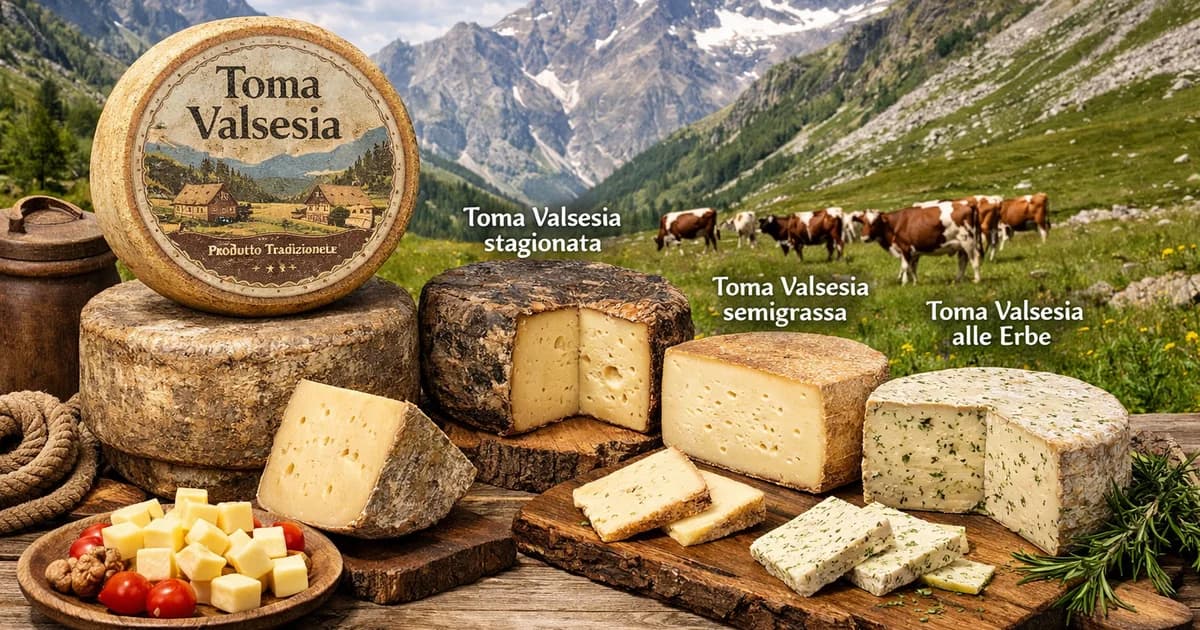
Toma della Valsesia (PAT) is a cow's milk cheese, with semi-cooked or cooked pasta, typical of the area alpine region of northern Piedmont.
It is presented with:
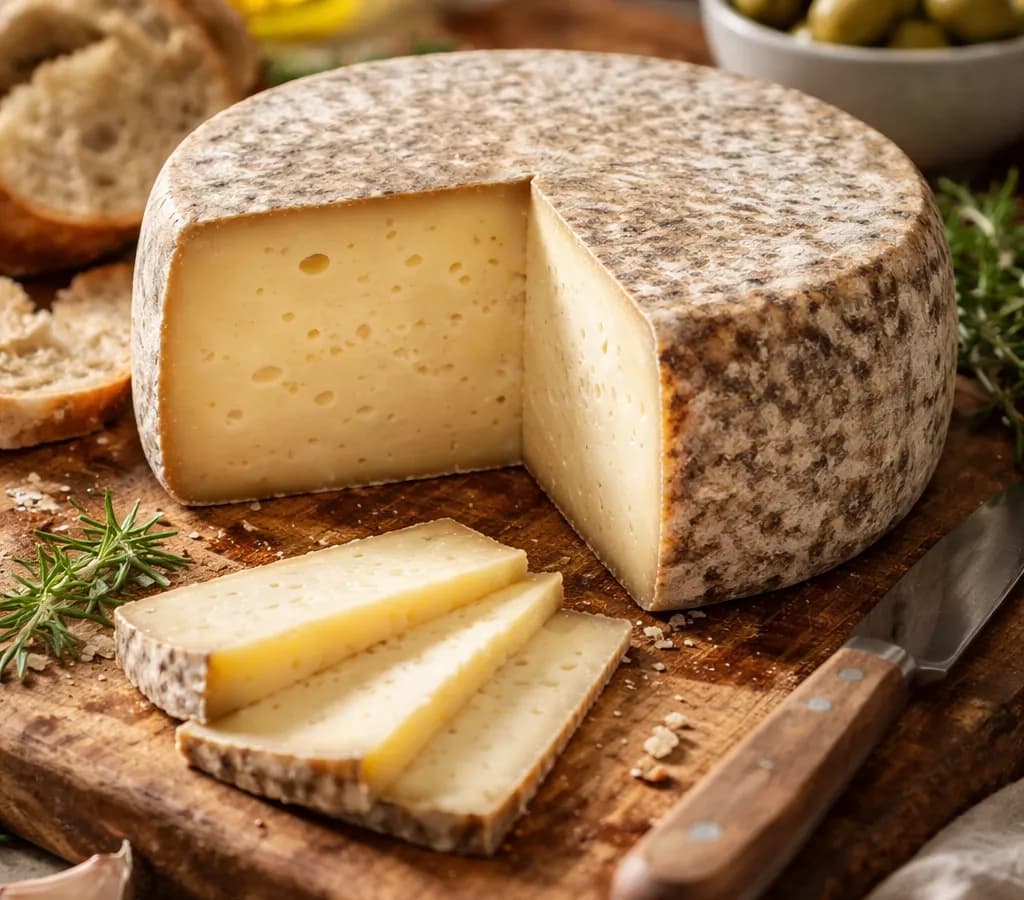
Low or medium barefoot cylindrical shape
Thin, straw-colored or burnished natural crust
Compact pasta with small and diffuse eyes
Interior colour from white to straw yellow
The taste is initially sweet and lactic, but evolves with aging towards more intense and slightly spicy notes, always maintaining a good balance.
History and origin
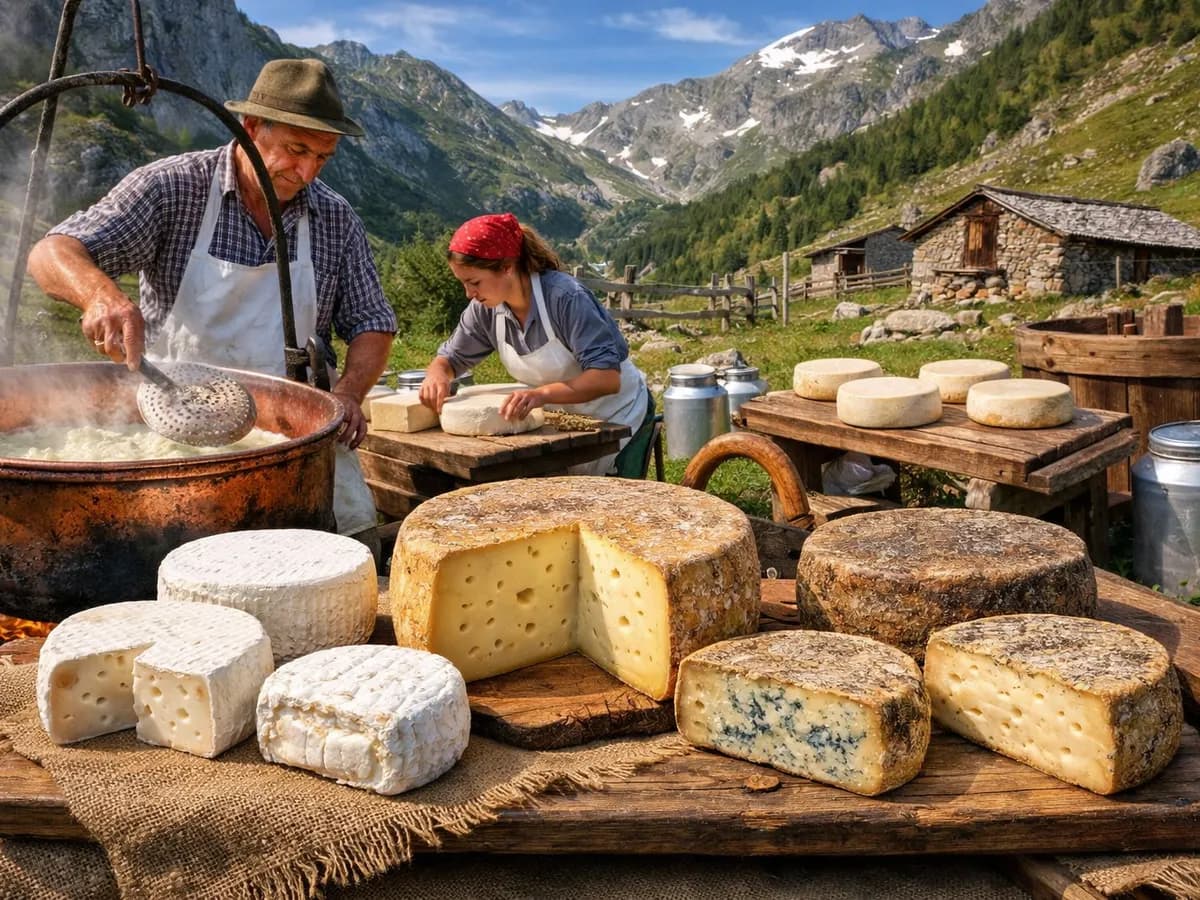
The gold the gins of the Toma della Valsesia are part of the Alpine pastoral tradition. This cheese was born as a subsistence product, made directly in the pasture during the summer season, when the herds were brought to altitude.
The processing of freshly milked milk made it possible to quickly transform a perishable raw material into a preservable, nutritious and easily transportable food. Even today, many productions maintain artisanal methods handed down for generations.
Production areas
Production is concentrated in Valsesia, in the province of Vercelli.
Main areas:
Alpeggi della Valsesia
Mountain municipalities in the province of Vercelli
Neighbouring areas with alpine dairy tradition
Types and variants
For curing
Fresh (20–30 days): soft, sweet and delicate taste
Medium maturing (2–4 months): more structured, herbaceous aromas
Matured (over 4 months): more intense, slightly spicy flavour
For processing
Alpine shooting: produced at altitude, more aromatic
Dairy intake: more regular and constant in profile
How to recognize a quality product
To choose an authentic and well-made Toma della Valsesia, look at:
Crust: natural, not too uniform, no obvious defects
Pasta: compact but not dry, with small eyes distributed
Bouquet: milk, butter, mountain herbs
Flavour: balance between sweetness and light flavour, without marked acid notes
Artisanal productions tend to have greater complexity aromatic tea.
Nutritional properties
Toma della Valsesia is a nutritious and energetic food.
Good source of proteins with high biological value
Rich in calcium and phosphorus
Accounts ene vitamins A and group B
Significant fat intake (variable with ageing)
Moderate presence of lactose (reduced in aged cheeses)
Storage methods
To keep intact and quality and freshness:
Store in a refrigerator between 4°C and 8°C
Wrap in food paper or breathable towel
Avoid airtight plastic containers
Consume within a few days of cutting
Before consumption, leave the cheese at room temperature for at least 20–30 minutes.
Consumption methods
The Toma della Valsesia lends itself to different uses:
Tabletop, pure
Sliced on rustic bread
Inserted in mixed cutting boards
Dissolved in hot preparations
Its versatility makes it suitable for both simple dishes and more structured recipes.
Recommended pairings
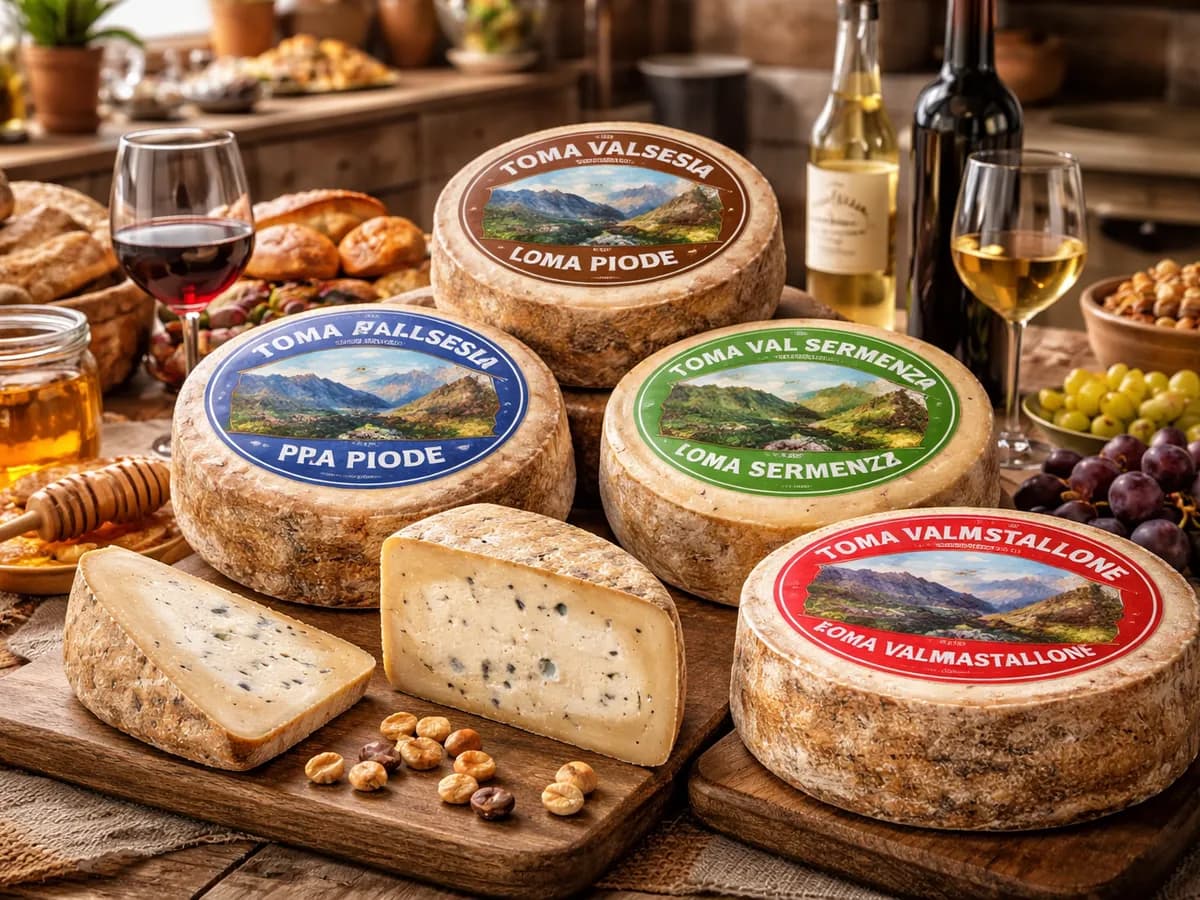
Wines
Young Piedmontese reds (Nebbiolo, Barbera)
Fresh and mineral mountain wines
Structured whites
Food
Rye or whole wheat
Honey (chestnut, wildflower)
Red fruit jams
Typical Piedmontese
Typical recipes
Polenta with melted
Piedmontese rustic fondue
Plate socket< /strong>
Ravioli or crepe fillings
Vegetable sausages with tomatoes
Festivals, events and local traditions
The Toma della Valsesia is often the protagonist of events related to Alpine culture and transhumance.
Among the most relevant occasions:
Alpine alpine festivals during the summer season
Local festivals dedicated to mountain products
Gastronomic events in the villages of Valsesia
These events represent an important moment for valorize are the artisan production and keep alive the traditions of the territory.
Conclusion
Toma della Valsesia (PAT) is a cheese that encapsulates history, territory and artisanal know-how. From the simplicity of the ingredients comes a product capable of evolving over time, offering ever-changing taste experiences.
Ideal for both daily consumption and more refined tastings, it is an authentic choice for those who want to explore the true Alpine gastronomic culture.