
Guide·Sagre·Fiere·Mercati·Degustazioni
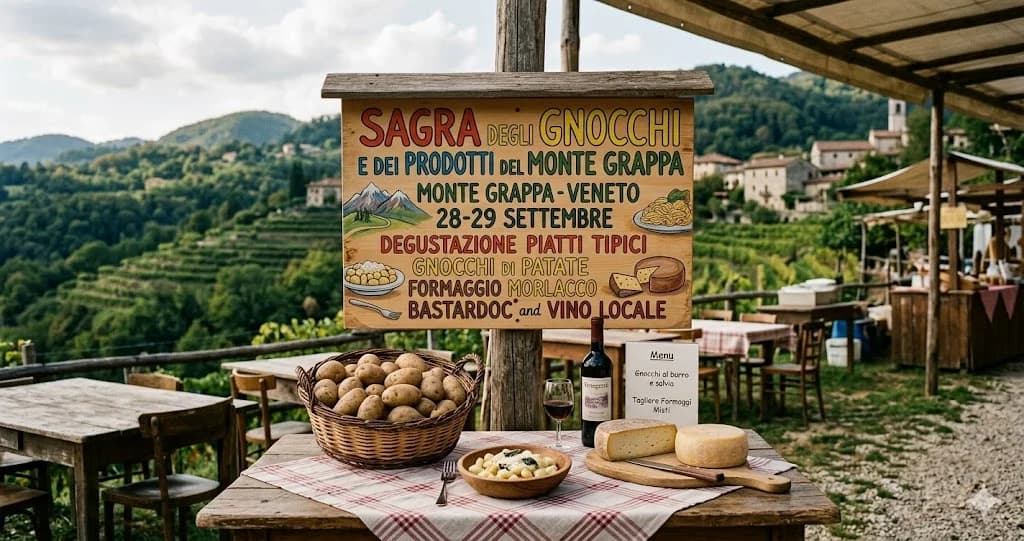
Among the steep hillsides of the Prosecco region, the high-altitude pastures of the Altopiano di Asiago and the Dolomite valleys of Bellunese, Veneto displays a gastronomic heritage that changes face with every season. This guide travels through the annual calendar of festivals, farmers' markets and gastronomic celebrations of mountain and hill Veneto: not the big headline-making events, but also village festivals where late-harvest radicchio is arranged in spring water, where the cheesemaker opens the doors of his casera early in the morning, where the fagiolo di Lamon returns to the center of a table that has never stopped recognizing it. A journey that follows the rhythm of the seasons, because in these territories food cannot be understood outside the time in which it matures.
Veneto is not a uniform gastronomic region. Its mountain valleys and hills guard distinct identities, each with its own flavor grammar built over centuries through subsistence agriculture, alpine pastoralism, heroic viticulture and seasonal migrations between plains and highlands.
The Prosecco Hills of Conegliano and Valdobbiadene, a UNESCO World Heritage site, represent the most well-known face of this system: slopes cultivated by hand for centuries, small villages like Farra di Soligo, Miane and Refrontolo that offer tastings, wine exhibitions and vineyard tours throughout the year. Alongside Prosecco Superiore DOCG are sopressa veneta, fresh cheeses from the Prealpi Trevigiane and risotto with radicchio that tell how farming culture remains alive even in this area.
Heading west, between Verona and the Monti Lessini, opens the Valpolicella: land of Amarone DOCG, Recioto and Ripasso, but also of Monte Veronese DOP, black truffles and summer mountain huts where cheeses are made with pasture-fed milk. Further north, the Asiago Plateau synthesizes the Veneto mountains in its most direct sense: Asiago DOP in two ages, tosella alla piastra, polenta made with marano corn, porcini mushrooms and mountain honey. In the Dolomite valleys of Cadore and Bellunese, finally, cuisine becomes alpine and identity-rooted: casunziei with red beets, canederli, pastin bellunese, Lamon IGP beans and soups that still speak the language of necessity.
This guide accompanies the reader through the entire arc of the year, marking the most significant events and some less-traveled paths.
January Winter is the season of late Treviso radicchio. The blanching in spring water, a practice passed down through generations in the areas of Treviso, Zero Branco, Preganziol and Dosson, softens the bitterness of the leaf and enhances its crunchiness. Festivals dedicated to Radicchio Rosso IGP are concentrated in the second half of the month and feature traditional risottos, rustic savory pies and pairings with Prosecco Superiore brut and fresh Treviso cheeses.
February On the Asiago Plateau, the first weekend of the month brings the Festa della Fiaccola, an event that animates the historic center with gastronomic stands dedicated to aged Asiago DOP, polenta with tosella and sweet treats typical of Veneto mountain winters. The cold at altitude is still fully wintry, and the flavors reflect this season: intense, enveloping, built on the raw materials of alpine pastures.
March With the first signs of spring begins the Primavera del Prosecco Superiore, which extends until June involving the municipalities of Valdobbiadene, Col San Martino, Guia, Farra di Soligo and Refrontolo. Each village hosts its own wine exhibition with tastings, cellar visits and scenic routes through still-bare vineyards. It is the season of more direct pairings: spiedo trevigiano, crostini with sopressa, cheeses aged in grape pomace.
April The last weekend of the month is dedicated to the Mostra del Formaggio Morlacco del Grappa, involving the municipalities of Borso del Grappa, Pederobba and Monfumo. Morlacco, historically produced in the mountain huts of Monte Grappa, has a herbaceous and slightly tart flavor that clearly distinguishes it from more well-known cheeses. Alongside it are the Bastardo del Grappa and fresh ricottas from the first seasonal production.
May Advanced spring brings two very different appointments. On the Colli Berici, the pea of Lumignano stars in its namesake festival on central weekends of the month: a legume with thin skin and sweet taste, used in risottos, soups and side dishes. In Alpago, at the end of the month, the Sagra delle Erbe Spontanee highlights dandelion, sclopit, nettles and other alpine herbs that local restaurateurs feature in seasonal menus dedicated to spontaneous mountain cuisine.
June With the beginning of summer pasturing, the mountain huts between Asiago and Lessinia open. The Malghe Aperte days allow visitors to witness the processing of freshly milked milk, the production of butter and the first forms of summer cheese. Guided tastings in the cheese-making huts are among the most educational experiences that Venetian gastronomy has to offer. At the same time, the Primavera del Prosecco concludes its arc in the Treviso villages with the last seasonal exhibitions.
July In mid-July Tambre d'Alpago hosts its Sagra del Fungo, with porcini mushrooms featured in tagliatelle, polenta and mushrooms trifolati with melted cheese. In the Belluno area there are also festivals linked to pastin, a preparation made from spiced ground meat considered one of the gastronomic symbols of the Dolomites, traditionally served with yellow polenta, hot cheese and mushrooms. Summer at altitude is brief and intense: the products reflect this urgency.
August In Valpolicella the night of San Lorenzo and the central weeks of August bring Calici di Stelle: evening tastings in the vineyards, with Amarone, Recioto and Ripasso in the foreground. The smaller wineries of Valpolicella Classica often offer more intimate settings compared to larger circuits. In Cadore and the Belluno Dolomites, August is the month of popular village festivals: casunziei alle rape rosse, canederli, sweets with berries and game enliven the squares of small municipalities.
September The last weekend of the month is traditionally dedicated to Fagiolo di Lamon IGP, in the namesake festival that attracts visitors from throughout Veneto. The volcanic soil of the area contributes to the thin skin and delicate flavor of the legume, starring in rustic soups, pasta and beans and hearty salads. September is also when the vines on the Prosecco hills turn golden and winemakers open the doors of their cellars for the first tastings of the new harvest.
October The richest month for Venetian gastronomic tourism. In San Zeno di Montagna, on the hills of Lake Garda, every weekend in October celebrates the chestnut: roasted chestnuts, traditional sweets and young wine in an atmosphere that smells of the forest. In Lessinia, between October and early November, the Fiera del Tartufo showcases local black truffle paired with Monte Veronese DOP, with restaurants offering tagliolini, fondues and game dishes.
November On the Colli Euganei, November brings the Festa dell'Olio Nuovo, with freshly pressed Veneto DOP extra virgin olive oil, featuring intense herbaceous notes and light spicy nuances, served on wood-fired bread paired with local wines. In Treviso the radicchio season resumes with the exhibition dedicated to the late IGP: risotto, grilled radicchio and pairings with blue cheeses.
December The Asiago plateau dresses up for Christmas markets that last from late November through the holidays: Asiago DOP, mountain cured meats, alpine honey and spiced biscuits animate the stalls of the historic center. In the Belluno Dolomites small villages host gastronomic markets with vin brulé, traditional sweets, dairy products and alpine herb liqueurs. It is the natural closing of a calendar built on the rhythm of the earth and its seasons.
The most direct way to understand the gastronomy of mountainous and hilly Veneto is to follow a product through its complete cycle: the radicchio that is blanched in spring water in January, the cheese that is born in the mountain pastures in June and arrives at the market stalls in December, the wine that in March is tasted in the cellars and in August is drunk under the stars. Each season has its own gateway. Choosing the right one, often in a small and unmarked village, is almost always the choice that leaves something to remember.