
Guide·Sagre·Fiere·Mercati·Degustazioni
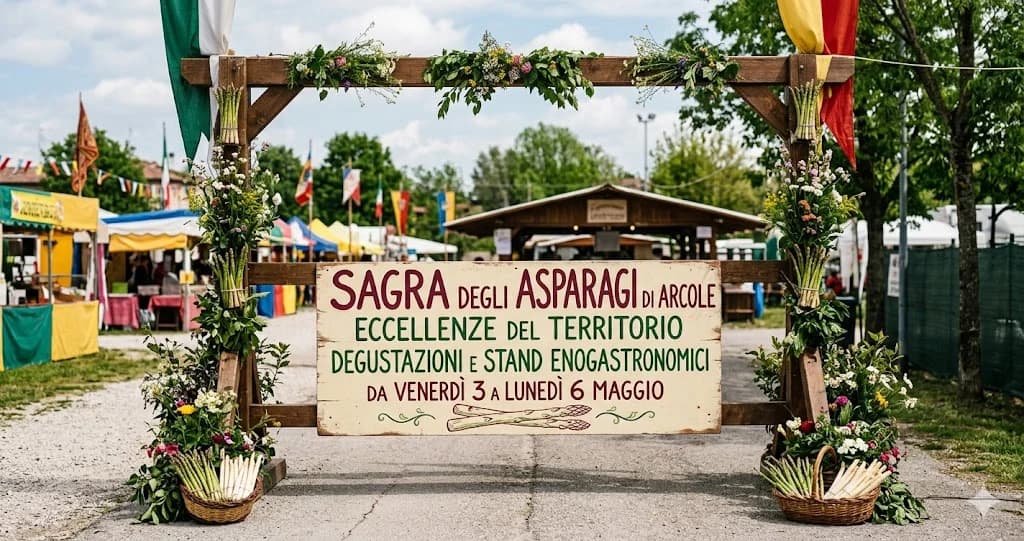
Veneto is a region that tells its story through its markets. Not tourist fairs or generic craft bazaars, but real markets, those frequented by people who still cook with the seasons, by those who know the name of the farmer who grew the radicchio or raised the chickens. From Verona to Venice, from Treviso to Vicenza, these spaces are not simply points of sale: they are the place where agricultural culture, local cuisine and the rhythm of the seasons settle. This guide accompanies the reader through the squares, porticoes and canals where Veneto food takes shape every day.
Veneto is one of the Italian regions with the greatest agricultural and gastronomic diversity. The Po Valley plain, the hills of the Colli Euganei and Berici, the Prealps, the Po Delta and the Adriatic coast produce radically different environments just a few kilometers apart, and the markets reflect this variety with an almost cartographic faithfulness. At Rialto, in Venice, the fish counter displays sea bass and soft-shell crabs according to the lagoon season. In Treviso, under the arcades of the covered market, late radicchio occupies the space that in summer gave way to Sant'Anna beans and Verona peaches IGP.
Veneto markets are distinguished by some recurring characteristics worth keeping in mind:
Navigating this system requires some basic knowledge: knowing when to visit, what to look for and how to distinguish producers from resellers is the first step to frequenting Veneto markets with awareness.
January The coldest month brings late Treviso red radicchio to the market stalls, still a star after the holidays, and variegated Castelfranco radicchio. In lowland markets you'll find cabbages, leeks and cicalino roots. Lagoon fish enjoys a quiet season: clams and mussels from Adriatic farming take center stage.
February A transitional month when winter stores begin to run thin. The stalls still hold dried legumes, preserved Chioggia onions, aged cheeses from the mountain dairies of Vicenza and Belluno. In the lagoon fish markets, the first cuttlefish of the year appear.
March The arrival of spring is felt first in the markets before anywhere else. The first white asparagus from Bassano del Grappa appears, grown in pure sand, tender and with a characteristic shape. Fresh peas from the Treviso countryside make their appearance at month's end.
April The markets come alive. White asparagus from Bassano is in full season, accompanied by green asparagus from Cimadolmo IGP. Wild herbs, the first strawberries and radishes occupy the smaller stalls. The Asparagus Fair of Bassano is the benchmark event for this season.
May A month of spring abundance. Alongside fava beans, peas and lettuces come the first zucchini with flowers still attached, highly sought after by Venetian restaurants. Adriatic blue fish, particularly mackerel and sardines, return at affordable prices.
June Cherries arrive, early apricots, tomatoes from the first harvests. In the farmers markets of the Euganean Hills you'll find late hill strawberries, more flavorful than their lowland counterparts. Baccalà mantecato is still sold freshly worked in artisanal laboratories.
July Summer markets offer peppers, eggplants, cucumbers, fresh borlotti beans and beefsteak tomatoes. Fruit takes up half the stalls: peaches, nectarines and melons from Chioggia. In Chioggia itself the fish market is among the most active in all of Veneto.
August Some markets reduce their opening days. Those in coastal and lakeside areas remain active, supplied by Adriatic catch. The stalls are dominated by summer produce at peak ripeness, including watermelons from the Po Valley.
September The richest month of the year. Grape harvest, porcini mushrooms from the Belluno Dolomites, blackberries, apples from Valpolicella, Lamon beans IGP. In Verona and Vicenza markets the first squashes appear. Table grapes and early pears herald the autumn.
October Squashes in every variety, chestnuts from Montello and the Berici hills, pomegranates, persimmons. Seasonal mushrooms are still found, especially in Belluno and Feltre markets. Fresh mountain dairy cheeses give way to aged forms.
November Radicchio returns: first the early Verona variety, then the first shipments of late Treviso radicchio. Game, where permitted, is found in some agricultural markets in the foothills zone. New oil from Valpolicella and Lake Garda.
December Markets fill with products for the holidays: artisanal pandoro, baccalà, eels from the Po Delta, capons and free-range hens. Late Treviso radicchio is at the peak of its season and dominates stalls throughout the region.
Frequenting the markets of Veneto regularly, even just once a month, changes the way you cook and eat. Not because they offer products that are unreachable elsewhere, but because they force you to come to terms with real seasons, the ones that cannot be negotiated. Radicchio tardivo trevigiano arrives when it arrives, white asparagus from Bassano lasts six weeks at most: accepting these limits is, paradoxically, the most direct way to cook well. Starting from a nearby market, returning often and choosing a product you have never cooked before is already a concrete starting point.