Guide·Sagre·Fiere·Mercati·Degustazioni
Trentino-Alto Adige is a region where food tells stories of borders, altitudes, and cultural crossroads. Between the Dolomites and the valleys descending toward Lake Garda, cuisine changes language and ingredients within just a few kilometers: canederlo meets tortei de patate, Lardo di Montagna encounters high-altitude speck, Caldaro wine coexists with Lavis grappa. This guide takes readers through the historic markets of cities, festivals in small mountain towns, hidden tasting points along wine routes, and a precise calendar of when to find what, where, and at which altitude.
Trentino-Alto Adige is composed of two provinces with distinct yet connected gastronomic identities. The Autonomous Province of Trento looks toward the Mediterranean through the Sarca Valley and Lake Garda, bringing to the table extra virgin olive oil, citrus fruits and cheeses like Trentingrana. The Autonomous Province of Bolzano, Alto Adige or Südtirol, has deeply alpine and Tyrolean roots: speck, canederli, Schlutzkrapfen, rye, sauerkraut and wine production concentrated between the Wine Road and Val Venosta.
Seasonality here is dictated by altitude even before the calendar. At 1,500 meters, forest fruits are harvested in July, while in the valley bottoms the wine cellars open already in September for the harvest. The Christmas markets of Bolzano, Bressanone and Merano are among the most frequented in the country, but alongside them there are dozens of events in mountain villages that maintain the direct relationship between producer and local community. Understanding both levels, that of large events and that of small village fairs, is the best way to understand this region.
January and February The quieter months are also best suited to exploring the huts that still serve Schlutzkrapfen and barley soups in high-altitude stupas. In Ortisei and Val Gardena some farms open for tastings of aged speck and alpine cheeses. In Trento, traditional shops offer the first casonsei and rye flours.
March and April It resumes activity in the weekly farmers' markets. In Bolzano, the market in Piazza delle Erbe comes alive with the first vegetables of the season. In Trentino it is the period of transformed chestnuts, the last winter speck and the first outings in the open farms in Val di Non, where the flowering of apple trees begins to be told.
May The apple tree blooms in Val di Non and Val di Sole: the Fiorita event in Val di Non attracts visitors to the orchards with tastings of juices, cider and processed products. The first events related to Garda Trentino PDO extra virgin olive oil are held in Riva del Garda.
June The mountain huts open. In South Tyrol, the season of open wineries begins along the Wine Route between Bolzano and Salorno: small producers of Lagrein, Gewürztraminer and Pinot Noir open their doors with events that are not always advertised nationally. In Pergine Valsugana there are the first summer agricultural markets.
July Wild berries festivals at altitude: in Ruffrè-Mendola, Folgaria and Lavarone, blueberries, raspberries and wild strawberries are celebrated with handmade jams for tasting. Castel Tesino hosts the Mushroom Fair, a preview of the autumn season. In South Tyrol, village festivals in the small hamlets of Ultental and Val Martello offer local specialties such as mountain strawberries and rye bread.
August Intense month of festivals in the small municipalities. Mountains on the Wine Route celebrate the Lardo Festival. In Caldaro sul Lago, the social winery organises evening tastings. In the villages of Bassa Atesina such as Egna, Ora and Salorno, informal wine festivals are held with local producers. In Trentino, Dimaro Folgarida and Val Rendena, village festivals include stands of local cheeses, canederli and Ottofile corn polenta.
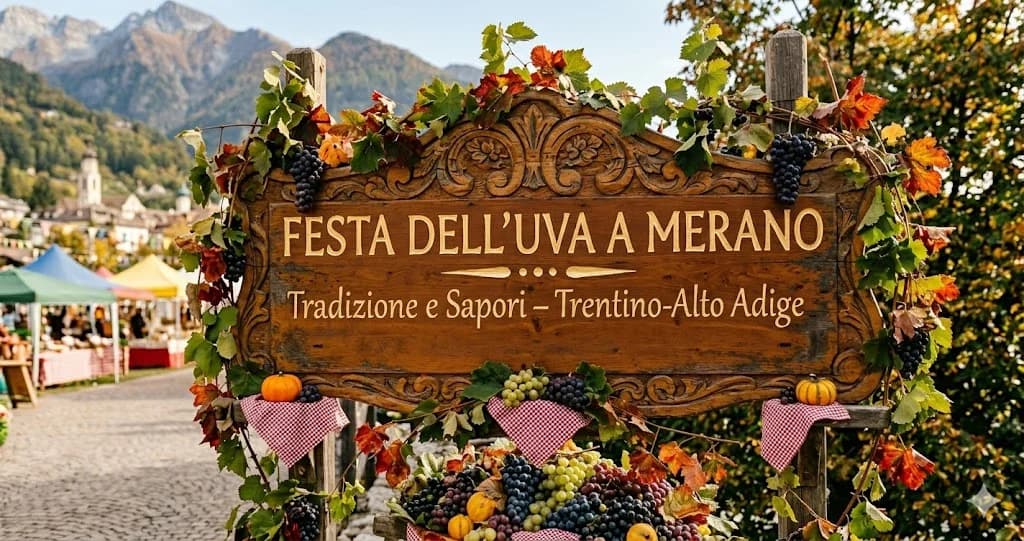
September Harvest. The Merano Grape Festival is one of the most important historical events in the region. Caldaro hosts the Caldarese, a fair of local grapes and wines. In Cles, in Val di Non, the harvest of Golden and Renetta Canada apples begins with tastings in the orchards of small producers. In Trento and Rovereto, wineries open for regional harvest days.
October Mushroom and chestnut dominate the scene. The Chestnut Fair is held in Brentonico. In Predazzo and in the Val di Fiemme, autumn markets are organised with porcini mushrooms, aged malga cheeses and young grappa. In South Tyrol, Törggelen is the most heartfelt tradition: in the farms of the Wine Route, from Appiano to Chiusa, fermented must, new wine, roasted chestnuts and Kaminwurzen are served.
November Törggelen continues until mid-month in the Apennine farms. The Christmas markets open in Bolzano and Merano: the one in Bolzano, in Piazza Walther, is among the largest in Italy in terms of size and tradition. In Brixen, the market takes place in the Duomo courtyard with local artisans and producers. In Vipiteno, the Christmas market is more collected and authentic.
December In addition to the large Christmas markets of Bolzano, Merano, Bressanone and Vipiteno, smaller towns such as Glorenza, Brunico and Silandro open their squares with producers of speck, Vinschgauer, mountain honey, strudel and grappa. In Trento, the Christmas market in Piazza Fiera offers Trentino products with local exhibitors alongside artisanal ones.
The best way to understand this region is to venture off the main itineraries and follow a weekly village market, stop at a farmhouse without a neon sign, ask about a cheese whose name you don't know. Trentino-Alto Adige rewards those who slow down and navigate by small signals: a hand-written sign in front of a bakery in Malles, the smell of roasted chestnuts in Ora in October, the sound of must fermenting in a cellar open for just one afternoon. That is the true measure of this cuisine.