
Guide·Sagre·Fiere·Mercati·Degustazioni
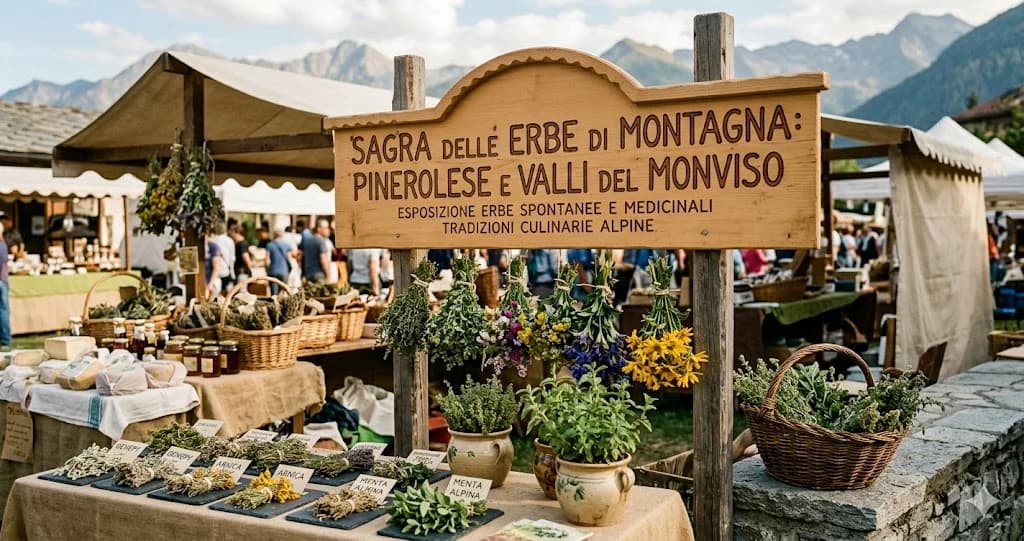
Between the Turin plain and the Alpine ridges that culminate in Monviso, there extends a territory that has built its own gastronomic identity around verticality. Products change with altitude: from the valley floor rise apples, malga cheeses, mountain cured meats, to be found on the table alongside toma di alpeggio and polenta di mais ottofile. The Pinerolese and the Valli del Monviso are not a gastronomic destination of passage. They are a coherent food system, where seasons truly dictate what is eaten, where it is eaten and with whom. This guide is a tool to navigate that system.
The Pinerolese is the administrative and cultural heart of an area that encompasses the Chisone, Germanasca, Pellice and Po valleys, the latter crossed by the river that descends directly from the slopes of Monviso. It is a territory with a dual nature: on one hand the plains and hills with their cereal, vegetable and fruit crops, on the other the mountains with their pastures, their alpine meadows and an ancient tradition of cheesemaking.
The historical presence of Waldensian communities in the Pellice and Germanasca valleys has left an imprint on food culture as well, oriented towards sobriety, preservation and the integral use of resources. Chestnuts, buckwheat, dried legumes and meat from small farmyard animals held a weight here that in other Alpine areas was quickly forgotten. Today this heritage returns to prominence thanks to the work of producers who have chosen to remain at higher altitudes, and a local dining scene that views the mountains as a resource, not as a limitation.
The reference designations include Toma Piemontese DOP and Raschera DOP, both present in the area, along with local productions without certification but of solid reputation, such as the cured meats of Cavour and the apples of Bibiana.
January and February The coldest months are a time for cellars and pantries. Cured meats, long-aged cheeses and soups made with dried legumes harvested in summer dominate the table. Polenta made from octofile corn, ground on stone by the mills of the valley floor, is the cornerstone of evening meals. In the valleys, "supa barbetta" is still consumed—meat broth with stale bread and grated cheese.
March and April With the melting of snow at lower altitudes, wild herbs return: tarassaco, nettles, silene. Valley floor restaurants incorporate them into risottos and frittatas. Fresh dairy production resumes on farms. It is also the time when saba begins to be processed—a reduction of cooked must used as a traditional sweetener.
May and June Alpine pasturing resumes: flocks and herds climb toward the pastures of Monviso, and with them the production of toma and seirass (whey ricotta) restarts. In Pinerolo and in the valley floor towns, the first strawberries of local varieties appear, cultivated on the sandy soils of the plain. Pinerolo's weekly market is enriched with spring vegetables.
July and August Full season of alpine pasturing and fresh cheeses. Alpine refuges along the paths leading to Monviso serve freshly made toma and polenta. Wild game, hunted in autumn, gives way to the gathering of small fruits: raspberries, blueberries and currants in the lateral valleys. Local festivals concentrate most of their events in these months.
September and October Harvest in the hillside communes of the Pinerolese, where small winemakers produce Freisa, Barbera and rare local grape varieties. Apple harvesting begins in the areas of Bibiana and Bricherasio. At higher elevations, the mountain dairies are dismantled and cheeses produced in summer descend to mature in valley floor cellars. Porcini mushrooms from the Chisone and Pellice valleys reach local markets.
November and December Time for chestnuts on the wooded slopes of the valleys, still gathered and consumed locally. Work on traditional cured meats resumes, particularly aged salame and salsiccia. Pinerolo's Christmas markets offer matured toma, mountain honeys and artisanal jams. The end of December is the time for baked goods tied to Waldensian tradition, such as bicciolano and long-keeping dry biscuits.
The key to reading this cuisine well is elevation. Not as a geographical fact, but as a reading criterion: every product from Pinerolese and the Valli del Monviso carries with it the altitude at which it was produced, the pasture that nourished it, the cheesemaker who chose to stay in the mountains instead of moving down. Taking home a toma di alpeggio purchased directly from the mountain dairy means taking home a piece of that choice. It's worth going the extra kilometer, or the extra trail, to understand it.