
Guide·Sagre·Fiere·Mercati·Degustazioni
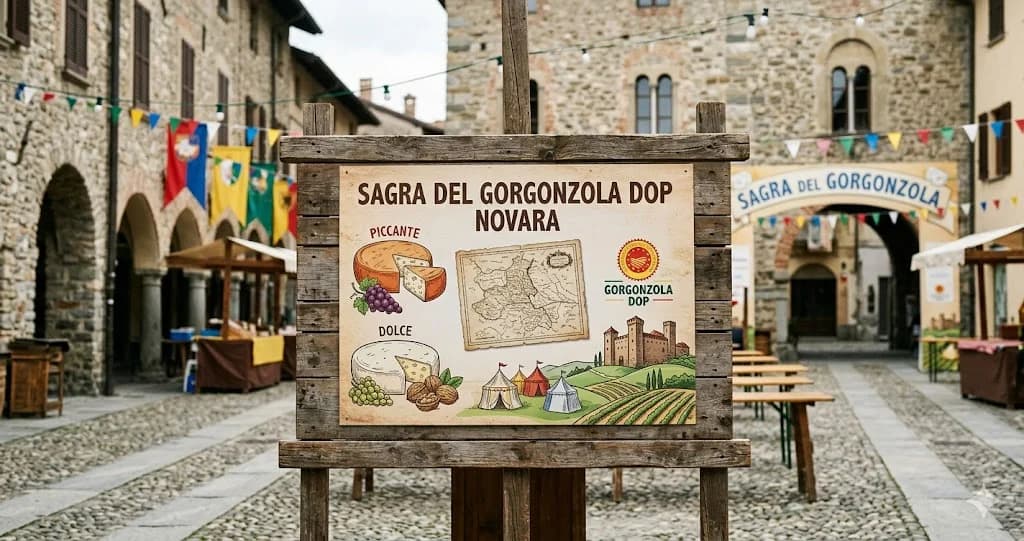
The calendar of food festivals in the Novara region tells the story of the territory better than any geographical map. Between the rice paddies of the Bassa and the hills of the Vergante, between the historic markets of the city and the villages of the plain, each season brings celebrations linked to what the land produces: rice, salami, the Cureggio onion, mushrooms from the hillside woods. This guide accompanies the reader through the main gastronomic events of the Novara province, month by month, with attention to the products that animate them and the reasons why it is worth stopping, tasting, and understanding.
The province of Novara occupies a geographical position that explains much of its cuisine. To the south and west stretches the rice-growing plain, an integral part of the great Paduan rice district: varieties such as Carnaroli and Arborio have consolidated roots here and find their most authentic showcase in local festivals. To the north the territory rises toward Lake Orta and the Vergante, a wooded area where mushrooms, chestnuts and game mark the gastronomic autumn.
The Novara festivals are not all equal in size or resonance. Some fall within known regional circuits, others remain village events that last a weekend and attract mostly a local audience. It is precisely in these latter, often, that the most genuine preparations are found: risotto cooked in the paiolo in front of the church, frittata with seasonal herbs, cooked salami served with polenta. The province has around fifty municipalities and many of them organize at least one gastronomic event a year, concentrated between late spring and autumn.
January and February Winter months are almost devoid of outdoor festivals. Gastronomic activity concentrates in trattorias and village associations, where social dinners dedicated to bollito misto alla piemontese or panissa, the quintessential Novara dish made with rice and borlotti beans, are organized. Some local tourism boards propose indoor events linked to Carnival, with fritters and traditional sweets.
March and April The beginning of the outdoor gastronomic season is timid but concrete. In some villages of the plain, the first spring fairs appear, historically linked to agricultural exchanges, where local producers display cured meats, fresh cheeses and preserves. Palm Sunday and Easter markets in cities often offer stalls with typical products.
May The month comes alive with the first real festivals. In several municipalities of the lowlands, events dedicated to asparagus appear, cultivated in small family plots. The festivals of salame and pork return as well, which ideally close the cycle of winter processing. It is a time when risotto often appears in festival menus, cooked outdoors on wood fires.
June The calendar fills up. Evenings grow longer and villages organize patron saint festivals that include gastronomic stands. Panissa and risotto with luganega are among the most served dishes. In the hilly area, towards Lake Orta, the first summer festivals begin with lake fish, particularly trout and whitefish.
July and August These are the months of village festivals par excellence. Sagre proliferate in small villages, often combined with concerts or evening shows. The protagonists are summer garden products: zucchini, tomatoes, peppers transformed into rice condiments. Some associations propose grilled local beef. The heat drives towards fried foods and sweets, including hazelnut cake, widespread in the hilly variant.
September The turning point month. The rice fields begin to turn gold and rice becomes the undisputed protagonist of events. The Sagra della Cipolla di Cureggio and Fontaneto d'Agogna, dedicated to the homonymous IGP product, is generally held in this period and represents one of the most rooted appointments in the province. Porcini mushrooms appear in the menus of hillside festivals.
October Full autumn. Rice harvesting is completed and some festivals celebrate the moment with risotto contests and varietal tastings. On the Vergante and around Lake Orta, mushroom and chestnut festivals multiply. It is the month in which Novara cuisine perhaps expresses its widest range: game, truffle, new harvest rice, aged cheeses.
November and December The calendar gradually empties. Some San Martino fairs with new wine and cheeses resist, and Christmas markets in cities offer packaged typical products. The month of December is dedicated to home preparation: cured meats, cotechini and artisanal panettoni that will return in the festivals of the following spring.
The best way to use this guide is to choose a product, one you really want to understand, and follow it through the season that belongs to it. Rice in September, onions between August and October, mushrooms when the forests of Vergante offer them. The Novara festivals are not shows to observe: they are occasions in which those who cook and those who eat share the same territory. Taking home a bag of rice bought directly from the producer during a festival is worth as much as any guided tour.