
Guide·Sagre·Fiere·Mercati·Degustazioni
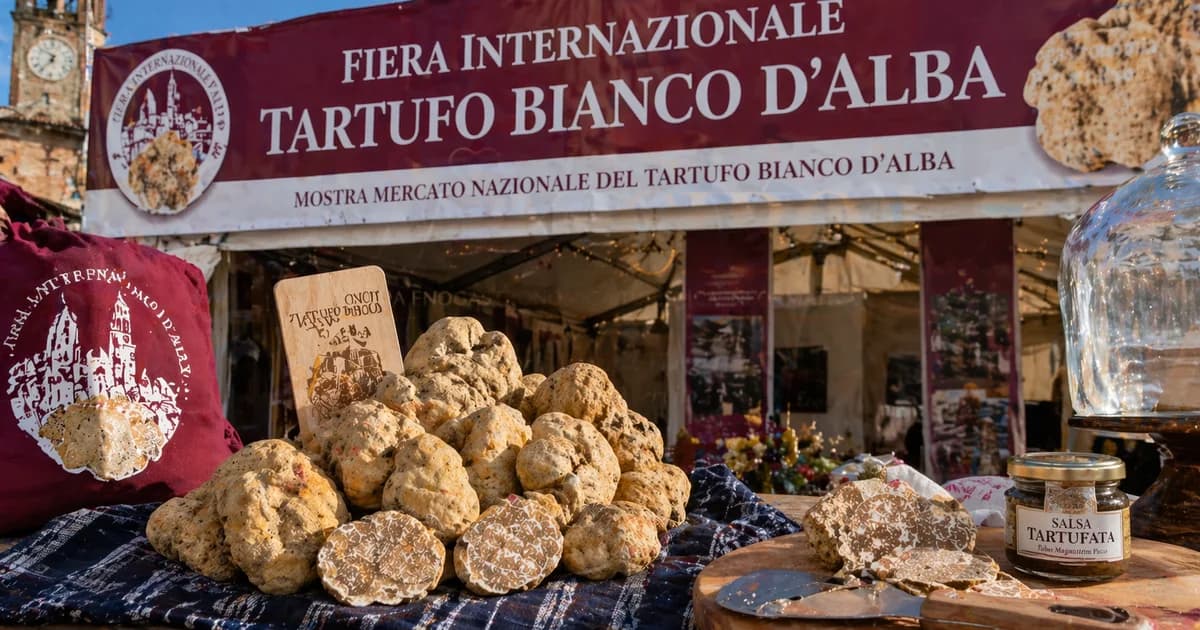
The Langhe and the Roero are two territories that face each other from opposite banks of the Tanaro, yet they speak the same language: that of a cuisine built on raw materials that do not need to be improved, only respected. White truffle of Alba, Barolo, Barbaresco, Tonda Gentile hazelnuts, alpine cheeses, tajarin all'uovo pulled by hand. This guide takes the reader through a year of products, seasons and gastronomic practices in one of Italy's territories most dense with flavors, with concrete guidance to navigate without getting lost.
The Langhe occupy the province of Cuneo and partly that of Asti, rolling hills where the landscape changes color with the seasons: gray with winter fog, intense green in spring, golden in summer, red and ochre in autumn during the harvest. The Roero, on the left bank of the Tanaro, is less celebrated but no less rich, with its white wines, its hazelnuts and a culinary tradition that draws from the same principles of essentiality.
The gastronomic system of this area is built on few high-value ingredients: wine holds a central place with denominations such as Barolo, Barbaresco, Langhe Nebbiolo, Dolcetto d'Alba, Barbera d'Asti and Roero Arneis. Around wine revolves an entire economy of wineries, wine bars, family trattorias and seasonal markets. The white truffle of Alba, harvested from October to December, is the most renowned product at an international level, but reducing these territories to truffle alone means ignoring the extraordinary variety that characterizes them throughout the year:
January and February The coldest months mark the time of great reds in the cellar and legume soups on osteria tables. The sausages of Bra, fresh or aged, are the stars alongside boards of local cured meats. It is the season of aged cheeses, aged Castelmagno and alpine pasture tome cheeses preserved from summer.
March and April The vineyard awakens and wild herbs appear in kitchens: nettle, dandelion, borage. Trattorias return to serving field frittatas and risottos with wild leek sprouts. The season of young Barbera begins, drunk fresh in cellars open for the first spring tastings.
May and June Strawberries from Borgo d'Ale in the Roero arrive, cultivated in sandy soils that yield fragrant fruits with thin skin. Wild asparagus complete the tajarin in white. Producers open their cellars for previews of new vintages and open-air markets fill again with fresh goat and milk cheeses.
July and August Summer brings the peppers of Carmagnola, tomatoes and zucchini from the garden. The cuisine becomes lighter with salads of raw meat chopped by knife, cold vitello tonnato and bagnet, typical Piedmontese sauces. Local festivals enliven the villages with dinners under the stars.
September and October Harvest in the vineyards of Barolo and Barbaresco, with Nebbiolo picked last among red-berried varieties. The first September rains bring porcini mushrooms to the markets of Borgosesia and the squares of Alba. From October white truffle is the undisputed protagonist: the International White Truffle Fair of Alba opens its doors and attracts seekers, chefs and enthusiasts from every part of Europe.
November and December White truffle reaches its fullest maturation in the first weeks of November. Cellars bottle the youngest reds and restaurants offer menus dedicated to truffle-egg-fresh pasta pairings. Hazelnuts from the Roero have already been harvested and processed: the Christmas markets of the villages offer nougat, gianduiotti and hazelnut creams produced artisanally.
The key to understanding the Langhe and the Roero is not the truffle, nor the Barolo, although both deserve their fame. It is the rhythm with which this territory changes face throughout the year, bringing each season a product that would not have the same meaning elsewhere. A glass of Nebbiolo drunk in November, in the silence of a cellar in Serralunga, while outside the fog rises from the Tanaro, is an experience tied to that precise place, to that precise moment. No guide can substitute physical presence. This one, however, can help you choose when to go and what to look for once you arrive.