
Guide·Sagre·Fiere·Mercati·Degustazioni
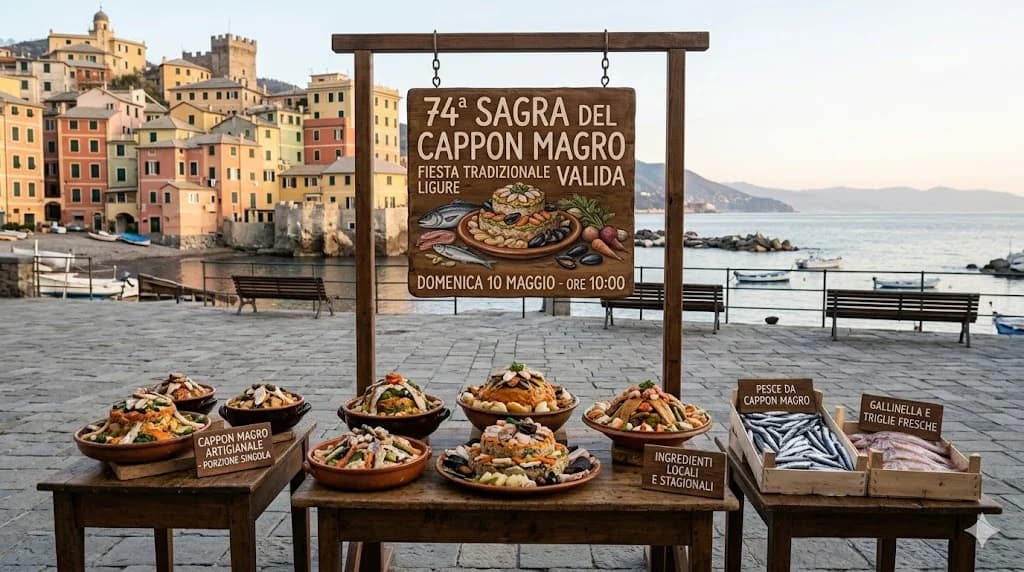
Liguria is not just the jagged profile of the Cinque Terre on postcards. It is a region where villages perched on heights or clinging to coves preserve a cuisine that has remained outside mass circuits, made of humble products transformed with precise, centuries-old technique. This guide enters the narrow alleys of less-visited towns, tells the story of morning markets, still-active mills, wood-fired ovens that work before dawn. Not a tourist itinerary, but a gastronomic map for those who want to understand what people eat, where it is produced and why that focaccia di Recco is unlike any other.
Liguria is one of the Italian regions with the highest density of historic villages relative to habitable surface area. The geographical conformation, with the Apennines and the sea pressing together in a strip of land sometimes less than twenty kilometers wide, has produced different microclimates at close range and, consequently, a gastronomic variety that surprises those who expect uniformity. In the Imperia hinterland, Taggiasca olives and porcini mushrooms grow on the ridges; in Val di Vara, dairy production and ancient legumes such as fagiolana dominate; along the Portofino promontory, there are still fishermen who work anchovies under salt as their grandfathers did.
The villages featured in this guide are not necessarily the most famous ones. Dolceacqua, Triora, Varese Ligure, Zuccarello, Apricale, Castelvecchio di Rocca Barbena: places where food is not a spectacle staged for the visitor, but the result of a short and often family-based supply chain, still readable in every neighborhood market or small village shop. Knowing these places means understanding the real Liguria, the one that produces before it even tells itself.
January and February These are the months of the hearth and dried legumes. In the trattorias of the inland areas, soups made with chickpeas from Garlenda and bean minestrone with the fat of pigs slaughtered in December appear. In the oil mills of the Imperia region, the late harvest of Taggiasca olives is still being worked: this is the best time to buy freshly filtered extra virgin oil, with its intense green color and herbaceous aroma that will soften in the following months.
March and April Spring in Liguria arrives early along the coast but is slower inland. On the markets of the villages, the first wild herbs appear—borage, prebuggiun, nettles—which go into vegetable pies and pasta fillings. At Easter, the torta pasqualina with its layers of paper-thin pastry and a filling of chard and eggs is still prepared in the homes of families in the towns of the Savona and Genoa regions.
May and June It is the season of basil. In the villages of the Genoa inland, such as Serra Riccò or Casella, there are still producers who cultivate the small-leaf variety destined for true pesto. May is also the month of fresh fava beans eaten raw with Pecorino Sardo, a deeply rooted habit in the inland towns of the La Spezia region. June brings the onions from Treschietto and the first zucchini to fry or stuff.
July and August The summer markets of coastal villages like Cervo and Noli fill with beef-heart tomatoes, eggplants, and peppers. It is the time of condiggion, the Ligurian seafarer's salad with softened sailor's crackers. In the inland areas, apricots from Valleggia are harvested, still grown on narrow terraces, and wild figs that grow on dry-stone walls.
September and October Harvest on the Cinque Terre and in the valleys of the Imperia region. Porcini mushrooms descend from the ridges of the Ligurian-Piedmont Apennines toward the markets of Triora and Pigna. October is the month of chestnuts: chestnut flour from Calizzano and Murialdo, a Slow Food presidium, goes into necci and into bread that smells of smoke. The olive harvest begins early in the towns most exposed to the sun.
November and December New oil is the absolute protagonist. The oil mills open and tastings are organized in the oil-producing villages of the Imperia region. December brings bagnun of anchovies to the homes of Riva Trigoso, cima alla genovese in the butcher shops of the inland villages, and pandolci bassi in artisanal bakeries that still prepare them with three days of natural fermentation.
Liguria's gastronomic identity through its villages is discovered on foot and at a leisurely pace, stepping into a bakery before the town wakes up, lingering in front of a mill that smells of freshly pressed olives, asking the market vendor what's available today, not what's always in stock. The most interesting products of this region don't wait for tourists: they follow the rhythm of the season and the land. Those who adapt to that rhythm find a concrete cuisine, without ornaments, built over centuries of necessity and peasant wisdom. It is that cuisine that makes the journey worthwhile.