
Guide·Sagre·Fiere·Mercati·Degustazioni
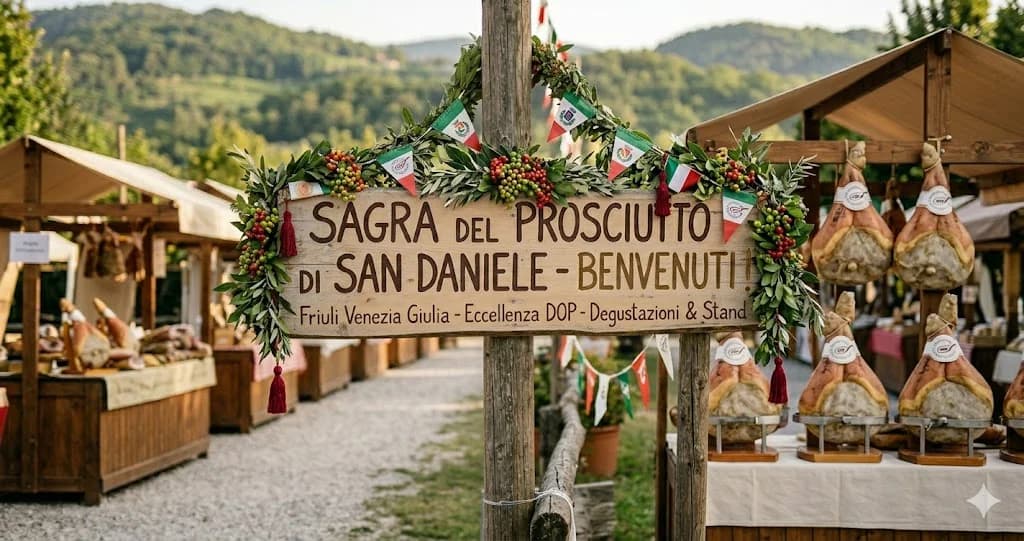
Friuli Venezia Giulia is a region where cuisines meet without merging, where the aroma of prosciutto crudo coexists with that of sauerkraut, where a glass of Friulano accompanies dishes that speak Slovene, Austro-Hungarian and Venetian in the same breath. This guide is born to navigate a stratified and often undervalued gastronomic territory, made of village festivals among the vineyards, neighborhood markets in the piazzas of Trieste and Udine, open wineries in the Colli Orientali and Collio, hidden osterie in the Carso hamlets. Those seeking authenticity will find it here.
Peak seasons for festivals: Summer (July-August) and autumn (September-October)
Main DOP/IGP products: Prosciutto di San Daniele DOP, Montasio DOP, Prosciutto di Trieste IGP.
Notable Slow Food Presidia: Pitina, Radic di mont, Cipolla di Cavasso Nuovo, speck dei Sauris.
Main wine regions: Collio, Colli Orientali del Friuli, Carso, Friuli Grave.
Historic markets: Mercato Coperto di Trieste, Piazza Matteotti in Udine, Ponterosso in Trieste.
Reference festivals: Festa dell'Uva di Cormòns, Aria di Festa (San Daniele), Fiera di San Simone (Gemona).
Distinct local cuisines: Friulana di pianura, Carnica alpina, Triestina mitteleuropea, Isontina.
Carso truffle season: October-November.
Friuli Venezia Giulia is divided into zones with distinctly different gastronomic characteristics. The Friuli plain, with its agricultural municipalities, expresses a humble and hearty cuisine: frico, polenta, barley soups. The Carso triestino brings Slavic and Central European influences to the table, with gulasch, jota, wild deer bresaola and white and red autochthonous wines such as Vitovska and Terrano. The hilly areas, Collio and Colli Orientali, are among Italy's most recognizable white wine-producing regions. To the north, Carnia carries an intact Alpine tradition, with alpine dairy cheeses, wild herbs and mountain cured meats.
Festivals and farmers' markets are the connective tissue of this region. Alongside established events such as the Grape Festival in Cormòns or the San Simone Fair in Gemona, there are dozens of events in small municipalities, often organized by local Pro Loco associations, that celebrate niche products such as Trieste radicchio, Cavasso Nuovo onion, Godia potato or Villanova bean. These latter occasions are the most precious opportunities to come into direct contact with producers and artisans of taste.
January and February The coldest months shift attention toward pantry products and cured meats. In Trieste, fresh cotechini, capuzi garbi (local sauerkraut) and brovada can still be found in covered markets like the Mercato Coperto on Via Carducci. In the osterie of Carnia, barley and spelt soups with smoked speck are served. It's the right time to visit the artisanal butcher shops of Sauris, where aged speck is ready after the winter months.
March and April The period of wild herbs arrives: wild hops (bruscandoli) are the star of frittatas and risottos throughout rural Friuli. Spring festivals begin to take place in villages of the Bassa: in San Giorgio di Nogaro and neighboring municipalities, local agricultural fairs are organized with tastings of fresh cheeses and new vintage wines. The wineries of Collio begin to open for the first tastings of the new harvest.
May An intense month for agricultural markets. In Udine, the market in Piazza Matteotti is enriched with white and green asparagus, field strawberries, radishes and the first fava beans. In Cividale del Friuli and in neighboring villages, small medieval fairs take place with typical products on direct sale. Trout festivals begin to appear in municipalities along the Natisone and Torre rivers.
June The festival season enters its peak. In the Goriziano area, the violet artichoke of Gorizia is celebrated with dedicated events. In municipalities of Carnia, such as Tolmezzo and Comeglians, begin the alp festivals with fresh Montasio cheese on tasting. Along the coast, in Grado and Lignano, fish markets offer moeche (crabs in molting phase), canoce and small fish from the Upper Adriatic.
July and August Peak of village festivals. In San Daniele del Friuli takes place Aria di Festa, the event dedicated to Prosciutto di San Daniele DOP, with stands, tastings and visits to curing facilities. In Carnia, village celebrations multiply with polenta and venison, game and alpine cheeses. In Sappada, a border municipality, culinary tradition of Germanic origin emerges in local celebrations with canederli and strudel. In municipalities of the Bassa Friulana such as Muzzana del Turgnano, risotto with frogs is celebrated.
September Grape harvest and grape festivals dominate the calendar. In Cormòns takes place the historic Festa dell'Uva, with costumed parades, dances and tastings of Collio wines. In Buttrio, Manzano and in other municipalities of the Colli Orientali, wineries open for open winery events. In Trieste, the Ponterosso market offers porcini mushrooms from the karst area, moscatelle pears and local renette apples. In Carnia, chestnut festivals begin.
October Month of mushrooms and chestnuts. In Gemona del Friuli takes place the Fiera di San Simone, one of the oldest in Friuli, with agricultural products, livestock and crafts. In Moggio Udinese and in other mountain municipalities, chestnut festivals are organized with tastings of roasted marrons and new vintage wine. Markets in Udine and Pordenone fill with pumpkins, radicchio and white truffle from Carso.
November and December Christmas markets in Trieste, Udine and Gorizia offer local artisanal products, typical sweets like putizza and gubana, grappa distillates and mountain honeys. In the alpine dairies (latterie turnarie) of Carnia, autumn cheese production comes to an end. In December, the tradition of smoked raw ham and aged cured meats returns as the protagonist in homes and country osterie.
The best way to understand Friuli Venezia Giulia at table is not to seek the restaurant most cited by guides, but to follow the calendar of village festivals, even those that don't appear in search results. A phone call to the Pro Loco of a small municipality like Clauzetto, Attimis or Prepotto can open the door to a village celebration where traditional frico is still served, cheese produced just a few kilometers away is sold, and you converse with those who work that land every day. The gastronomic authenticity of this region lies precisely there, in the margins that tourist guides don't reach.